Can Trexyne Peel Be Used on Skin With Broken Capillaries ?
Skin with broken capillaries, also known as telangiectasia, requires exceptional caution during clinical resurfacing treatments due to heightened vascular fragility. However, the Trexyne Peel Professional Algae Resurfacing Treatment
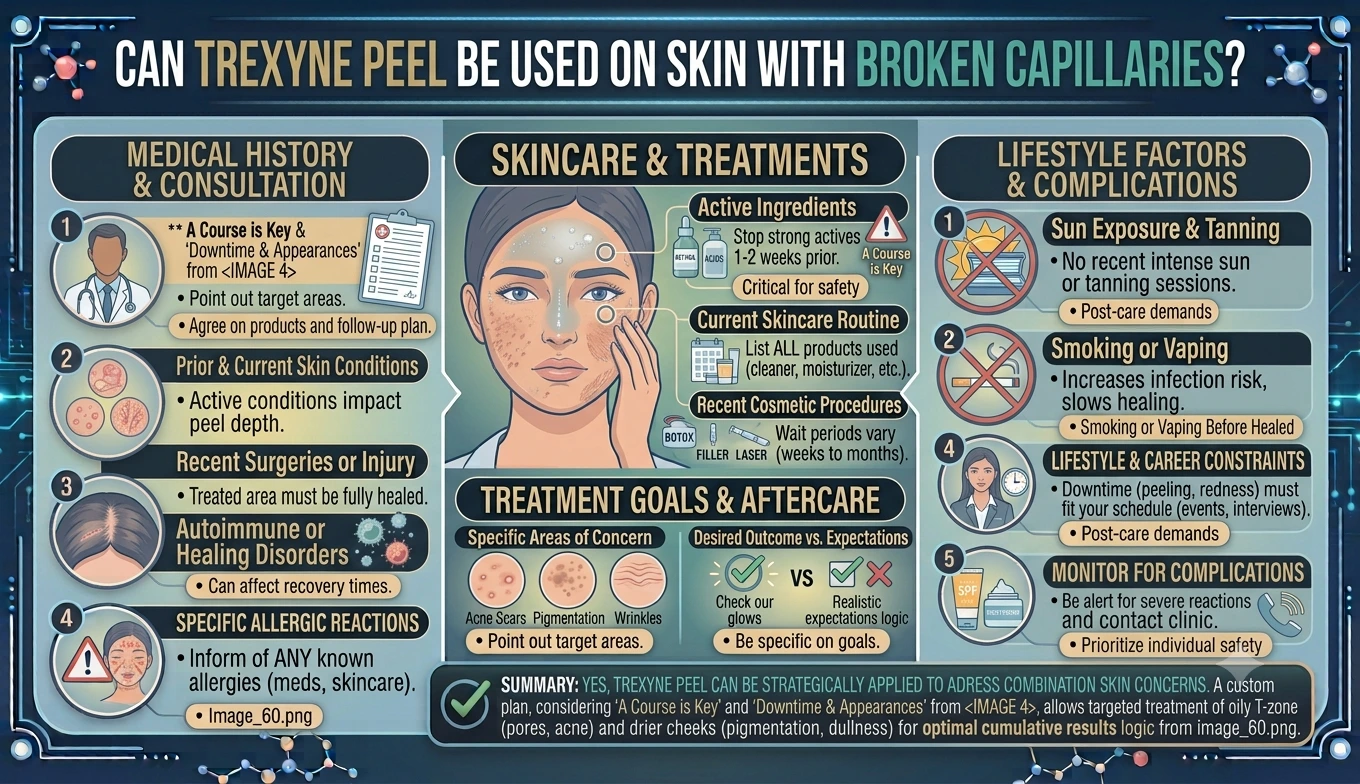
can be used safely on skin with broken capillaries when administered by a trained aesthetic professional who adapts the application protocol to avoid direct pressure on affected areas. Trexyne Peel operates through a purely mechanical mechanism using microscopic marine-algae spicules and stabilised Vitamin E, completely avoiding chemical exfoliants. By utilizing a controlled, tiered protocol, practitioners can customize physical massage pressure, target surrounding tissue safely, and support epidermal renewal while comforting vulnerable lipid barriers and protecting fragile surface capillaries.
Understanding Telangiectasia and Vascular Fragility in Clinical Skincare
Telangiectasia refers to small, permanently dilated blood vessels that lie close to the surface of the skin. Managing skin with visible capillary fragility requires a deep understanding of vascular structure and epidermal support mechanisms.
The Underlying Mechanics of Broken Capillaries
Capillaries are tiny, thin-walled blood vessels responsible for delivering oxygen and essential nutrients to surrounding cutaneous tissue. When these tiny vessels lose structural elasticity due to sun damage, genetic predisposition, environmental stress, or mechanical trauma, they remain expanded. This permanent dilation becomes visible as fine red or purple thread-like lines, most commonly across the cheeks, nose, and chin. Because the vessel walls are delicate and close to the surface, improper handling can aggravate localized erythema.
Why Careful Resurfacing Management Is Essential
Skin exhibiting broken capillaries often presents with a thin or easily compromised epidermal barrier. Aggressive facial procedures, intense thermal heat, or harsh physical friction can increase localized blood flow and put undue stress on fragile vessel walls. Aesthetic professionals must evaluate the skin carefully before proceeding with any resurfacing service. Choosing a treatment method that offers complete control over physical intensity ensures surrounding tissue receives necessary refinement without causing trauma to delicate capillaries.
The Mechanical Advantage of Marine Algae Spicules
The choice of resurfacing methodology plays a critical role when treating clients with vascular sensitivity or localized capillary weakness.
Physical Micro-Channeling Without Chemical Stress
The cornerstone of Trexyne technology lies in microscopic, needle-like spicules derived naturally from marine algae. These spicules create controlled micro-channels in the upper stratum corneum purely through physical movement. Unlike methods that rely on active chemical reaction, marine spicules do not alter skin pH or induce deep thermal heat. This physical mechanism allows practitioners to resurface the epidermal layer without subjecting fragile capillaries to chemical irritation or unpredictable vascular flushing.
Precise Practitioner Control Over Application Parameters
Because marine spicules operate mechanically, the treating aesthetic professional retains total control over every aspect of application. The practitioner can adjust physical pressure, movement speed, and contact duration across different areas of the face. When working near areas affected by broken capillaries, the practitioner simply lightens their touch or avoids direct friction over visible vessels. This level of physical customization ensures maximum safety and comfort for vulnerable complexions.
The Soothing and Fortifying Role of Stabilised Vitamin E
Protecting delicate cutaneous tissue during active resurfacing requires robust lipid support and immediate antioxidant intervention from the moment of treatment.
Immediate Lipid Support and Barrier Conditioning
The Trexyne formulation incorporates stabilised Vitamin E, or tocopherol, directly alongside natural marine spicules. Tocopherol is a lipid-compatible antioxidant that integrates seamlessly into the intercellular matrix of the stratum corneum. As the spicules create microscopic micro-channels, stabilised Vitamin E conditions the surface layer, reduces initial warmth, and fortifies natural lipid structures. This immediate support helps calm surrounding tissue and maintains barrier stability throughout the treatment.
Minimising Transepidermal Water Loss in Sensitive Tissue
Skin with broken capillaries frequently suffers from increased transepidermal water loss and surface dryness. By infusing the skin with stabilised Vitamin E during the resurfacing process, Trexyne Peel helps seal in ambient moisture. Preserving surface hydration keeps newly developing epidermal cells supple and supported, which aids in a smooth, predictable recovery phase without unnecessary tissue stress. Practitioners looking to source professional botanical resurfacing products can browse our full range via the official Trexyne shop page
.
Protocol Adjustments for Skin With Vascular Fragility
A key strength of the Trexyne resurfacing system is its tiered protocol framework, which enables practitioners to tailor treatments to individual skin resilience.
Initiating Care with a Gentle Level 1 Protocol
When treating a client who exhibits localized broken capillaries, the aesthetic professional should select a Level 1 protocol. This entry-level option utilizes feather-light massage movements, reduced application time, and minimal physical pressure. The primary objective is to deliver light surface refinement and initiate natural cell movement while ensuring the microvascular network remains calm and comfortable.
Zone-Specific Pressure Modulation
A skilled practitioner does not apply uniform physical pressure across the entire face. For complexions with localized telangiectasia on the nose or cheeks, the practitioner modifies their physical technique zone by zone. They apply standard mechanical pressure to resilient areas, such as the forehead or jawline, while applying gentle, passive touches or skipping direct spicule engagement over areas with visible broken capillaries.
Managing Expected Post-Treatment Responses Safely
Educating clients on what to expect after a mechanical resurfacing session helps prevent concern and supports proper aftercare compliance.
Understanding Normal Post-Resurfacing Sensations
Following a Trexyne Peel session, clients typically experience mild localized redness and a prickling sensation similar to mild sunburn. This response is completely normal as the microscopic marine spicules rest within the upper skin layers to stimulate natural cell turnover. For skin prone to vascular redness, initial warmth typically settles within twenty-four to forty-eight hours as the spicules work out of the tissue naturally.
Differentiating Expected Erythema from Vascular Strain
Because marine spicules function through a controlled physical process, post-treatment shedding follows a predictable schedule over three to six days. The temporary erythema associated with spicule engagement should be uniform and mild. By avoiding direct pressure on visible broken capillaries during the session, practitioners ensure that normal post-treatment flushing does not place excess strain on fragile vessels.
Home Aftercare Guidelines for Preserving Vessel Integrity
Post-treatment care is vital for maintaining skin comfort, supporting barrier repair, and protecting delicate surface capillaries following a clinic session.
Simplifying the Post-Treatment Routine
During the active recovery window, clients must keep their daily home care minimal and non-irritating. Cleansing should be limited to lukewarm water and a mild cleanser applied lightly with the palms. Hot showers, steam rooms, saunas, and intense physical exercise must be avoided for at least forty-eight hours after treatment. Heat and heavy sweating induce facial vasodilation, which can stress vulnerable capillaries and prolong recovery.
Barrier Hydration and Diligent Sun Protection
Clients must apply a comforting, lipid-replenishing moisturizer to keep the stratum corneum soft and well-hydrated throughout the shedding phase. Daily application of broad-spectrum sun protection is equally vital, as newly revealed epidermal cells are particularly sensitive to ultraviolet radiation. Proper photoprotection shields fresh tissue from solar stress and prevents further capillary damage. Practitioners seeking technical protocol resources or clinical support can reach out directly via our official Trexyne contact page
.
Integrating Trexyne Peel into a Comprehensive Treatment Plan
Achieving optimal texture and radiance on skin with vascular sensitivities requires a thoughtful, long-term clinical strategy.
Conducting a Pre-Treatment Visual Assessment
Before commencing any resurfacing procedure, the aesthetic professional must perform a detailed skin analysis under bright light and magnification. Mapping out the exact location and extent of broken capillaries allows the practitioner to plan their massage pathway effectively. Assessing baseline barrier health and discussing current home care habits ensures that the client is suitable for mechanical resurfacing.
Structuring a Multi-Session Resurfacing Schedule
To refine skin texture, clear dull surface cells, and enhance overall skin clarity, practitioners usually recommend a structured series of three to six sessions. Spacing appointments three to four weeks apart provides ample time for the epidermal barrier to recover and rebuild completely. Over time, progressive mechanical resurfacing supports healthy cell turnover without compromising delicate surface vessels. Learn more about our professional education and botanical formulations on the main Trexyne homepage
.
Comparing Mechanical Marine Spicules to Aggressive Physical Abrasives
Understanding the physical differences between marine spicules and traditional facial scrubs highlights why spicules offer a safer option for delicate skin.
Smooth Micro-Precision Versus Harsh Surface Friction
Standard retail scrubs often rely on crushed seeds, nutshells, or coarse mineral particles with sharp, uneven edges. Rubbing these harsh materials across the face causes micro-tears, severe friction trauma, and intense vascular flushing, which can easily worsen broken capillaries. In contrast, micronized marine spicules are refined microscopic structures that enter the upper stratum corneum cleanly without dragging or tearing surface tissue.
Internal Biological Stimulation Versus External Surface Abrasion
Traditional manual scrubs attempt to scrape away dead cells from the outside through aggressive surface friction. Marine spicules work differently by embedding briefly within the upper epidermal layer to signal natural cellular movement from within. As fresh cells migrate upward, old surface tissue detaches naturally without requiring forceful rubbing, protecting fragile capillaries from mechanical trauma.
Conclusion
Trexyne Peel can be used safely on skin with broken capillaries when administered by a trained aesthetic professional who adapts physical application parameters to protect delicate vessels. Telangiectasia requires a careful resurfacing approach that avoids intense heat, harsh friction, and unpredictable chemical stress. By utilizing the purely mechanical mechanism of marine-algae spicules, the Trexyne Peel Professional Algae Resurfacing Treatment
creates controlled micro-channels that encourage natural cell movement without causing tissue trauma. Combined with the comforting benefits of stabilised Vitamin E and flexible tiered protocols, Trexyne Peel allows practitioners to refine surrounding skin texture, clear surface dullness, and support a brighter, smoother, and more even-looking complexion safely.
Frequently Asked Questions
Q: Can Trexyne Peel cause new broken capillaries to appear on sensitive skin?
No, Trexyne Peel does not cause new broken capillaries when applied correctly by a trained professional. The treatment operates through controlled physical micro-channeling without deep thermal heat or harsh dragging, protecting vessel integrity when appropriate protocol pressure is used.
Q: How should a practitioner handle areas with visible thread veins during a Trexyne Peel session?
During application, the practitioner should avoid applying direct physical pressure or massage friction over visible thread veins. They can apply the formulation lightly or work around affected areas while focusing standard pressure on surrounding, healthier tissue.
Q: Will the warmth experienced after a Trexyne Peel worsen existing telangiectasia?
The mild surface warmth and redness experienced after treatment are normal signs of spicule engagement and typically settle within twenty-four to forty-eight hours. Avoiding hot showers, saunas, and strenuous exercise during this window ensures delicate vessels are not subjected to thermal stress.
Q: How does stabilised Vitamin E support skin with broken capillaries during resurfacing?
Stabilised Vitamin E conditions the stratum corneum, supports the skin’s lipid barrier, and provides antioxidant protection during active resurfacing. This immediate conditioning helps soothe initial warmth, maintain hydration, and support overall skin resilience throughout recovery.
Q: Is Trexyne Peel available for purchase as an at-home resurfacing option for sensitive skin?
No, Trexyne Peel is strictly a professional-only product available exclusively to trained aesthetic practitioners and verified clinics. Safe application requires professional assessment, precise pressure control, and specialized protocol adjustments.
Q: How many sessions are recommended for clients who have skin with broken capillaries?
Practitioners generally recommend a series of three to six sessions spaced three to four weeks apart. This gradual schedule allows for progressive texture refinement while ensuring the epidermal barrier and microvascular network have adequate time to rest between visits.