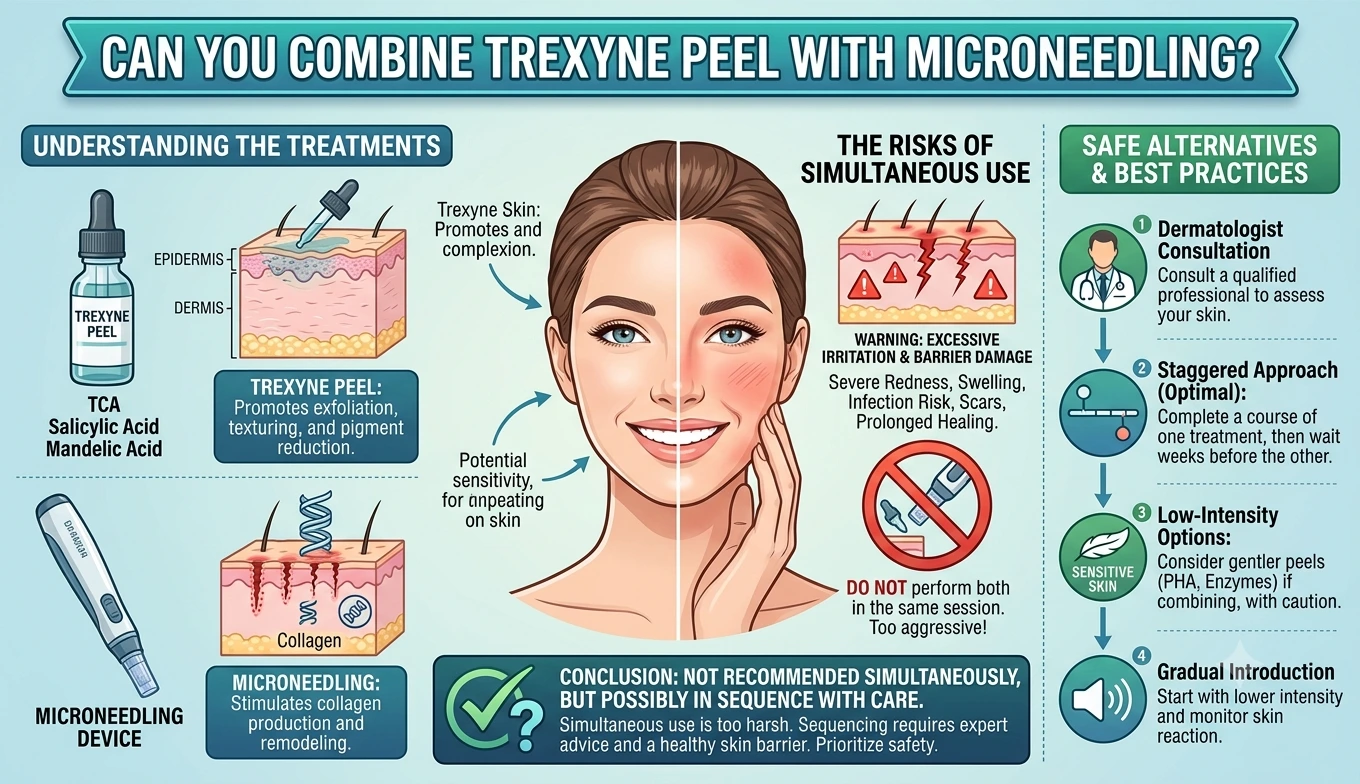
Can You Combine Trexyne Peel With Microneedling?
Combining treatments is a question practitioners hear regularly, and it deserves a careful, individualised answer rather than a simple yes or no. The short answer is that any decision to combine the Trexyne Peel with another professional treatment, including microneedling, should be assessed by a qualified practitioner based on the client’s specific skin condition, tolerance, and treatment history. Because the Trexyne Peel works through a mechanical mechanism using marine-algae spicules, understanding how it fits alongside other resurfacing approaches requires thinking carefully about sequencing, recovery time, and how much stimulation the skin can comfortably manage within a given period.
This article looks at the key considerations a practitioner should think through when clients ask about combining treatments, and why a thoughtful, conservative approach tends to serve both the client and the clinic best.
This is a topic worth returning to regularly as clinic protocols evolve and as practitioners gain more experience with how their own client base responds to different treatment sequences. What follows is intended as a framework for thinking through these decisions, rather than a fixed rule that applies identically to every client who asks.
Why Clients Ask About Combining Treatments
It is easy to understand why clients are drawn to the idea of combining two professional treatments. Many assume that pairing two resurfacing approaches will speed up results or deliver a more dramatic outcome than either treatment alone. This is a reasonable question to raise, but it is one that needs a considered, professional answer rather than an assumption.
The Appeal of Faster Results
Clients are often working toward a specific goal, whether that is preparing for an event or simply wanting to see visible change more quickly. Combining treatments can feel like a logical shortcut, especially if a client has read about other people pairing different resurfacing methods.
Why This Requires Professional Judgement
What works well for one client’s skin may not suit another, and this is particularly true when more than one type of stimulation is involved. A practitioner’s role is to assess the individual’s skin condition, recent treatment history, and overall tolerance before making any decision about combining approaches, rather than assuming that more treatment automatically means better results.
Understanding How the Trexyne Peel Works
Before considering how any treatment might sit alongside another, it helps to be clear on how the Trexyne Peel itself works. This understanding forms the foundation of any sensible discussion about sequencing or combining treatments.
A Mechanical Mechanism
The Trexyne Peel uses marine-algae spicules to create controlled micro-channels in the skin’s surface, rather than relying on chemical exfoliants. This mechanical approach is central to how the treatment resurfaces and refines the skin, and it is what distinguishes it from other resurfacing methods a practitioner might be familiar with.
Vitamin E and the Recovery Phase
The treatment is also infused with stabilised tocopherol, a form of Vitamin E that can support the skin’s recovery phase from the very first application. This built-in support is a meaningful part of how the treatment is designed to work, and it is worth considering when thinking about how the skin might respond to any additional treatment applied around the same time.
A Tiered, Adjustable Protocol
Because the Trexyne Peel follows a tiered protocol, intensity can be matched to skin type and client expectation. This flexibility is one of the product’s defining features, and it is relevant to any conversation about combining treatments, since it means the peel itself can often be adjusted to sit more comfortably within a broader treatment plan, depending on the practitioner’s clinical judgement.
Why Skin Needs Time to Process Any Resurfacing Treatment
Regardless of the method used, any treatment that stimulates the skin’s surface asks the skin to go through a period of recovery and renewal. Understanding this process is essential when thinking about whether and how two treatments might be combined.
The Skin’s Natural Renewal Cycle
Skin regenerates on its own cycle, with new cells forming at the base of the epidermis and moving upward to replace older cells at the surface. This cycle typically takes several weeks, and it can be influenced by age, sun exposure, and the general condition of the skin barrier. Any treatment that encourages this renewal process needs to be given enough time to allow the cycle to progress properly.
Why Overlapping Stimulation Needs Careful Thought
When more than one treatment is introduced within a short period, the skin is effectively being asked to manage more than one renewal signal at once. This is not automatically a problem, but it does mean that spacing, intensity, and overall skin condition all need to be considered carefully by a practitioner before any combined approach is planned.
Key Factors a Practitioner Should Consider
Deciding whether to combine the Trexyne Peel with another treatment is not a decision that should be made casually. Several factors deserve careful thought before any plan is put in place.
Skin Condition and Sensitivity
A client’s current skin condition plays a significant role in this decision. Skin that is already sensitive, reactive, or recovering from a previous treatment may need a longer period of rest before introducing any additional stimulation, regardless of which treatments are being considered.
Recent Treatment History
Understanding what a client has had done recently, including any other in-clinic treatments or the introduction of active skincare products at home, gives a practitioner a fuller picture of how much the skin has already been asked to manage. This history should always be reviewed carefully before considering combining treatments.
The Client’s Overall Goals
A client’s goals also matter when thinking about sequencing. Someone looking for a gradual, long-term renewal plan may have very different needs from someone working toward a specific short-term outcome, and this should inform how a practitioner approaches any conversation about combining treatments.
Professional Training and Clinic Protocols
Ultimately, any decision to combine treatments should sit within a practitioner’s own training, clinical judgement, and clinic protocols. Practitioners who are trained to work with the Trexyne Peel should refer to their professional training and any guidance provided by the brand when considering how it might fit alongside other treatments they offer.
The Importance of Sequencing and Spacing
Even where a practitioner does decide that combining treatments is appropriate for a particular client, sequencing and spacing become critical considerations.
Allowing Adequate Recovery Time Between Treatments
Because the Trexyne Peel is designed around predictable downtime, practitioners are often well placed to plan a schedule that allows adequate recovery before introducing any other treatment. Rushing this process, or overlapping treatments too closely, is more likely to increase the demands placed on the skin than to accelerate results.
Reassessing Skin Before Each Stage
Before any additional treatment is introduced, it makes sense to reassess how the skin has responded to the Trexyne Peel session that came before it. This step by step approach allows a practitioner to make informed decisions at each stage, rather than committing to a fixed combined plan in advance.
Adjusting Intensity to Account for Combined Treatment Plans
If a practitioner does decide that a combined approach is appropriate for a particular client, the tiered nature of the Trexyne Peel protocol allows intensity to be adjusted accordingly. This means the peel itself does not need to be delivered at a fixed intensity regardless of what else is being planned for that client’s overall skin journey.
Why a Conservative Approach Often Serves Clients Best
When in doubt, a more conservative approach to combining treatments tends to serve both the client and the practitioner well. This does not mean combining treatments is never appropriate, but it does mean that caution and careful assessment should guide the decision.
Protecting Long-Term Skin Health
The primary goal of any professional treatment plan should be supporting the client’s long-term skin health, not simply achieving the fastest possible result. A conservative, well-paced approach to any combined treatment plan is more likely to support this goal than rushing to combine multiple approaches without adequate assessment.
Building Client Trust Through Careful Planning
Clients tend to trust practitioners who take the time to explain their reasoning, rather than agreeing to every request without question. Explaining why a particular sequencing or spacing plan has been chosen, even if it means waiting longer than the client initially hoped, tends to build confidence in the overall treatment relationship.
Questions Practitioners Should Ask Before Combining Treatments
A structured set of questions can help guide the decision-making process when a client asks about combining the Trexyne Peel with another treatment.
Has the Skin Fully Recovered From Any Previous Treatment?
Confirming that the skin has fully recovered from any recent in-clinic treatment is an essential first step before considering any additional stimulation.
What Is the Client’s Realistic Timeline?
Understanding whether a client’s timeline allows for a properly spaced, sequential approach, rather than requiring everything to happen within a very short window, helps guide a more sensible treatment plan.
Does the Client Understand the Reasoning Behind the Plan?
Taking the time to explain why a particular sequencing decision has been made, including any recommendation to wait between treatments, helps ensure the client understands and supports the overall plan.
How to Discuss This Topic With Clients
Clear communication is essential whenever a client raises the idea of combining treatments. Practitioners are encouraged to approach this conversation with honesty and patience.
Avoiding Overpromising
It is important not to overpromise results when discussing combined treatment plans. Because outcomes vary between individuals, practitioners should focus on explaining the reasoning behind their recommended approach, rather than making specific promises about combined results.
Encouraging an Open Conversation
Clients should feel comfortable asking questions about why a particular sequencing plan has been recommended. An open, ongoing conversation throughout the treatment journey tends to lead to better outcomes and a more positive overall experience.
Directing Clients to Professional Guidance
For clinics wanting further guidance on working with the Trexyne Peel within a broader treatment plan, the Trexyne shop provides an overview of the full professional range, and the Trexyne contact page is available for practitioners with specific questions about protocols and training. General information about the brand’s approach to professional skin renewal can also be found on the Trexyne homepage.
Why Professional Guidance Should Always Lead the Decision
Because the Trexyne Peel is sold strictly to verified practitioners and clinics, any decision about combining it with another treatment should be led by professional training and clinical judgement rather than general assumptions.
Relying on Verified Training
Practitioners who are trained and verified to use the Trexyne Peel are best placed to make informed decisions about how it fits within a broader treatment plan for their clients. This training provides the foundation for any responsible decision about sequencing or combining approaches.
Keeping Client Safety and Comfort as the Priority
Whatever decision is made, client comfort and safety should remain the guiding priority throughout. A well-reasoned, conservative approach that takes the time to assess each client individually is far more valuable than a generic answer applied to every client who asks the same question.
What Makes This Question Different From Other Treatment Queries
Questions about combining treatments tend to come up more often with resurfacing procedures than with many other cosmetic treatments, simply because resurfacing involves directly stimulating the skin’s surface. This makes it worth spending a little extra time understanding what makes this particular question worth approaching carefully.
The Difference Between Complementary and Overlapping Treatments
Not every combination of treatments carries the same considerations. Some treatments target different layers or functions of the skin and may be planned with more separation in mind, while others work in more similar ways and may require more careful spacing. Understanding where a particular combination sits on this spectrum is an important part of a practitioner’s assessment.
Why Generic Online Advice Can Be Misleading
Clients researching this topic online often come across generic advice that does not account for their individual skin condition or treatment history. This is one of the main reasons a proper in-clinic consultation remains essential before any decision is made about combining treatments, regardless of what a client may have read elsewhere.
Building a Personalised Treatment Plan
Rather than offering a blanket answer to whether treatments can be combined, practitioners are better placed to build a personalised plan that reflects each client’s specific circumstances.
Starting With a Thorough Consultation
A thorough consultation should always come before any decision about combining treatments. This includes reviewing the client’s skin history, current concerns, and any other treatments they may be considering or have recently undergone.
Setting a Realistic Sequence and Timeline
Once a practitioner has a clear picture of the client’s skin and goals, a realistic sequence and timeline can be planned. This might mean completing a course of the Trexyne Peel before considering any additional treatment, or it might mean a longer-term plan that incorporates several approaches spaced appropriately over time.
Reviewing the Plan Regularly
A treatment plan should not be considered fixed once it has been agreed. Regular reviews allow a practitioner to adjust the sequence or timeline based on how the client’s skin is actually responding, rather than sticking rigidly to an initial plan regardless of how the skin behaves in practice.
The Role of Client Education in This Decision
Helping clients understand the reasoning behind a recommended approach is just as important as the clinical decision itself.
Explaining Why Patience Supports Better Outcomes
Clients who understand why a practitioner has recommended a particular sequence or spacing are generally more patient and more satisfied with the eventual outcome. Taking the time to explain the biology behind skin renewal, in straightforward terms, tends to support this understanding.
Addressing Client Concerns About Delayed Treatment
Some clients may feel disappointed if a practitioner recommends waiting before introducing an additional treatment. Acknowledging this concern, while explaining the reasoning clearly, helps maintain trust even when the immediate answer is not what the client had hoped to hear.
Encouraging Clients to Trust Professional Recommendations
Ultimately, clients benefit most when they trust their practitioner’s professional recommendation over generic advice found elsewhere. Reinforcing this trust through clear, honest communication is an important part of any practitioner’s role when discussing combined treatment plans.
Documenting Decisions Around Combined Treatments
Whatever decision is reached, keeping clear records supports both the client’s ongoing care and the practitioner’s professional accountability.
Recording the Reasoning Behind Each Decision
Noting down why a particular sequencing or spacing decision was made, including the client’s skin condition and treatment history at the time, creates a useful reference for any future appointments or treatment planning.
Reviewing Records Before Any Future Treatment
Referring back to these records before considering any future treatment, including potential combinations, helps ensure that decisions remain consistent with what has already been observed about that individual client’s skin.
This kind of consistent, well-documented approach also makes it easier to hand over care between practitioners within the same clinic, should a client’s regular practitioner be unavailable for a follow-up appointment. Clear records mean that whoever picks up the client’s file can continue the treatment plan with the same level of informed, individualised care.
Common Scenarios Practitioners May Encounter
While every client’s situation is unique, a few common scenarios tend to come up repeatedly when this question is raised in clinic. Thinking through these in advance can help practitioners respond with confidence and consistency.
A Client Who Has Recently Had Microneedling Elsewhere
If a client has recently undergone microneedling at another clinic and is now asking about starting a course of the Trexyne Peel, a practitioner should first establish exactly when that treatment took place and how the skin responded. Without this information, it is difficult to make an informed recommendation about when it might be appropriate to begin a new treatment.
A Client Who Wants Both Treatments for a Single Event
Clients preparing for a specific event sometimes hope to fit in both treatments within a short window beforehand. In this scenario, a practitioner may need to explain that a rushed combined approach is unlikely to deliver the reliable, even-looking result the client is hoping for, and that a longer lead time would allow for a more considered plan.
A Client Already Partway Through a Trexyne Peel Course
If a client is partway through a course of the Trexyne Peel and asks about adding microneedling before finishing, a practitioner should weigh up how the skin has responded to the sessions so far, and whether introducing an additional treatment at this stage would support or interrupt the progress already made. In most cases, it is worth encouraging the client to complete their current course before reassessing, since this allows the full benefit of the planned programme to be realised before any new variable is introduced.
Why Ongoing Professional Development Matters
Because questions like this one sit at the intersection of clinical judgement and product knowledge, ongoing professional development plays an important role in helping practitioners respond confidently and appropriately.
Staying Current With Product Training
Practitioners offering the Trexyne Peel are encouraged to stay up to date with any training or guidance provided, since this forms the most reliable basis for decisions about how the treatment fits within a broader clinic offering. This is particularly relevant as clinic protocols and client expectations continue to evolve over time.
Learning From Case-by-Case Experience
Over time, practitioners build up a valuable base of experience from observing how different clients respond to treatment sequencing decisions. Reflecting on these outcomes, and adjusting future recommendations accordingly, supports continual improvement in how these decisions are made.
Sharing Knowledge Within a Clinic Team
Where a clinic has more than one practitioner offering the Trexyne Peel, sharing observations and experiences as a team can help build a more consistent, well-informed approach to answering client questions about combining treatments.
Conclusion
Whether the Trexyne Peel can be combined with microneedling is not a question with a single universal answer. It depends on the client’s skin condition, recent treatment history, and the professional judgement of a trained practitioner. Because the Trexyne Peel works through a mechanical mechanism using marine-algae spicules and follows a tiered, adjustable protocol, it offers practitioners flexibility when planning a client’s overall treatment journey, but any decision to combine it with another approach should always be made carefully and individually. Taking the time to assess skin condition, allow proper recovery, and communicate clearly with clients supports the goal that matters most, a brighter, more even-looking complexion achieved safely and sustainably over time.
Frequently Asked Questions
Q: Is it safe to combine Trexyne Peel with microneedling in the same treatment plan?
This depends entirely on the individual client’s skin condition and treatment history, and should always be assessed by a trained, verified practitioner rather than decided as a general rule.
Q: How long should I wait between a Trexyne Peel session and another resurfacing treatment?
Recovery time varies from client to client, so practitioners should reassess the skin before introducing any additional treatment rather than following a fixed timeline.
Q: Can combining treatments speed up visible results?
Not necessarily. Skin needs adequate time to move through its natural renewal cycle, and combining treatments without proper spacing may place additional demands on the skin rather than accelerating results.
Q: Does the tiered protocol of the Trexyne Peel make it easier to plan around other treatments?
The tiered nature of the protocol allows intensity to be adjusted to suit an individual client’s overall treatment plan, which can support more flexible planning when a practitioner is considering multiple approaches.
Q: Should every client be offered a combined treatment plan if they ask for one?
No. Each request should be assessed individually, considering the client’s skin condition, recent treatment history, and realistic goals, rather than applying the same approach to every client.
Q: Who should make the decision about combining Trexyne Peel with other treatments?
This decision should always be made by a trained, verified practitioner, based on their clinical judgement and the specific needs of the individual client.
Q: What should I discuss with my practitioner before requesting a combined treatment plan?
Clients are encouraged to discuss their skin history, recent treatments, and overall goals openly, so the practitioner can make an informed and appropriate recommendation.