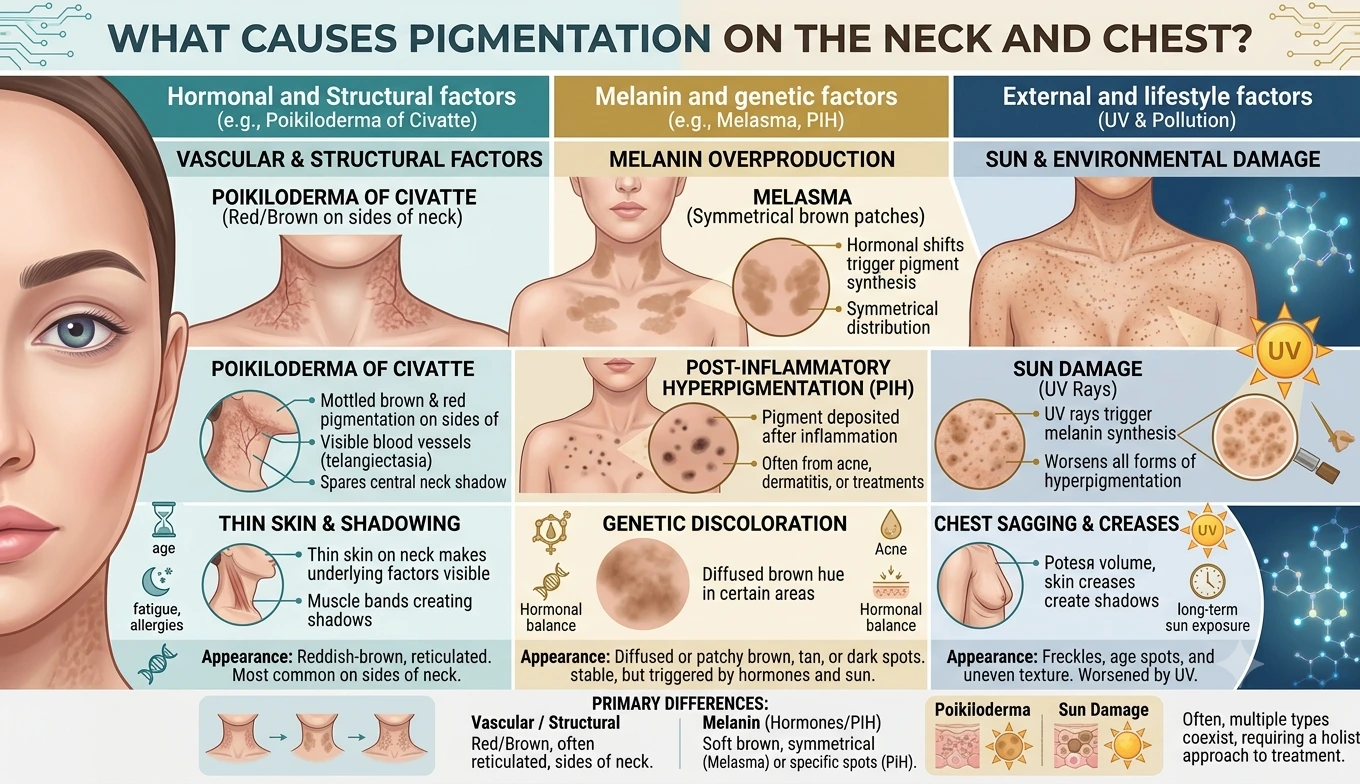
What Causes Pigmentation on the Neck and Chest?
Pigmentation on the neck and chest is usually caused by a combination of sun exposure, friction, ageing, and inflammation, all of which trigger the skin to produce extra melanin in patches. These areas are often overlooked in daily skincare routines, yet they are exposed to many of the same triggers as the face, sometimes with less protection. Over time, this can lead to uneven tone, brown patches, and a texture that feels rougher than the surrounding skin. Many practitioners now support clients with professional resurfacing options such as the Trexyne Peel, which works through a botanical mechanism to support smoother, more even-looking skin over time. This article looks at why pigmentation develops on the neck and chest and what tends to help.
Why the Neck and Chest Are Prone to Pigmentation
The skin on the neck and chest shares some similarities with facial skin, but it also has some important differences. It is generally thinner than skin on the body, with fewer oil glands and less natural cushioning. At the same time, it is frequently exposed to the sun, whether during outdoor activity, while driving, or simply while wearing clothing that leaves the area uncovered.
Unlike the face, the neck and chest are often left out of daily sunscreen application. This gap in protection, combined with the area’s natural thinness, makes it particularly susceptible to sun-related pigmentation over the years. Add in factors like friction from clothing, jewellery, or bra straps, and the skin here can develop uneven tone earlier than many people expect.
A Frequently Neglected Zone
Many skincare routines stop at the jawline, leaving the neck and chest without the same level of care given to the face. This inconsistency can create a visible difference in tone and texture between the two areas over time, sometimes referred to informally as a mismatched complexion.
Sun Exposure: The Leading Cause
Cumulative sun exposure is widely considered the most significant contributor to pigmentation on the neck and chest. Ultraviolet rays stimulate melanocytes, the pigment-producing cells in the skin, prompting them to generate more melanin as a protective response.
How UV Damage Builds Over Time
This process happens gradually, often without a single dramatic sunburn to mark it. Years of low-level sun exposure, whether from short walks, gardening, or sitting near a window, can accumulate and eventually show up as flat brown patches, commonly known as sun spots or solar lentigines.
Why the Chest Is Particularly Vulnerable
The chest is frequently exposed during warmer months, often with minimal or no sunscreen applied. Because clothing necklines vary from day to day, some areas of the chest may receive inconsistent sun exposure, which can lead to a mottled or patchy pattern of pigmentation rather than an even tan.
Hormonal Factors and Pigmentation
Hormonal changes can influence melanin production across the body, and the neck and chest are not exempt.
Pregnancy and Hormonal Fluctuations
Some people notice increased pigmentation on the neck and chest during pregnancy or while using hormonal contraception. This is thought to be linked to melanocyte-stimulating hormones and tends to affect areas of the body already prone to pigmentation, including the neck.
Ageing and Hormonal Shifts
As oestrogen levels shift with age, some individuals become more prone to developing pigmented patches. This is often seen alongside other visible signs of ageing in the neck and chest area, such as reduced elasticity and fine lines.
Friction and Mechanical Irritation
Friction is an underappreciated cause of pigmentation in this part of the body.
Clothing, Jewellery, and Repeated Rubbing
Necklaces, bra straps, and tight collars can create ongoing friction against the skin. Repeated rubbing in the same spot, day after day, may lead to a form of pigmentation known as friction melanosis, where the skin darkens in response to constant mechanical irritation.
Why This Type of Pigmentation Can Be Persistent
Because the trigger is mechanical rather than purely UV-related, friction-related pigmentation can be harder to shift with sun protection alone. It often requires a combination of reducing the irritation and supporting the skin’s natural renewal process.
Post-Inflammatory Hyperpigmentation
Any form of inflammation on the neck or chest, including acne, eczema, folliculitis, or an allergic reaction, can leave behind a mark once the initial issue resolves. This is known as post-inflammatory hyperpigmentation, and it is particularly common in areas prone to breakouts, such as the upper chest and along the jawline extending down the neck.
Why the Chest Is a Common Site for Breakout-Related Marks
The chest has a higher density of oil glands compared with some other body areas, which can make it more prone to breakouts, particularly during hot or humid weather or after sweating during exercise. Each breakout carries the potential to leave a pigmented mark behind, especially if the skin is picked or squeezed.
Ageing, Sun Damage, and Skin Texture Changes
As skin ages, several changes tend to occur together on the neck and chest.
Collagen Loss and Thinning Skin
Reduced collagen production means the skin becomes thinner and less resilient over time. This can make existing pigmentation appear more pronounced, simply because there is less healthy tissue to dilute or soften its appearance.
Photoageing and Uneven Texture
Long-term sun exposure, sometimes referred to as photoageing, contributes not only to pigmentation but also to a rougher, more uneven skin texture. This combination of tone and texture changes is one of the reasons the neck and chest can appear to age faster than skin that has been consistently protected.
Why Skin Renewal Matters for Neck and Chest Pigmentation
Regardless of the specific cause, skin that renews efficiently tends to display pigmentation less prominently. As new skin cells rise to the surface, they gradually replace older, more pigmented tissue, which can help even out tone over time.
When this renewal process slows, whether due to age, cumulative sun damage, or simply the natural passage of time, pigmented patches can become more established and harder to shift with topical products alone. This is why many practitioners look toward professional resurfacing treatments to help support the skin’s own renewal cycle.
The Role of Professional Resurfacing Treatments
For clients dealing with pigmentation on the neck and chest, professional-grade resurfacing can be a valuable addition to a broader skincare strategy. This is where treatments such as the Trexyne Peel fit into a practitioner’s toolkit.
How the Trexyne Peel Works
The Trexyne Peel is a precision botanical peel built around marine-algae spicules and stabilised Vitamin E. Rather than relying on chemical exfoliants, Trexyne resurfaces and refines the skin through a purely mechanical mechanism. The marine-algae spicules create controlled micro-channels in the surface layers of the skin, encouraging the skin’s natural renewal process without the use of acids.
This mechanical approach means there is no chemical penetration involved, which is often appreciated when working on areas like the neck and chest, where skin can be thinner and more reactive than facial skin in some clients. The infusion of stabilised tocopherol, a form of Vitamin E, is designed to support the skin’s recovery phase from the very first application.
Matching Treatment Intensity with a Tiered Protocol
A key feature of the Trexyne system is its tiered protocol, which allows practitioners to match treatment intensity to the client’s skin type and expectations around downtime. Because the mechanism is mechanical rather than chemical, the treatment is associated with predictable downtime, without the surprises that can sometimes accompany other resurfacing approaches.
It is worth noting that the Trexyne Peel is designed for use exclusively by trained aesthetic professionals and is not intended for home use. Each 30ml practitioner vial provides approximately six to eight full-face treatments, making it a practical addition to a clinic’s professional-only treatment menu. Clinics interested in stocking the product can explore options through the Trexyne shop.
Daily Habits That Support an Even Tone on the Neck and Chest
Alongside professional treatments, a few consistent daily habits can make a meaningful difference to pigmentation on the neck and chest.
Extend Sunscreen Application Beyond the Face
One of the simplest and most effective habits is extending daily sunscreen application down to the neck and chest, not just the face. This single step can help prevent new pigmentation from forming and can protect the results of any professional treatment.
Reduce Friction Where Possible
Choosing looser necklines, adjusting jewellery placement, or opting for softer fabrics can help reduce ongoing friction against the skin. Over time, this may lessen the likelihood of friction-related pigmentation developing or worsening.
Avoid Picking at Breakouts
For clients prone to chest breakouts, resisting the urge to pick or squeeze can reduce the risk of post-inflammatory pigmentation forming in the aftermath.
When to Seek Professional Support
While daily habits play an important role, persistent or worsening pigmentation on the neck and chest is often best assessed by a trained professional. A practitioner can help identify whether sun exposure, friction, hormonal factors, or inflammation are the primary drivers, and can recommend a treatment plan suited to the individual’s skin type and goals.
If you are a practitioner looking to expand your pigmentation treatment offering for the neck and chest, or a clinic exploring professional-grade resurfacing options, the Trexyne team can be reached directly through the contact page for further guidance on protocols and stock.
Building a Long-Term Approach to Neck and Chest Pigmentation
Consistent, long-term care tends to bring the most reliable results for pigmentation on the neck and chest. This typically includes daily sun protection extended beyond the face, gentle handling of friction-prone areas, prompt management of breakouts or irritation, and periodic professional support where appropriate.
For clinics building out a comprehensive pigmentation and resurfacing menu, exploring the full product range on the Trexyne homepage can offer a clearer picture of how mechanical resurfacing fits alongside other professional treatments.
Conclusion
Pigmentation on the neck and chest tends to develop from a mix of sun exposure, friction, hormonal changes, and post-inflammatory marks, often made more visible as skin thins and renews itself more slowly with age. Because these areas are frequently left out of daily sunscreen routines, they can be particularly prone to uneven tone building up over time.
A considered, long-term approach that combines daily sun protection, reduced friction, and professional support tends to bring the most consistent improvement. For clients dealing with pigmentation on the neck or chest, the Trexyne Peel offers a mechanical, botanical approach to resurfacing that may help support a brighter, more even-looking complexion over time, without relying on chemical exfoliants.
Frequently Asked Questions
Q: Why does pigmentation on the neck and chest often look worse than on the face?
This is often because the neck and chest are less consistently protected with sunscreen than the face, allowing sun-related pigmentation to build up more noticeably over time.
Q: Can jewellery or clothing really cause pigmentation?
Yes, repeated friction from necklaces, bra straps, or tight collars can lead to a form of pigmentation known as friction melanosis, where constant rubbing causes the skin to darken in that specific area.
Q: Does chest acne lead to permanent pigmentation?
Chest breakouts can leave behind post-inflammatory hyperpigmentation, particularly if the skin is picked or squeezed. While this discolouration is not necessarily permanent, it can take time to fade without support.
Q: Is pigmentation on the chest linked to hormones?
Hormonal fluctuations, including those related to pregnancy or contraception, are thought to influence melanin production and may contribute to pigmentation on the chest and neck in some individuals.
Q: Can the Trexyne Peel be used on the neck and chest?
The Trexyne Peel is a professional-only botanical resurfacing treatment that works through a mechanical mechanism using marine-algae spicules. It is designed to support skin renewal and may help contribute to a brighter, more even-looking complexion when used as part of a professional treatment plan.
Q: How can I prevent pigmentation on my neck and chest from getting worse?
Extending daily sunscreen application to the neck and chest, reducing friction from clothing or jewellery, and avoiding picking at breakouts can all help reduce the likelihood of pigmentation worsening over time.
Q: Does pigmentation on the neck and chest fade on its own?
Some post-inflammatory marks can fade gradually with consistent sun protection and gentle skincare, but sun-related and friction-related pigmentation often becomes more established over time without targeted support.