Can a Professional Peel Be Used Near the Eye Area?
Yes, a professional peel can be used near the eye area, but only when the treatment is designed with that sensitivity in mind. The skin around the eyes is thinner, more reactive, and less forgiving than skin on the rest of the face, which means the choice of peel matters enormously. Many practitioners avoid the periorbital zone altogether because chemical peels carry a real risk of irritation, stinging, or uneven results in this area. This is one of the reasons mechanical, non-chemical options such as the Trexyne Peel have become a talking point in clinics that want to address fine lines and dullness around the eyes without the unpredictability that acids can bring. In this article, we look at why the eye area needs special consideration, what makes a peel suitable or unsuitable for it, and how a controlled, mechanical approach can be worked into a client’s treatment plan safely.
Why the Eye Area Behaves Differently From the Rest of the Face
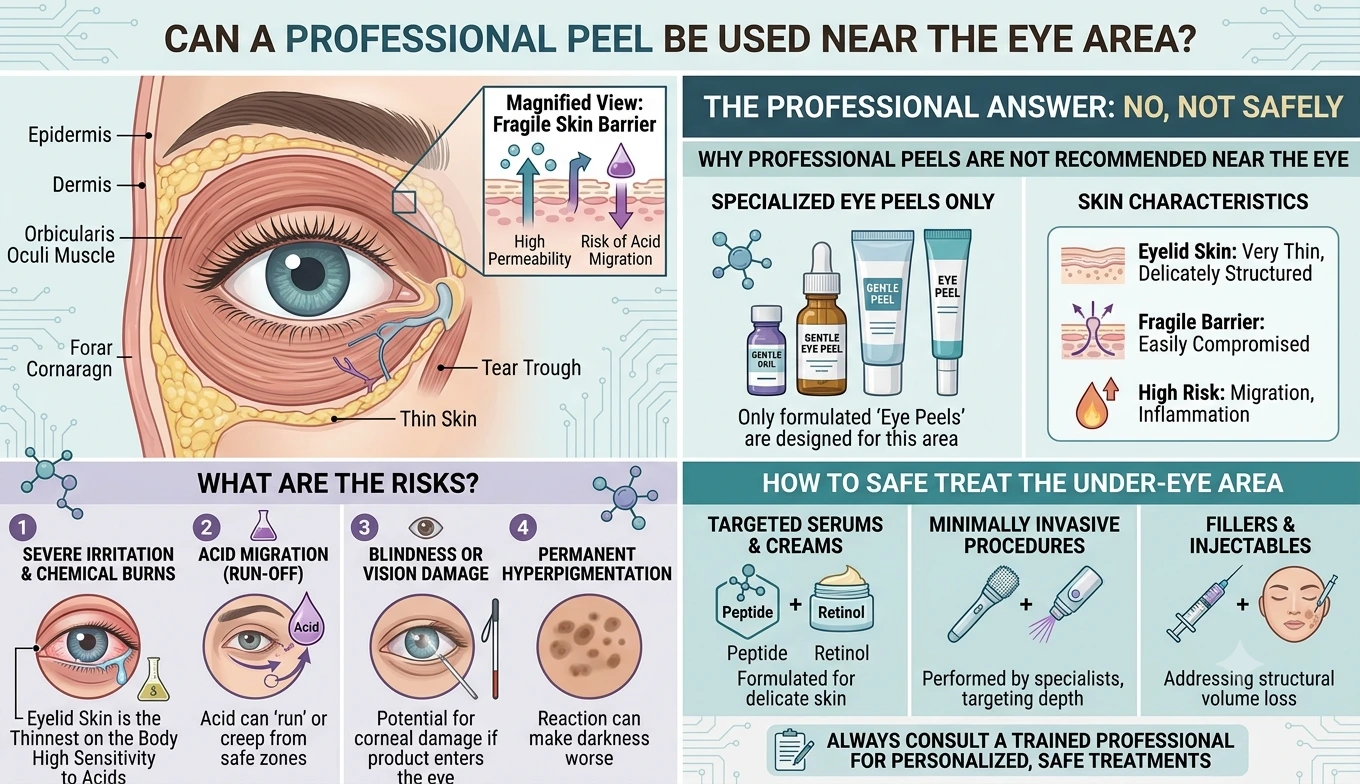
The skin surrounding the eyes is structurally unlike the skin on the cheeks, forehead, or jawline. It is thinner, has fewer sebaceous glands, and sits directly over delicate underlying tissue with very little fat padding for protection. This means anything applied too close to the orbital bone can migrate, spread, or penetrate more deeply than intended.
Reduced Barrier Function
Because the stratum corneum is thinner around the eyes, the skin’s natural barrier is weaker in this zone. Products that would sit comfortably on thicker facial skin can cause a stronger reaction here, including redness, tightness, or a burning sensation.
Higher Sensitivity to Irritants
Nerve density around the eyes is higher than in most other facial areas, which is part of why clients report stinging or discomfort so quickly when something isn’t suited to that region. A practitioner assessing a client for any resurfacing treatment near the eyes needs to factor in this heightened responsiveness before deciding on intensity or product choice.
The Problem With Chemical Peels Around the Eyes
Traditional chemical peels rely on acids to dissolve the bonds between dead skin cells, encouraging them to shed. While this can be effective on thicker skin, it becomes far riskier near the eyes.
Acids can migrate along the fine, mobile skin in this area, particularly if a client blinks, squints, or moves during application. There is also a narrower margin for error when it comes to strength and timing, since the same concentration that works well on the cheek can cause overexposure just a few centimetres away, closer to the lash line. This is why many practitioners are cautious, or avoid the area entirely, when working with acid-based formulations.
A Different Approach: Mechanical Resurfacing
This is where a mechanical mechanism, rather than a chemical one, becomes relevant. The Trexyne Peel is built around marine-algae spicules that create controlled micro-channels in the skin’s surface. There are no acids involved and no chemical exfoliation taking place. The resurfacing effect comes from the physical action of the spicules themselves, which practitioners can control far more precisely than they can control acid penetration.
Why a Mechanical Mechanism Offers More Control
Because the Trexyne Peel works mechanically, the practitioner has direct influence over how much pressure and product is applied in a given pass. This tiered protocol allows the treatment to be matched to skin type and client expectation, which is particularly useful in a delicate zone like the periorbital area, where predictability matters more than in most other parts of the face.
The Role of Stabilised Vitamin E
The formulation also includes stabilised tocopherol, or Vitamin E, which supports the skin’s recovery phase from the very first application. In an area that is already more prone to sensitivity, having a recovery-supportive ingredient built into the treatment itself can make a meaningful difference to how comfortable the process feels for the client.
Assessing a Client Before Treating Near the Eyes
Before any practitioner considers working close to the orbital area, a proper skin assessment is essential. This isn’t a step to rush, regardless of how experienced the practitioner is or how many times they’ve performed the treatment before.
Checking for Existing Conditions
Any active irritation, broken skin, recent cosmetic procedures in the area, or known sensitivities should be identified during consultation. Clients with a history of reacting badly to skincare products around the eyes need a more conservative approach, and this should be documented clearly.
Setting Realistic Expectations
Clients often expect dramatic results from any resurfacing treatment, but the eye area typically responds more gradually than other parts of the face. Being upfront about this during consultation helps avoid disappointment and builds trust in the process.
How Distance From the Orbital Rim Affects Technique
Not every part of the “eye area” carries the same level of risk. Practitioners generally work in defined zones, adjusting technique as they move closer to the lash line.
The Outer Orbital Region
The skin slightly further from the lash line, closer to the temple and upper cheek, tends to be a little thicker and more tolerant of resurfacing work. This is often where a practitioner will begin, assessing the client’s response before deciding whether to work any closer.
The Immediate Periorbital Zone
Right along the orbital bone and close to the lash line, caution increases significantly. Many practitioners choose to work with reduced pressure or fewer passes in this specific area, prioritising a gentle, even result over intensity.
Signs a Peel Is Being Tolerated Well
During and after treatment, there are indicators that suggest the skin is responding appropriately rather than being overworked.
During the Session
Mild warmth or a light tingling sensation is generally expected, but sharp pain, sudden intense burning, or visible blanching are signs to stop and reassess immediately.
In the Hours Afterwards
Some redness and mild puffiness can be normal in the hours following treatment, particularly in a delicate area like this. However, this should settle within a reasonable timeframe rather than intensifying or spreading.
Aftercare Considerations Specific to the Eye Area
Aftercare near the eyes needs to be more deliberate than aftercare for the rest of the face, simply because the skin is thinner and the area is more exposed to daily movement, rubbing, and product transfer from other routines.
Gentle Cleansing
Clients should be advised to cleanse gently around the treated area, avoiding vigorous rubbing or the use of exfoliating cloths and devices while the skin is recovering.
Sun Protection
The eye area is particularly vulnerable to sun exposure, and clients should be reminded that sunglasses and appropriate sun protection matter just as much here as on any other treated skin.
Avoiding Additional Actives
In the days following treatment, clients should generally avoid layering additional active ingredients, such as retinoids, directly over the treated area, to give the skin space to recover without added stress.
Building the Eye Area Into a Wider Treatment Plan
Many clients seeking improvement around the eyes are also looking at their skin more broadly, whether that’s overall tone, texture, or a general sense of radiance. Practitioners can use this as an opportunity to talk through a fuller treatment plan rather than treating the eye area in isolation.
Combining With Full-Face Sessions
Some clinics choose to incorporate a more cautious pass near the eyes as part of a broader full-face session, using the same Trexyne Peel vial across the whole face while adjusting pressure and technique as they move into more sensitive zones.
Spacing Out Sessions for Sensitive Clients
For clients with particularly reactive skin, it may be more appropriate to treat the eye area on a separate, more spaced-out schedule than the rest of the face, allowing extra recovery time between sessions.
Why Practitioners Are Moving Towards Mechanical Options
There has been a noticeable shift among aesthetic professionals towards treatments that offer more predictability, particularly for delicate zones like the eye area. A mechanical mechanism removes some of the guesswork that comes with chemical penetration, since the practitioner is directly controlling the physical action rather than waiting to see how an acid will behave on a particular client’s skin.
This predictability is part of why products like the Trexyne Peel are being incorporated into treatment menus for clients who specifically ask about improving the appearance of the under-eye and outer-eye area, without wanting to risk the downtime or unpredictability associated with more aggressive chemical options. Clinics interested in adding this to their offering can browse the full range via the Trexyne shop or get in touch with the team through the Trexyne contact page to discuss training and clinic requirements.
Conclusion
The eye area is one of the most delicate zones on the face, with thinner skin, a weaker barrier, and a lower tolerance for aggressive treatments. Chemical peels can be difficult to control in this region, which is why many practitioners look for alternatives that offer more precision. A mechanical approach, using marine-algae spicules rather than acids, allows the practitioner to adjust pressure and intensity directly, rather than relying on chemical penetration to behave predictably near such sensitive tissue. With stabilised Vitamin E supporting the skin’s recovery phase from the first application, the Trexyne Peel offers clinics a way to approach the eye area with a tiered, controlled protocol matched to each client’s skin type. For practitioners looking to expand what they can safely offer around the eyes, this kind of predictable, non-chemical mechanism is worth understanding fully before bringing it into a treatment plan. Learn more on the Trexyne homepage.
FAQs
Q: Is it safe to have a peel done close to the eyes?
It can be safe when the treatment and technique are appropriate for that area. A thorough consultation, careful technique, and a product designed with sensitivity in mind all help reduce risk when working close to the eyes.
Q: What is the best type of peel for sensitive skin around the eyes?
Non-chemical, mechanical options tend to be better suited to sensitive areas like the eyes, since the practitioner has more direct control over pressure and intensity rather than relying on chemical penetration.
Q: Can the Trexyne Peel be used near the under-eye area?
The Trexyne Peel works through a mechanical mechanism using marine-algae spicules, which allows a trained practitioner to adjust pressure and passes according to the sensitivity of the area being treated.
Q: How long does it take for the eye area to recover after a resurfacing treatment?
Recovery time can vary depending on the client’s skin and the intensity used, but mild redness or puffiness in the hours afterwards is common and generally settles within a short period.
Q: Are chemical peels riskier than mechanical peels around the eyes?
Chemical peels can be harder to control near the eyes because acids may migrate or penetrate unpredictably on thin, mobile skin. A mechanical mechanism gives the practitioner more direct control over the treatment.
Q: Can I have my whole face treated including the eye area in one session?
Some clinics do combine a cautious pass near the eyes with a full-face treatment, adjusting technique as they move into more sensitive zones, while others prefer to treat the eye area separately for clients with reactive skin.
Q: Does treating the eye area require special training?
Yes. Working close to the orbital area requires a proper understanding of the skin’s anatomy in that zone, along with training specific to the product being used, which is why professional peels like Trexyne are sold exclusively to verified practitioners and clinics.