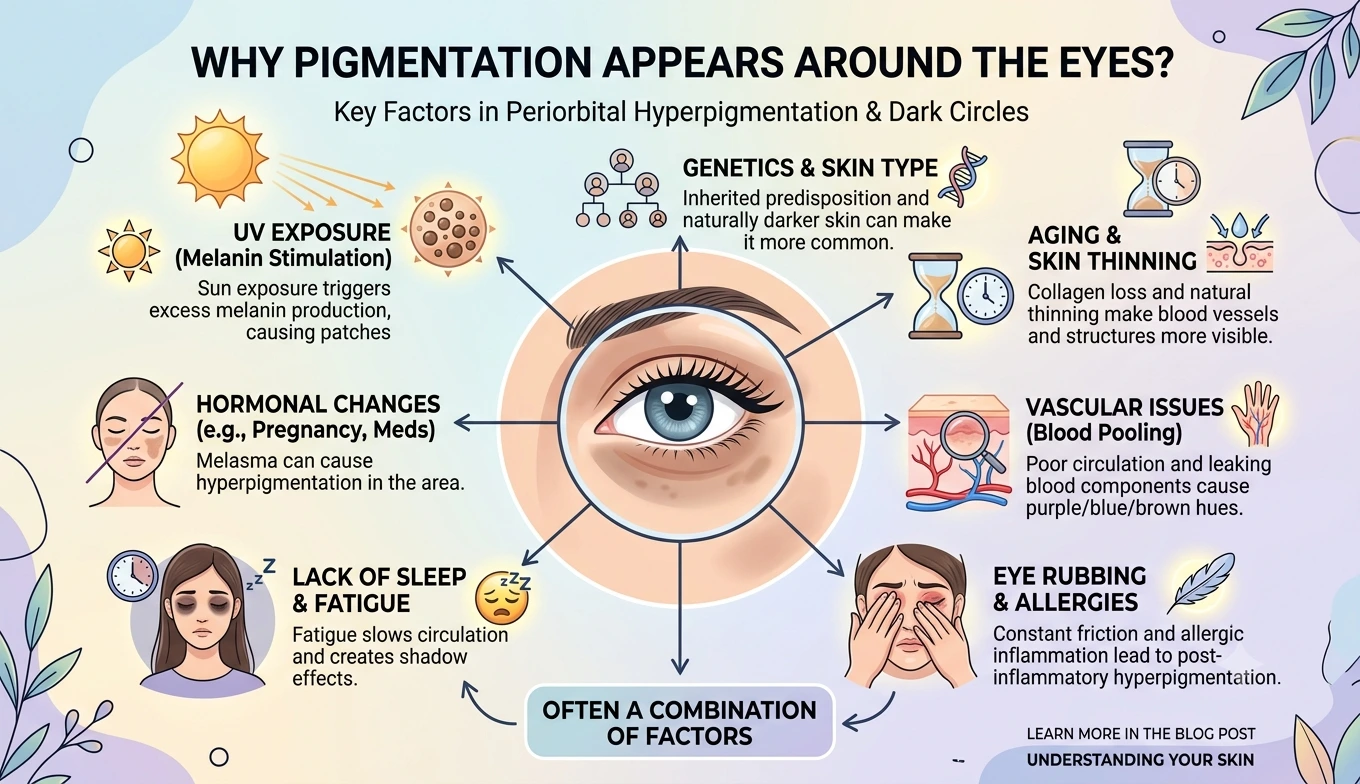
Why Does Pigmentation Appear Around the Eyes?
Pigmentation around the eyes usually appears due to a combination of thin skin, genetics, sun exposure, and repeated friction or inflammation in that area. The skin around the eyes is significantly thinner than skin elsewhere on the face, which makes underlying blood vessels and melanin changes more visible. Add in years of sun exposure, natural ageing, and habits like rubbing the eyes, and this delicate area becomes especially prone to visible darkening or uneven tone. For clients dealing with this concern, professional resurfacing treatments such as the Trexyne Peel can play a helpful role in supporting a brighter, more even-looking appearance around the eyes, using a purely botanical and mechanical approach.
Understanding the Unique Skin Around the Eyes
The periorbital area, meaning the skin surrounding the eyes, is structurally different from the rest of the face. It is thinner, has fewer oil glands, and contains less collagen and elastin support. This makes it more fragile and more prone to visible changes, including pigmentation, compared to skin on the cheeks or forehead.
Because this skin is so delicate, it also reacts more visibly to stress, inflammation, and sun exposure. Practitioners often see pigmentation here before it becomes noticeable elsewhere on the face, which is why this area deserves particular attention during a client consultation.
Common Causes of Under-Eye and Periorbital Pigmentation
Genetics and Family History
For many clients, pigmentation around the eyes has a strong genetic component. Some people are simply predisposed to producing more melanin in this area, and this tendency often runs in families. Clients with a family history of dark circles or periorbital pigmentation may notice the concern appearing earlier in life and becoming more pronounced with age.
Sun Exposure and UV Damage
The skin around the eyes receives just as much sun exposure as the rest of the face, yet it is often the most neglected area when it comes to sun protection. Repeated UV exposure stimulates melanin production as a protective response, and over time this can lead to visible darkening, particularly along the lower eyelid and outer corners.
Thinning Skin and Visible Blood Vessels
As skin thins with age, blood vessels beneath the surface become more visible. This can create a bluish or dark discolouration that is often mistaken for pigmentation, though the two can also occur together. Practitioners should assess whether a client’s concern is primarily pigment-related, vascular, or a combination of both, as this affects treatment planning.
Repeated Friction and Rubbing
Frequent eye rubbing, whether due to allergies, contact lens irritation, or habit, can cause a form of inflammation known as post-inflammatory hyperpigmentation. Over time, repeated friction triggers the skin to produce more melanin as a protective response, which can darken the area gradually.
The Role of Inflammation in Periorbital Pigmentation
Inflammation is one of the most common drivers of pigmentation, particularly in the delicate eye area. Conditions such as eczema, allergic reactions, and even chronic eye strain can trigger low-grade inflammation that leads to excess melanin production. This is known as post-inflammatory hyperpigmentation, and it tends to appear as flat, brownish patches rather than uniform darkening.
Clients who mention a history of skin sensitivity, allergies, or eye irritation around this area are often good candidates for a broader skin assessment before starting any resurfacing treatment. Addressing the underlying inflammatory trigger alongside professional treatment tends to produce more consistent results.
How Lifestyle and Sleep Patterns Affect the Eye Area
Sleep Deprivation
Poor sleep is closely associated with a tired, dull appearance around the eyes. While sleep deprivation is more commonly linked to puffiness and shadowing rather than true pigmentation, chronic sleep disruption can worsen the appearance of existing pigment by reducing circulation and increasing visible dullness in the surrounding skin.
Dehydration and Thinning Skin
Dehydrated skin appears thinner and more translucent, which can make pigmentation and underlying blood vessels more prominent. Maintaining good hydration, both through skincare and daily water intake, can support a more even-looking appearance over time.
Digital Eye Strain
With increased screen time, many clients report more noticeable darkening around the eyes. Prolonged eye strain can lead to subtle inflammation and rubbing, both of which may contribute to pigmentation over time, particularly in clients who already have a genetic predisposition.
Why the Eye Area Needs a Gentle Yet Effective Approach
Because the skin around the eyes is thinner and more reactive than other facial areas, it requires a treatment approach that is both effective and considerate of its fragility. Aggressive chemical exfoliation can be particularly risky in this area, often leading to irritation, sensitivity, or uneven results.
This is where a mechanical, botanical approach becomes particularly valuable. Treatments that work without acids can offer practitioners more predictable control, which is especially important when treating skin this delicate.
How Trexyne Peel Supports Pigmentation Around the Eyes
A Mechanical, Botanical Mechanism
The Trexyne Peel is built around marine-algae spicules that create controlled micro-channels in the skin’s surface. This mechanical mechanism works without chemical exfoliants, which makes it a suitable consideration for practitioners looking to treat pigmentation in more delicate areas, including around the eyes, with a gentler overall approach.
Because the treatment does not rely on acid penetration, practitioners can adjust intensity carefully, which is particularly important when working near such a sensitive part of the face.
Vitamin E for Recovery Support
Trexyne is also infused with stabilised Vitamin E, which supports the skin’s recovery phase from the very first application. This can be particularly relevant for the eye area, where skin often needs extra support to recover well after any resurfacing treatment.
A Tiered Protocol for Precision
One of the most useful aspects of the Trexyne system for practitioners is its tiered protocol, which allows intensity to be matched to skin type and client expectation. This flexibility is especially valuable around the eyes, where a one-size-fits-all approach is rarely appropriate. Practitioners can browse the full range via the Trexyne shop to understand how the tiered system fits into a broader treatment plan for periorbital concerns.
Building a Treatment Plan for Periorbital Pigmentation
A thoughtful treatment plan for pigmentation around the eyes usually starts with a thorough consultation. Practitioners should ask about family history, sun exposure habits, allergies, sleep patterns, and any history of eye rubbing or irritation. This helps determine whether the pigmentation is primarily genetic, inflammatory, vascular, or a combination of factors.
From there, a tiered approach using treatments like the Trexyne Peel can be introduced gradually, starting with a lower intensity setting to assess how the delicate eye area responds. Sessions can then be adjusted based on client tolerance and visible progress. Practitioners who are unsure how to structure a protocol for this area are encouraged to reach out via the Trexyne contact page for further guidance.
Supporting At-Home Habits Between Clinic Visits
Professional treatments work best when supported by good daily habits. Practitioners can advise clients to:
- Apply broad-spectrum sun protection around the eyes daily, even on cloudy days
- Avoid rubbing the eyes, particularly when tired or irritated
- Address any underlying allergies or sensitivities with appropriate management
- Stay well hydrated to support overall skin thickness and resilience
- Prioritise consistent, good-quality sleep where possible
These small, consistent habits can make a meaningful difference in how well the skin responds to in-clinic treatment and how long results are maintained. For clients wanting to understand more about the brand’s overall approach to skin renewal, the Trexyne homepage offers a helpful overview.
When to Refer for Further Assessment
While most periorbital pigmentation is cosmetic in nature, practitioners should remain alert to cases that may require referral. Sudden, asymmetric, or rapidly changing pigmentation should always be assessed by a medical professional before any aesthetic treatment is considered, as should any pigmentation accompanied by swelling, pain, or other unusual symptoms.
Conclusion
Pigmentation around the eyes develops for several interconnected reasons, including genetics, sun exposure, thinning skin, inflammation, and lifestyle factors such as sleep and screen time. Because this area of skin is thinner and more delicate than the rest of the face, it often benefits from a gentler treatment approach. The Trexyne Peel offers a botanical, mechanical way to support skin renewal in this sensitive area, helping practitioners work toward a brighter and more even-looking appearance around the eyes as part of a considered, tiered treatment plan.
FAQs
Q: Why does pigmentation around the eyes seem worse than on the rest of the face?
The skin around the eyes is thinner and more delicate than skin elsewhere, which makes pigmentation, blood vessels, and inflammation more visible. This is why periorbital pigmentation often appears more pronounced even when overall skin tone elsewhere looks even.
Q: Can rubbing my eyes cause dark pigmentation to develop?
Yes, repeated friction from rubbing can trigger inflammation that leads to post-inflammatory hyperpigmentation over time. Reducing this habit, alongside professional treatment, may help support a more even-looking appearance.
Q: Is the Trexyne Peel safe to use near the delicate eye area? Trexyne’s tiered protocol allows practitioners to adjust intensity carefully, which can make it a suitable consideration for delicate areas when applied by a trained professional following an appropriate assessment.
Q: Does lack of sleep cause pigmentation around the eyes?
Sleep deprivation is more closely linked to dullness and reduced circulation than true pigmentation, though chronic sleep disruption may make existing pigment appear more noticeable over time.
Q: How is genetic pigmentation around the eyes different from sun-related pigmentation?
Genetic pigmentation tends to appear earlier in life and often runs in families, while sun-related pigmentation typically develops gradually with cumulative UV exposure. Both can occur together in the same client.
Q: Can the Trexyne Peel be used instead of chemical peels for eye area pigmentation?
Yes, Trexyne works through a mechanical mechanism using marine-algae spicules rather than chemical exfoliants, offering practitioners an alternative approach for clients seeking treatment without acid-based methods.
Q: How many sessions are typically needed to see improvement in periorbital pigmentation?
This varies depending on the underlying cause and skin type. Practitioners can assess this during a consultation and recommend a suitable course using the Trexyne tiered protocol, adjusting as needed based on client response.