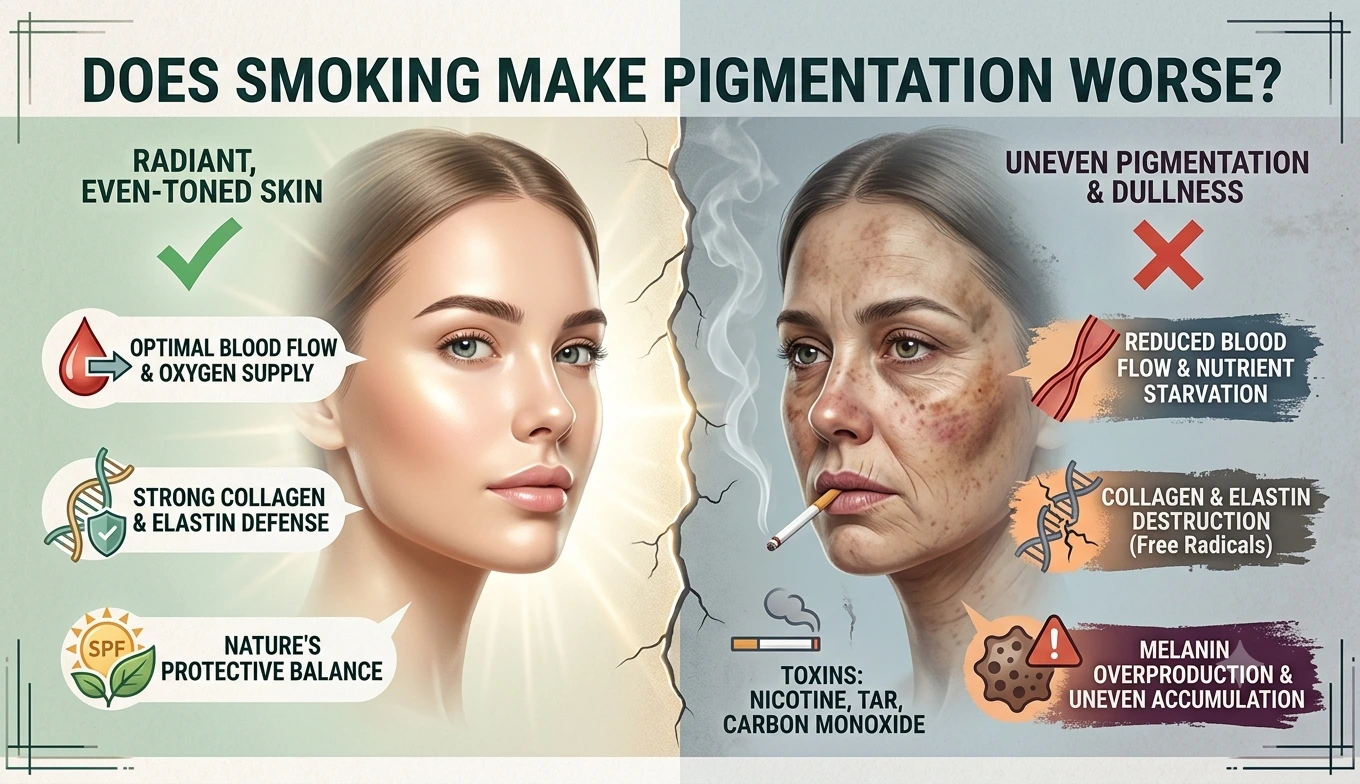
Does Smoking Make Pigmentation Worse?
Yes, smoking does make pigmentation worse. The chemicals in cigarette smoke damage collagen, restrict circulation and trigger oxidative stress in the skin, and together these effects encourage excess melanin production while slowing the skin’s natural repair process. Many smokers notice dull, uneven tone, stubborn dark patches, and pigmentation that seems to linger for far longer than expected.
As a practitioner, I see this pattern regularly in clinic. Smoking does not only affect the lungs, it changes how skin behaves at a cellular level, and that change shows up clearly on the face. The encouraging part is that targeted professional treatment can support a brighter, more even-looking complexion, even in clients who currently smoke or who smoked in the past. The Trexyne Peel is one option we use in clinic to help resurface and refine pigmented skin, with no acids and no extended downtime.
What Causes Pigmentation in the First Place
Pigmentation develops when melanocytes, the cells responsible for producing melanin, become overactive in certain areas of the skin. This can happen for several reasons, including sun exposure, hormonal changes, inflammation, and injury to the skin. Understanding these root causes is useful groundwork before looking specifically at how smoking fits into the picture.
When skin experiences trauma, whether from UV rays, a blemish, a burn, or general irritation, it responds by producing extra melanin as a protective measure. This is sometimes called post-inflammatory hyperpigmentation, and it is one of the most common forms of pigmentation seen in clinic. Over time, this uneven distribution of pigment becomes visible as dark spots, patches, or an overall uneven skin tone that clients often describe as tired-looking or dull.
Genetics also play a role in how reactive a person’s skin is to these triggers. Some clients develop pigmentation easily, while others rarely see it, even with similar sun exposure or lifestyle habits. Skin tone itself can influence this too, with deeper skin tones sometimes more prone to visible post-inflammatory marks.
Understanding these underlying causes matters because it shapes how a practitioner approaches treatment. Pigmentation is rarely caused by a single factor, and lifestyle habits, including smoking, can compound existing triggers rather than act alone. This is why a thorough consultation, rather than a one-size-fits-all approach, tends to give the best results.
In clinic, it is common to see clients presenting with more than one pigmentation trigger at once. A client may have sun-related pigmentation on the cheeks, hormonal pigmentation across the forehead, and smoking-related dullness around the mouth, all overlapping in the same complexion. Recognising each contributing factor helps a practitioner build a more realistic, layered treatment plan rather than expecting a single approach to resolve everything at once.
How Smoking Affects the Skin at a Cellular Level
Oxidative Stress and Free Radical Damage
Cigarette smoke contains thousands of chemical compounds, and many of these generate free radicals when they come into contact with the skin or enter the bloodstream. Free radicals are unstable molecules that damage healthy cells, including the collagen and elastin fibres that keep skin firm and even in tone.
This oxidative stress can also disrupt normal melanocyte function, which may encourage patchy or excessive pigment production. Skin that experiences ongoing oxidative stress often struggles to maintain a balanced, even complexion, and this effect tends to build cumulatively the longer someone smokes.
Antioxidants naturally present in the skin help to neutralise some of this damage, but heavy or prolonged oxidative stress can outpace the skin’s own defences. This is one reason many practitioners look for antioxidant-supportive ingredients, such as vitamin E, when planning treatment for clients who smoke.
Over years of smoking, this cumulative oxidative burden can leave skin looking generally tired, with a texture that feels less resilient and a tone that appears uneven even in areas without obvious dark spots. Clients sometimes describe this as their skin simply looking older than they feel it should, which is often an early sign that oxidative stress has been building for some time.
Reduced Blood Flow and Oxygen Delivery
Nicotine causes blood vessels to narrow, a process known as vasoconstriction, which reduces circulation to the skin’s surface. This means less oxygen and fewer nutrients reach skin cells, slowing down the natural renewal process. Skin that is not receiving adequate oxygen tends to look duller and takes longer to recover from any form of pigmentation, blemish or minor injury.
Reduced circulation also affects how efficiently the skin can clear away excess pigment, which is one reason smokers often notice that dark marks take longer to fade compared to non-smokers with similar skin types. In clinic, this reduced circulation can also make skin appear more sallow overall, even in areas without obvious pigmentation.
This is sometimes described as a smoker’s complexion, a combination of dullness, uneven tone and a slightly greyish cast that can be present even before distinct pigmentation patches develop. Recognising this early pattern can be useful, as it often signals that the skin’s renewal capacity is already under strain.
The Direct Link Between Smoking and Hyperpigmentation
Smoker’s Melasma
Some practitioners refer to a specific pattern of pigmentation seen in long-term smokers as smoker’s melasma. This tends to appear as greyish or brownish patches, often across the cheeks and around the mouth, and is thought to be associated with the combined effects of oxidative stress, reduced circulation and hormonal fluctuation linked to smoking.
This pattern can be more resistant to standard brightening skincare alone, partly because the underlying circulatory and oxidative environment keeps contributing to the problem even while topical products are being used correctly. Clients presenting with this pattern often benefit from a conversation about combined lifestyle and clinical factors, rather than being offered brightening products in isolation.
Patchy, Uneven Tone Around the Mouth and Cheeks
The repetitive movement of smoking, combined with reduced blood flow to the area, can also contribute to uneven tone concentrated around the lower face. Clients often describe this as a greyish dullness rather than distinct, well-defined spots, which can make it feel harder to address with targeted treatment alone.
Fine lines around the mouth, sometimes called smoker’s lines, frequently accompany this pigmentation pattern, which is why clients often ask about both concerns together during consultation.
Why Pigmentation Seems to Fade More Slowly in Smokers
Healthy, well-oxygenated skin generally has an efficient natural turnover cycle, meaning older, pigmented cells are shed and replaced with fresher ones over time. Smoking interferes with this cycle in several ways. Reduced circulation slows cell renewal, oxidative stress keeps triggering further pigment production, and lower collagen support means the skin’s overall repair capacity is compromised.
This combination can create a frustrating cycle for clients. They may follow a good skincare routine, use SPF diligently and still find that pigmentation persists or returns quickly. In clinic, this is often the point where clients ask about professional treatment, because home care alone is working against a skin environment that is not primed for renewal.
It is worth setting realistic expectations here. Pigmentation that has built up over years of smoking is unlikely to resolve overnight, and clients tend to respond best when they understand that a course of professional treatment, combined with consistent daily care, is usually needed to see meaningful change.
Explaining the biology behind this delay can also help clients stay motivated. When they understand that circulation and cell turnover, not just topical products, play a central role in how quickly pigmentation fades, they are often more patient with a gradual, session-by-session approach.
Smoking and Premature Skin Ageing: A Compounding Effect
Pigmentation rarely appears in isolation in smokers. It is commonly seen alongside other signs of premature ageing, including fine lines, reduced elasticity and a rougher skin texture. This is because smoking accelerates the breakdown of collagen and elastin while also depleting antioxidant reserves in the skin, including natural vitamin E levels.
This compounding effect matters for treatment planning. Addressing pigmentation in isolation, without considering overall skin resilience, may produce more limited results. A more comprehensive approach, one that supports renewal and resilience together, tends to be more effective for smokers presenting with pigmentation concerns.
Many clients are surprised to learn how closely linked pigmentation and premature ageing can be. Explaining this connection during consultation often helps clients understand why a practitioner might recommend a treatment plan that addresses skin texture and tone together, rather than pigmentation alone.
Vertical lines above the upper lip, sometimes noticeable earlier in smokers than non-smokers, are another common visible marker of this combined effect. While these lines are a separate concern from pigmentation itself, they often appear in the same clients and can factor into an overall treatment conversation.
Can Quitting Smoking Improve Pigmentation?
Stopping smoking is one of the most valuable things a client can do for their skin, and many practitioners see gradual improvements in circulation and overall skin tone once smoking stops. Better blood flow means more oxygen and nutrients reaching the skin, which can support a more even renewal process over time.
That said, quitting smoking does not reverse existing pigmentation on its own. Melanin that has already settled into the skin generally requires targeted professional treatment to visibly fade. Quitting simply creates a better environment for that treatment to work more effectively, since circulation and cell turnover are no longer working against the process.
For clients who have recently quit, this can be an encouraging time to begin a course of resurfacing treatment, as the skin is often more receptive to renewal than it was previously. Practitioners often find that these clients are also highly motivated, having already made a significant lifestyle change, which can support consistency with aftercare and sun protection between sessions.
You can find more information about how we support clients through this process at trexyne.com.
Professional Treatment Options for Smoking-Related Pigmentation
Why Mechanical Resurfacing May Suit This Skin Type
Because smokers’ skin often shows reduced resilience and slower renewal, gentle but effective resurfacing tends to be a sensible starting point. The Trexyne Peel works through a purely mechanical mechanism, using fine marine-algae spicules to create controlled micro-channels in the skin’s surface. This process may help encourage renewal and support a more even-looking tone without relying on chemical exfoliants.
The treatment is also infused with stabilised vitamin E, which supports the skin’s recovery phase from the very first application. For clients whose skin has been under additional oxidative stress from smoking, this kind of targeted antioxidant support can be a valuable part of the treatment plan, working alongside the resurfacing action rather than instead of it.
Because the protocol is tiered, practitioners can start conservatively for clients with more reactive or compromised skin, and adjust intensity as tolerance and results are assessed over a course of sessions. Practitioners interested in offering this treatment can explore the full range available at our full range.
What Happens During a Trexyne Peel Treatment
A Trexyne Peel treatment begins with a thorough skin assessment, allowing the practitioner to select the appropriate intensity for the client’s skin type and pigmentation concerns. Because the protocol is tiered, intensity can be matched carefully, which is particularly useful for clients whose skin may be more reactive due to smoking-related sensitivity.
During the treatment, the marine-algae spicules are applied to gently resurface the skin’s outer layer, creating controlled micro-channels that encourage the skin’s natural renewal response. Because the mechanism is mechanical rather than chemical, there are no acids involved and downtime tends to be predictable, which many clients appreciate when planning treatment around their routine and social commitments.
Most clients tolerate the treatment well, and practitioners can adjust intensity across a course of sessions as the skin responds. A single 30ml vial typically allows for six to eight full-face treatments, giving practitioners flexibility when planning a course for a client working through pigmentation concerns.
Because downtime tends to be predictable rather than prolonged, clients can generally plan sessions around work and social commitments with more confidence than they might with more intensive resurfacing options. This predictability is often part of what makes a course of treatment easier for clients to commit to and complete.
Supporting Skin Recovery Between Sessions
Good aftercare plays an important role in how well pigmentation responds to any resurfacing treatment. Consistent daily sun protection is essential, since UV exposure can undo progress and may worsen existing pigmentation, particularly in the days immediately following a treatment when skin is in its recovery phase.
Clients should also be guided towards gentle, non-irritating skincare in the days following treatment to support the skin’s recovery. Harsh actives or aggressive scrubs are best avoided while the skin is renewing itself.
For clients who smoke, practitioners may also want to gently discuss the broader lifestyle factors covered earlier in this article, since ongoing oxidative stress and reduced circulation can influence how quickly results become visible. A realistic treatment plan usually involves a course of sessions rather than a single visit, allowing the skin’s renewal cycle time to catch up and pigmentation to visibly fade in stages.
Hydration also supports the recovery phase, as well-hydrated skin tends to renew more comfortably following resurfacing. Simple, consistent habits between sessions, rather than complicated routines, generally give the skin the best chance to respond well to each treatment.
Choosing a Qualified Practitioner for Pigmentation Concerns
Because pigmentation can have several underlying causes, working with a trained practitioner matters. A proper consultation should always take place before any resurfacing treatment, allowing a qualified professional to assess the skin, ask about lifestyle factors such as smoking, discuss realistic expectations and recommend an appropriate protocol.
The Trexyne Peel is sold strictly to verified practitioners and clinics, which means clients can expect the treatment to be delivered by someone with the training to use it safely and effectively. This professional-only approach also means the tiered protocol can be adjusted with proper clinical judgement, rather than applied generically.
Clients are also encouraged to ask their practitioner about their specific pigmentation concerns during consultation, including any history of smoking, sun exposure or previous treatments. This information helps the practitioner tailor the protocol appropriately and set realistic expectations for the course ahead.
If you would like to discuss suitability for a specific client, ask about training, or request stockist information, our team is happy to help at our contact page.
Conclusion
Smoking makes pigmentation worse by increasing oxidative stress, reducing circulation and slowing the skin’s natural renewal process. This combination can lead to dull, uneven tone, stubborn dark patches and pigmentation that takes longer to fade than expected, often alongside other visible signs of premature ageing such as fine lines and reduced elasticity.
While quitting smoking supports a better environment for healthy skin, existing pigmentation usually needs targeted professional treatment to visibly improve. Through its gentle, mechanical resurfacing action and infusion of stabilised vitamin E, the Trexyne Peel may help support a brighter, more even-looking complexion as part of a considered, professionally guided treatment plan.
For clients frustrated by pigmentation that never quite seems to fade, a proper consultation with a qualified practitioner remains the best starting point, allowing a tailored course of treatment to be built around their individual skin and lifestyle.
Frequently Asked Questions
Can smoking cause dark spots on the face?
Smoking is associated with increased oxidative stress and reduced circulation in the skin, both of which can encourage excess melanin production. Over time, this may contribute to dark spots and patches, particularly around the cheeks and mouth.
Does smoker’s melasma go away on its own?
Smoker’s melasma can be persistent and may not fade fully without targeted treatment. Reducing exposure to triggers, maintaining consistent sun protection and considering professional resurfacing may all support a more even tone over time.
How long does it take for pigmentation to fade after quitting smoking?
There is no fixed timeline, as this depends on individual skin, how long someone smoked, and other lifestyle factors. Circulation may improve within weeks of quitting, but existing pigmentation typically requires professional treatment to visibly fade.
Is the Trexyne Peel suitable for smokers with pigmentation concerns?
Many clients with smoking-related pigmentation are suitable candidates, though this depends on an individual skin assessment. A qualified practitioner can evaluate the skin and recommend the appropriate intensity within the tiered protocol.
Does the Trexyne Peel use chemical exfoliants to treat pigmentation?
No. The Trexyne Peel works through a purely mechanical mechanism, using fine marine-algae spicules to create controlled micro-channels in the skin. It does not contain or rely on acids or chemical exfoliants.
How many sessions are typically needed to see an improvement in pigmentation?
This varies by individual, but most practitioners recommend a course of sessions rather than a single treatment, since pigmentation typically responds gradually as the skin’s renewal cycle progresses.
Can pigmentation come back after treatment?
Pigmentation can return if underlying triggers, such as unprotected sun exposure or ongoing smoking, are not addressed. Consistent daily SPF and a considered skincare routine support longer-lasting results after professional treatment.