Can You Swim After a Skin Peel Treatment?
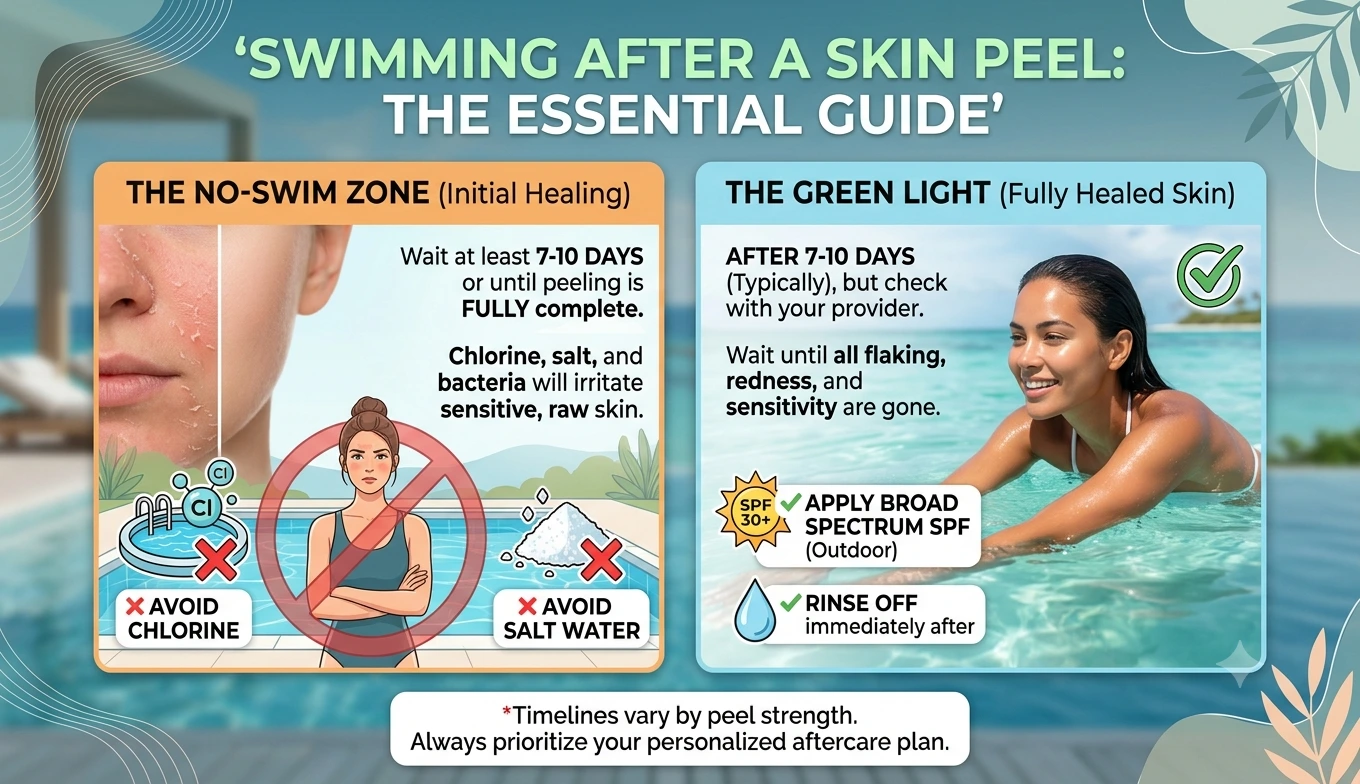
You can swim after a skin peel, but timing matters more than most clients realise. Chlorinated water, sea salt, and warm pool temperatures can all irritate skin that is still in its recovery phase, so most practitioners recommend waiting at least 48 to 72 hours before submerging the treated area. The exact window depends on the type of peel used and how the skin responds. With the Trexyne Peel, a mechanical resurfacing treatment built around marine-algae spicules, recovery tends to be more predictable, which makes planning around holidays and swimming trips considerably easier for both you and your clients.
Why Swimming Straight After a Peel Is a Concern
Freshly treated skin is doing important work in the hours and days after a resurfacing session. The surface is renewing itself, and the skin barrier is temporarily more permeable than usual. This is a normal part of the process, but it also means the skin is less equipped to deal with anything that isn’t gentle and clean.
Pool water contains chlorine and other disinfecting chemicals designed to kill bacteria. Sea water carries salt, minerals, and whatever else happens to be in the water that day. Neither is designed with freshly resurfaced skin in mind, and both can cause stinging, redness, or irritation if contact happens too soon.
The Barrier Function Explained Simply
Think of the skin barrier as the front door of the building. After a resurfacing treatment, that door is temporarily left ajar while the skin rebuilds itself. Water, especially treated or salt water, can slip through more easily than it would on undisturbed skin, which is why practitioners advise a short waiting period rather than an immediate return to the pool.
How Different Types of Peels Affect Recovery Time
Not all peels behave the same way, and this is where client expectations can go wrong if they compare notes with a friend who had a different treatment. Peels that rely on chemical exfoliation tend to come with longer, less predictable downtime because the depth of penetration can vary from session to session and skin to skin.
The Trexyne Peel takes a different approach. It works through a purely mechanical mechanism, using marine-algae spicules to create controlled micro-channels in the skin’s surface. There is no chemical exfoliation involved. This mechanical action, combined with stabilised Vitamin E to support the skin’s recovery phase from the first application, tends to produce a more consistent and manageable downtime experience, which practitioners can explain to clients with more confidence.
Why a Tiered Protocol Matters
One of the most useful things about the Trexyne Peel is its tiered protocol. Because intensity can be matched to skin type and client expectation, you can plan a treatment around a client’s travel dates, swimming plans, or upcoming events with a reasonable degree of certainty rather than guesswork.
Chlorinated Pools Versus Open Water: What’s the Real Difference
Clients often ask whether a swimming pool is safer than the sea after a peel, and the honest answer is that both carry their own considerations.
Chlorinated pools are treated with disinfectants that keep bacteria levels low, but the same chemicals can be drying and mildly irritating to skin that is still renewing. Prolonged exposure can leave freshly treated skin feeling tight, flushed, or uncomfortable.
Sea water contains salt and naturally occurring minerals. Salt can draw moisture out of the skin, and open water is harder to control for cleanliness compared to a well-maintained pool. Sun exposure at the beach is also a factor, since freshly resurfaced skin is more vulnerable to UV damage.
Practical Guidance for Each Scenario
For pools, a general guide is to wait until any visible redness or flaking has settled, and to shower thoroughly with lukewarm water immediately after any accidental splash. For sea swimming, the same waiting period applies, with the added recommendation of a broad-spectrum SPF and a rash vest or cover-up if the face and neck were treated and full sun avoidance is not possible.
Lake and river swimming sits somewhere in between the two, since natural bodies of water are not chemically treated but can still carry bacteria, sediment, and temperature fluctuations that resurfaced skin would rather avoid. The same core principle applies regardless of the water source: wait until the skin has visibly calmed and can comfortably tolerate a normal shower before introducing anything more demanding.
Recommended Waiting Time Before Swimming After a Trexyne Peel
Because the Trexyne Peel works mechanically rather than chemically, most clients find their skin settles predictably within a few days. As a general guide, practitioners typically advise clients to avoid swimming pools and open water for at least 48 to 72 hours following treatment, though this can vary depending on the intensity level chosen and how the individual’s skin responds.
Clients booked onto a higher intensity protocol may be advised to wait slightly longer, while those on a lighter protocol designed for minimal downtime may be cleared to swim a little sooner. This is exactly where the tiered nature of the Trexyne Peel becomes useful in practice, since you can select the intensity level with a client’s upcoming plans already in mind.
Booking Around Holidays
If a client mentions they have a beach holiday or pool-based event coming up, it is worth discussing timing at the consultation stage rather than after treatment. A peel booked with enough lead time allows the skin to complete its visible recovery phase before any water exposure, which tends to lead to a smoother experience and better results overall.
It also helps to factor in the client’s own skin history. Someone who has had several previous resurfacing sessions may recover more predictably than someone experiencing their first treatment, simply because their skin is more accustomed to the process. First-time clients may benefit from a slightly longer buffer before any swimming plans, purely as a precaution while you both learn how their skin responds.
Signs the Skin Isn’t Ready for Water Exposure
Every client’s skin responds slightly differently, so rather than relying purely on a fixed number of days, it helps to teach clients what to look for.
Skin that is still notably pink, warm to the touch, tight, or visibly flaking is not yet ready for chlorinated or salt water. Any areas that feel sensitive to normal tap water in the shower are a clear signal that pool or sea water should wait a little longer.
A Simple Client Checklist
- Redness has visibly reduced compared to the day of treatment
- Skin no longer feels tight or uncomfortable when touched
- Any flaking has settled or is minimal
- Skin tolerates a normal lukewarm shower without stinging
Sharing a simple checklist like this with clients, either verbally or as a printed aftercare sheet, can reduce the number of follow-up questions you receive in the days after treatment.
How to Protect Skin If Water Exposure Can’t Be Avoided
Sometimes a client cannot avoid the pool entirely, whether because of a family holiday already booked or a work event. In these cases, harm reduction is the better conversation to have rather than an outright ban that may not be followed anyway.
Advise clients to keep treated areas out of the water where possible, and if the face was treated, suggest they avoid submerging it and instead focus on gentle, controlled movement rather than diving or prolonged immersion. A broad-spectrum SPF applied before any sun exposure is essential, since resurfaced skin is more vulnerable to pigmentation changes when sun protection is skipped.
Rinsing and Aftercare Post-Swim
If water contact does happen, a prompt, thorough rinse with clean, lukewarm water helps limit prolonged contact with chlorine or salt. Following this with a gentle, fragrance-free moisturiser can help support comfort afterwards. Avoid anything with active ingredients, fragrance, or alcohol content until the skin has visibly settled.
Supporting Recovery Between Sessions
Good aftercare does more than protect against swimming pools. It sets the tone for how well the skin responds to the Trexyne Peel overall and how comfortable clients feel during their recovery window.
Recommend a simple routine in the days following treatment: a gentle, non-foaming cleanser, a fragrance-free moisturiser, and daily SPF regardless of the weather. Stabilised Vitamin E within the Trexyne Peel formulation is already supporting the skin’s recovery phase from the first application, so the aftercare routine at home should complement this rather than overwhelm the skin with additional active ingredients.
What to Avoid During Recovery
Clients should be advised to avoid saunas, steam rooms, hot yoga, and very hot showers for a similar window to swimming, since heat and steam can affect skin in comparable ways to water exposure. Exfoliating tools, retinoids, and acid-based products should also be paused until the practitioner confirms the skin has fully settled.
Common Mistakes Clients Make After a Peel Treatment
Even with clear instructions, a few mistakes come up repeatedly in clinic. Understanding these can help you address them proactively at the consultation stage rather than reactively afterwards.
Some clients assume that because their skin looks fine the next morning, it is fully recovered and safe for any activity. Visible calm skin does not always mean the barrier has fully reformed. Others assume that a quick dip is harmless because it was brief, without accounting for the fact that even short exposure to chlorine or salt can cause discomfort on newly resurfaced skin.
Managing Client Expectations
A short conversation at booking, reinforced with written aftercare guidance, tends to prevent most of these issues. Clients who understand why the waiting period exists are generally more compliant than those who are simply told a number of days without context.
Another common mistake is clients using their normal skincare products again too soon, assuming that because the surface feels calm the skin is ready for its usual routine. Retinoids, acid-based toners, and exfoliating scrubs should all be paused until you have confirmed the skin has settled, since reintroducing them too early can prolong sensitivity and increase the likelihood of irritation if water exposure also happens during this window.
Planning Peel Treatments Around Travel and Events
For clients who travel frequently or have set holiday dates, treatment planning becomes part of the consultation. Because the Trexyne Peel offers a tiered protocol that lets intensity be matched to skin type and client expectation, it is often possible to schedule a treatment that suits both the client’s skin goals and their travel calendar.
As a general rule, booking a peel session two weeks or more before a swimming-focused holiday gives the skin ample time to complete its visible recovery, reducing the likelihood of any conflict between treatment and travel plans. For last-minute bookings, a lighter intensity protocol may be the more sensible choice.
If you are unsure which protocol suits a client’s timeline, the Trexyne team is available through the contact page to discuss professional ordering and treatment planning support.
Choosing the Right Protocol for Predictable Downtime
Clients increasingly ask about downtime before they ask about results, which reflects how much modern skincare consumers value predictability. A mechanical resurfacing treatment has a genuine advantage here, since its tiered protocol allows the recovery window to be planned with more confidence from the outset.
Practitioners looking to stock a professional-only treatment with a consistent recovery profile can review the full range on the Trexyne shop page, where the Trexyne Peel is available in single treatment and multi-treatment vial options. For clinics new to the brand, the Trexyne homepage outlines the full philosophy behind the botanical, mechanical approach to resurfacing.
Suiting Clients With Active Lifestyles
Clients who swim regularly, whether for fitness, training, or simply because they enjoy it, often ask whether resurfacing treatments are even worth pursuing given the disruption to their routine. Because the Trexyne Peel’s tiered protocol allows intensity to be matched to skin type and client expectation, it becomes easier to plan treatments around an active lifestyle rather than working against it. A client training for an event, for instance, might be better suited to a lighter protocol with a shorter recovery window, allowing them to return to their normal swimming routine sooner while still benefiting from resurfacing over a series of sessions.
Rather than viewing each peel as an isolated event, consider building a treatment plan that accounts for a client’s recurring commitments, whether that is weekly swimming, regular travel, or seasonal events. Spacing sessions appropriately, and choosing intensity levels that respect the client’s downtime tolerance, tends to produce better long-term compliance and, as a result, better long-term outcomes for the skin.
What to Tell Clients at the Consultation Stage
The waiting period after a peel is far easier for clients to accept when they understand the reasoning behind it, rather than being handed a rule with no context. Building this into the consultation, before treatment even begins, tends to reduce anxious messages afterwards and helps clients feel more confident about their own aftercare decisions.
It helps to ask directly about upcoming plans. A simple question such as whether the client has any holidays, swimming lessons, or pool-based events coming up allows you to tailor both the intensity level and the aftercare advice to their specific situation. Clients who swim regularly for fitness, for example, may need a slightly different conversation to someone booking a one-off treatment ahead of a beach holiday.
There is also a balance to strike between giving clients enough information to make good decisions and overwhelming them with detail they will not retain. Focus the conversation on the few points that matter most: the general waiting period, the signs to watch for, and what to do if water exposure happens sooner than planned. Avoid framing the advice in a way that feels overly restrictive or medicalised. Most clients respond better to practical, friendly guidance than to a long list of warnings.
Written Aftercare as a Safety Net
Verbal advice is useful in the room, but it is easily forgotten once a client leaves and gets on with their day. A written aftercare sheet, whether printed or sent digitally, gives clients something to refer back to if they are unsure. Include the recommended waiting period for swimming, saunas, and steam rooms, along with the signs that indicate skin is ready for water exposure. This small addition to your usual process can meaningfully reduce the number of follow-up calls and messages you receive.
Conclusion
Swimming after a skin peel is entirely possible, but it comes down to timing and understanding what the skin needs during its recovery window. Chlorinated pools and open water can both interfere with a skin barrier that is still renewing itself, which is why a short waiting period, generally at least 48 to 72 hours, is recommended before any water exposure. Because the Trexyne Peel works through a mechanical mechanism using marine-algae spicules rather than chemical exfoliation, recovery tends to be more predictable, and its tiered protocol allows treatments to be planned around a client’s swimming plans or travel dates with more confidence. With the right aftercare and clear client communication, the path towards a brighter, more even-looking complexion can be managed smoothly, without unnecessary compromise to holiday or lifestyle plans.
Frequently Asked Questions
Q: How long should I wait to swim after a chemical-free skin peel like Trexyne?
Most practitioners recommend waiting at least 48 to 72 hours before swimming after a Trexyne Peel, though the exact timing can depend on the intensity level used and how quickly the individual’s skin settles.
Q: Can chlorine damage skin after a resurfacing treatment?
Chlorine can be drying and mildly irritating to skin that is still in its recovery phase, so it is best avoided until any redness or flaking has settled and the skin tolerates a normal shower comfortably.
Q: Is sea swimming better or worse than a pool after a peel?
Both carry their own considerations. Sea water contains salt, which can draw moisture from the skin, while pools contain disinfecting chemicals that can be irritating. Sun exposure at the beach adds an extra factor to manage.
Q: Can I still go on holiday shortly after a Trexyne Peel treatment?
Yes, with planning. Because the Trexyne Peel offers a tiered protocol, treatments can often be scheduled with a client’s travel dates in mind, and lighter intensity options may suit last-minute bookings better.
Q: What should I do if I accidentally get my skin wet in a pool too soon after a peel?
Rinse the area promptly with clean, lukewarm water, apply a gentle fragrance-free moisturiser, and avoid active ingredients until the skin has visibly settled. Monitor for ongoing irritation and follow up with your practitioner if needed.
Q: Does the Trexyne Peel have a shorter downtime than chemical peels?
The Trexyne Peel works through a mechanical mechanism using marine-algae spicules, which tends to produce a more predictable and consistent recovery profile compared to treatments relying on chemical exfoliation, though individual results vary.
Q: Can sun exposure after swimming affect peel results?
Yes. Freshly resurfaced skin is more vulnerable to UV-related pigmentation changes, so a broad-spectrum SPF and sensible sun avoidance are important whenever swimming or beach time follows a peel treatment.