What Is the Difference Between Sun Damage and Photoageing?
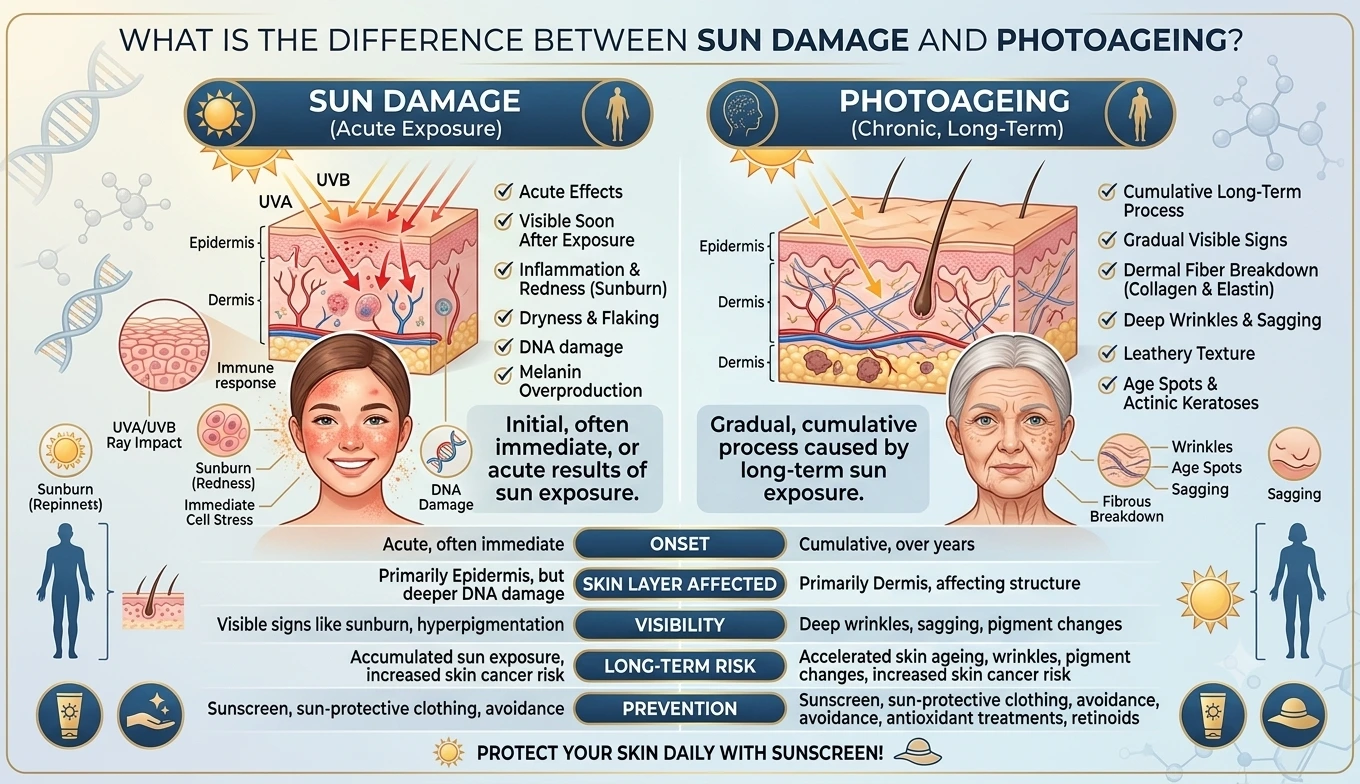
Sun damage and photoageing are often used interchangeably, but they describe different stages of the same process. Sun damage refers to the immediate and cumulative injury UV exposure causes to the skin, such as pigmentation changes, dryness, and surface roughness. Photoageing is the longer-term result of that damage building up over years, showing as fine lines, uneven texture, and a dull or leathery appearance. Understanding the distinction helps practitioners explain to clients why early intervention matters and why some treatments address surface concerns while others target deeper structural change. For clients dealing with visible signs of photoageing, treatments like the Trexyne Peel can support resurfacing and renewal without relying on chemical exfoliants.
Understanding Sun Damage
Sun damage is the skin’s response to ultraviolet radiation, whether from direct sunlight or UV-emitting devices. It can appear within hours of exposure or build gradually over repeated instances.
Short-Term Signs
Redness, sensitivity, and dryness often appear soon after UV exposure. These are visible signals that the skin’s surface has been affected and its barrier function is under strain.
Cumulative Signs
Over time, repeated UV exposure leads to patchy pigmentation, rough texture, and a loss of even tone. Clients often describe this as skin that “looks tired” even when they feel well rested.
What Photoageing Actually Means
Photoageing describes the structural changes that occur in skin after years of UV exposure. Unlike sun damage, which can be a single episode, photoageing is a progressive process linked to repeated and prolonged exposure.
How It Differs From Chronological Ageing
Chronological ageing happens regardless of environment, driven by time and natural cellular changes. Photoageing is largely preventable and is associated with lifestyle and sun exposure habits rather than age alone. This is why two people of the same age can have very different skin texture and tone depending on their sun exposure history.
Visible Characteristics of Photoaged Skin
Photoaged skin often shows deeper lines, a coarser texture, visible pigmentation clusters, and reduced elasticity. These changes tend to be more pronounced on frequently exposed areas such as the face, neck, and hands.
Why the Two Are Often Confused
Sun damage and photoageing sit on the same continuum, which is why the terms get blurred. Sun damage is the acute or early-stage evidence of UV exposure. Photoageing is what happens when that damage accumulates without correction over years. A single sunburn is sun damage. A decade of unprotected exposure that leaves behind fine lines and patchy pigmentation is photoageing.
The Role of UV Exposure in Both Processes
UV radiation affects skin at a cellular level, and both UVA and UVB rays contribute differently to the overall picture.
UVA and Long-Term Structural Change
UVA rays penetrate deeply and are associated with the gradual breakdown of skin’s structural support, which can show up as sagging and fine lines over time.
UVB and Surface-Level Damage
UVB rays are more closely linked to surface damage such as burning and immediate pigmentation changes. Both types of exposure contribute to the overall photoageing process when left unmanaged.
Common Signs to Look Out For
Recognising the signs early allows for a more proactive approach to skin health.
- Uneven pigmentation or sun spots
- Rough or textured patches
- Fine lines that appear earlier than expected
- Reduced skin firmness
- A dull or uneven complexion
Clients presenting with several of these signs may benefit from a consultation to discuss suitable in-clinic options.
How Professional Treatments Can Help
Addressing photoageing usually calls for treatments that support skin renewal at a deeper level than home skincare alone can achieve. This is where in-clinic options such as the Trexyne Peel become relevant for many practitioners.
Why a Mechanical Approach Matters
The Trexyne Peel is a precision botanical peel built around marine-algae spicules and stabilised Vitamin E. It resurfaces and refines through a purely mechanical mechanism, creating controlled micro-channels without any chemical exfoliants. This approach can suit clients who want visible improvement in tone and texture without the acids associated with some resurfacing treatments.
Supporting Skin Renewal
Stabilised tocopherol within the formula supports the skin’s recovery phase from the first application. Combined with a tiered protocol, practitioners can match treatment intensity to individual skin type and client expectation, which can help make results feel more predictable across a course of sessions.
Building a Long-Term Skin Health Plan
Managing photoageing effectively is rarely about a single treatment. A structured plan that combines in-clinic resurfacing with consistent daily protection tends to produce more noticeable and lasting results.
The Importance of Daily Protection
Daily broad-spectrum sun protection remains one of the most effective ways to slow further photoageing. Without it, the benefits of any in-clinic treatment can be undermined by ongoing UV exposure.
Pairing In-Clinic Treatments With Homecare
Practitioners often recommend a homecare routine that supports barrier function alongside professional treatments. This combined approach can help maintain results between sessions and supports the skin’s overall resilience.
Setting Realistic Expectations With Clients
Clients researching photoageing solutions often expect instant results. Setting realistic expectations from the outset can help clients feel more confident in their treatment plan and more likely to complete a full course. Explaining that a tiered protocol exists, and that intensity can be adjusted, often reassures clients who are new to professional resurfacing treatments.
Choosing the Right Professional Treatment
Not every resurfacing treatment suits every skin type or concern. Practitioners considering options for their clinic can explore the full range on the Trexyne shop page to compare offerings and find what fits their client base. For practitioners with specific questions about protocols or suitability, reaching out via the Trexyne contact page is a straightforward way to get tailored guidance.
Conclusion
Sun damage and photoageing are connected but distinct. Sun damage reflects the skin’s immediate or cumulative reaction to UV exposure, while photoageing describes the deeper structural changes that build up over years of unprotected sun exposure. Recognising the difference helps clients understand why consistent protection matters and why professional treatments can play a valuable role in managing visible signs. The Trexyne Peel, with its mechanical resurfacing approach using marine-algae spicules and stabilised Vitamin E, may help support a brighter and more even-looking complexion for clients working through the effects of photoageing. Practitioners interested in learning more can visit Trexyne’s homepage for further information.
FAQs
Q: What is the main difference between sun damage and photoageing?
Sun damage refers to the skin’s immediate or cumulative reaction to UV exposure, such as pigmentation changes or dryness. Photoageing is the longer-term structural change that results from years of unmanaged sun exposure, showing as fine lines, texture changes, and uneven tone.
Q: Can photoageing be reversed with professional treatment?
Professional treatments may help improve the appearance of photoaged skin by supporting resurfacing and renewal. Results vary by individual, and a tiered protocol allows practitioners to tailor intensity to each client’s skin type and expectations.
Q: Is the Trexyne Peel suitable for treating signs of photoageing?
Yes, the Trexyne Peel is designed to resurface and refine skin through a mechanical mechanism using marine-algae spicules, which can support improvement in texture and tone associated with photoageing.
Q: Does the Trexyne Peel use chemical exfoliants to treat photoaged skin?
No. The Trexyne Peel works through a purely mechanical mechanism, creating controlled micro-channels using marine-algae spicules rather than chemical exfoliants.
Q: How can practitioners tell if a client has sun damage or photoageing?
Sun damage often presents as recent redness, dryness, or patchy pigmentation. Photoageing tends to show as more established signs such as deeper lines, coarser texture, and reduced elasticity built up over years.
Q: How many sessions of the Trexyne Peel are typically needed to see visible improvement?
The Trexyne Peel follows a tiered protocol, so the number of sessions can vary depending on skin type and client goals. Practitioners can discuss suitable protocols further via the Trexyne contact page.
Q: Can daily sun protection prevent photoageing on its own?
Consistent daily sun protection can significantly reduce the risk of further photoageing, though it works best alongside professional treatments and a supportive homecare routine for clients already showing visible signs.