Can You Go Back to Work the Same Day as a Peel?
Yes, in most cases clients can return to work the same day as a Trexyne Peel. Because the Trexyne Peel works through a mechanical resurfacing process rather than chemical exfoliation, downtime is typically shorter and more predictable than clients expect. Redness may appear for a few hours, but most people find it manageable enough to carry on with their day, including returning to an office or client-facing role.
This is one of the most common questions practitioners hear before booking a resurfacing treatment. Clients want brighter, smoother skin, but they also worry about visible redness, flaking, or an awkward few days hiding indoors. Understanding what actually happens to the skin after a peel, and why the mechanism behind the treatment matters, helps set realistic expectations and builds trust before the client even sits in the treatment chair.
Why Downtime Worries Put Clients Off Peels
Many people delay booking a resurfacing treatment because they associate the word “peel” with visible flaking, tight red skin, and days of hiding away. This reputation largely comes from stronger chemical treatments that penetrate deeper into the skin and trigger a more dramatic recovery process.
It is a fair concern. Nobody wants to walk into a meeting with patchy, shedding skin. But not every peel behaves this way, and the recovery experience depends heavily on how the treatment actually works on the skin.
The Mismatch Between Expectation and Reality
Clients often picture the most intense version of a peel they have read about online, without realising there are gentler, more controlled options designed specifically for professionals who need predictable outcomes. Setting the record straight early in the consultation helps clients feel confident about booking.
How Trexyne Peel Works Differently
Trexyne Peel uses a botanical mechanism built around marine-algae spicules and stabilised Vitamin E. Rather than relying on chemical exfoliants, the spicules create controlled micro-channels in the skin through a purely mechanical action. This approach avoids the chemical penetration associated with more aggressive treatments.
Because there is no chemical exfoliation involved, the skin’s response tends to be more measured. The stabilised tocopherol (Vitamin E) supports the skin’s recovery phase from the very first application, which can help the surface feel calmer during the hours after treatment.
Why the Mechanism Matters for Downtime
The way a peel interacts with the skin has a direct effect on how visible and how long the recovery period will be. A mechanical approach that creates controlled micro-channels, without introducing chemical exfoliants, tends to produce a gentler visible response. This is part of why Trexyne Peel is associated with predictable, tiered downtime rather than a one-size-fits-all reaction.
What Clients Can Realistically Expect on Treatment Day
Every client’s skin responds a little differently, but there are some general patterns worth discussing during consultation.
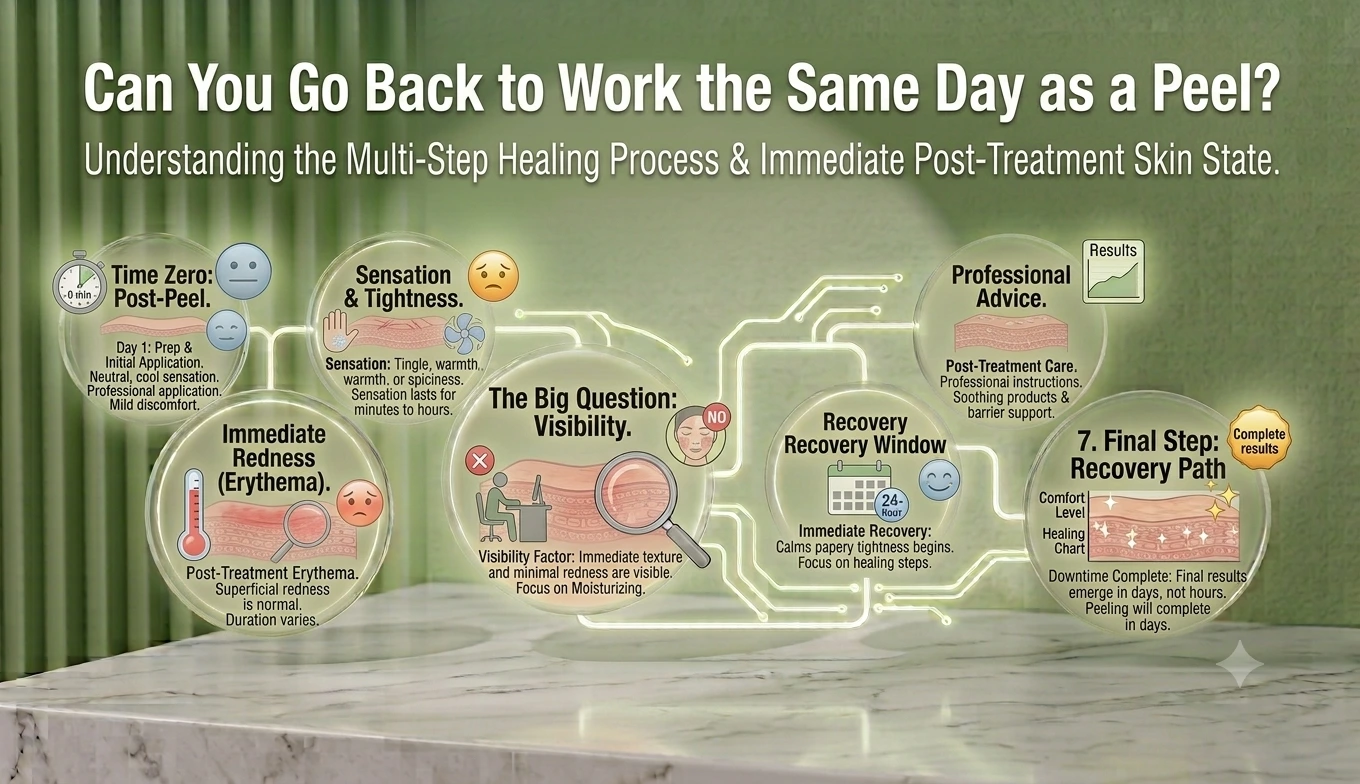
Immediately After the Treatment
Mild redness or warmth in the treated area is common in the first hour or two. This is a normal part of the skin’s response to resurfacing and typically settles on its own.
Later the Same Day
For many clients, redness fades enough that makeup can be worn if needed, and the skin may simply look and feel slightly refreshed rather than visibly treated. This is one of the main reasons same-day work return is realistic for a good proportion of clients.
The Following 24 to 48 Hours
Some mild tightness or subtle texture change may continue briefly. This tends to be far less dramatic than the flaking associated with deeper chemical treatments, since Trexyne Peel does not work through that mechanism.
Who Is Most Likely to Return to Work the Same Day
Not every client will have an identical experience, and this is where a tiered protocol becomes valuable. Trexyne Peel’s tiered approach lets practitioners match treatment intensity to the client’s skin type and their expectations for downtime.
Clients With Lower Intensity Protocols
Clients booked in for a lighter intensity setting, perhaps ahead of a big event or simply wanting a subtle refresh, tend to have the mildest visible response and the highest likelihood of a same-day return to normal activities.
Clients With More Sensitive or Reactive Skin
Even with a mechanical, non-chemical approach, some clients naturally show more visible redness than others. Practitioners should always discuss this honestly during consultation rather than promising a specific outcome, since results and recovery experience can vary.
Clients With Higher Intensity Protocols
Where a stronger intensity has been selected for more targeted resurfacing goals, the practitioner may recommend planning for a slightly longer settling period, even if actual downtime remains shorter than with chemical alternatives.
The Role of Aftercare in Minimising Visible Downtime
How a client cares for their skin in the hours after treatment can influence how quickly any redness settles.
Simple Aftercare Habits That Help
- Avoiding excessive touching or rubbing of the treated area
- Steering clear of intense heat, saunas, or strenuous exercise on treatment day
- Using a gentle, fragrance-free moisturiser as recommended by the practitioner
- Applying broad-spectrum sun protection if heading outdoors
What to Avoid Immediately After
Clients should avoid active ingredients, exfoliating products, or anything likely to irritate freshly treated skin in the hours following the appointment. Simplicity is the safest approach on treatment day.
Why Consultation Timing Matters
The best way to manage a client’s expectations around downtime is to have this conversation before the treatment, not after. A thorough consultation should cover:
- The client’s job and how visible any redness might be to colleagues or clients
- Any upcoming events they want to look their best for
- Their previous experience, if any, with resurfacing treatments
- Realistic timelines based on the intensity level being considered
This conversation also gives practitioners the chance to explain why Trexyne Peel’s mechanical, non-chemical mechanism tends to support a smoother, more predictable recovery window compared with what many clients assume a “peel” involves.
Scheduling Appointments Around Work Commitments
For clients who are particularly cautious, practitioners can still offer some simple scheduling guidance, even though same-day return is realistic for many.
Booking Ahead of a Day Off
Clients with especially reactive skin, or those who simply prefer extra reassurance, may feel more comfortable booking their appointment on a day when they have a lighter schedule afterwards.
Booking Around Lunchtime
Because visible redness for many clients settles within a few hours, a lunchtime appointment can work well for those planning to return to an office environment later in the day.
Communicating With Employers if Needed
For roles that are highly client-facing, some individuals simply prefer to mention they have had a skin treatment that day. This is a personal choice rather than a necessity for most, given the generally mild and short-lived nature of the visible response.
Setting the Right Intensity From the Start
One of the clearest ways to support a same-day return to work is choosing the appropriate protocol intensity during the initial consultation. Trexyne Peel’s tiered system means practitioners are not locked into a single fixed strength. Instead, the treatment can be adjusted to suit:
- The client’s skin type and sensitivity
- Their downtime tolerance
- Their long-term resurfacing goals
This flexibility is part of what makes Trexyne Peel a practical option for clinics working with busy clients who cannot always plan for extended recovery time. Practitioners can explore the full treatment range on the Trexyne shop page to understand how the various pack sizes support a full course of sessions.
Why Practitioners Are Choosing Trexyne Peel for Predictable Recovery
Clinics increasingly look for resurfacing treatments that combine visible results with a downtime profile clients can trust. Because Trexyne Peel avoids chemical exfoliation entirely and relies on a mechanical, spicule-based approach supported by stabilised Vitamin E, it offers a more consistent recovery experience across a range of skin types.
This predictability is valuable both for client satisfaction and for practitioners building a reputation for treatments that fit into real, busy lives. Clinics interested in stocking Trexyne Peel, which is sold strictly to verified practitioners, can find more detail by visiting the Trexyne homepage or reaching out directly via the contact page.
Conclusion
Same-day work return after a peel is a genuine possibility for many clients, and the type of peel used makes a real difference to how realistic this is. Trexyne Peel’s mechanical mechanism, built around marine-algae spicules and stabilised Vitamin E, tends to support a milder and more predictable recovery window than clients often expect from a resurfacing treatment. With a tiered protocol that allows intensity to be matched to skin type and lifestyle, practitioners can help clients achieve a brighter, more even-looking complexion without the disruption they may have feared.
FAQs
Q: Can I go straight back to work after a Trexyne Peel?
Many clients find they can return to work the same day, since the mechanical, non-chemical mechanism tends to produce a milder and shorter visible response than more intense treatments.
Q: How long does redness last after a botanical peel?
Redness often settles within a few hours for many clients, though this can vary depending on skin sensitivity and the intensity level chosen for the treatment.
Q: Is Trexyne Peel suitable for clients with client-facing jobs?
It can be a suitable option for many client-facing roles, particularly when a lighter intensity protocol is selected and the appointment is scheduled earlier in the day to allow time for any redness to settle.
Q: Does a mechanical peel have less downtime than a chemical peel?
A mechanical approach that avoids chemical exfoliation, such as the one used in Trexyne Peel, is generally associated with a milder and more predictable recovery period.
Q: Can I wear makeup after a resurfacing treatment the same day?
Many clients are able to apply makeup later the same day once any initial redness has settled, though practitioners should advise based on individual skin response.
Q: What can I do to reduce visible downtime after a peel?
Gentle aftercare, avoiding heat and strenuous exercise, and using minimal, fragrance-free products can all help support a smoother recovery after treatment.
Q: How do practitioners decide which intensity level to use?
Practitioners assess the client’s skin type, downtime tolerance, and treatment goals during consultation, then select an appropriate intensity from Trexyne Peel’s tiered protocol to match those needs.