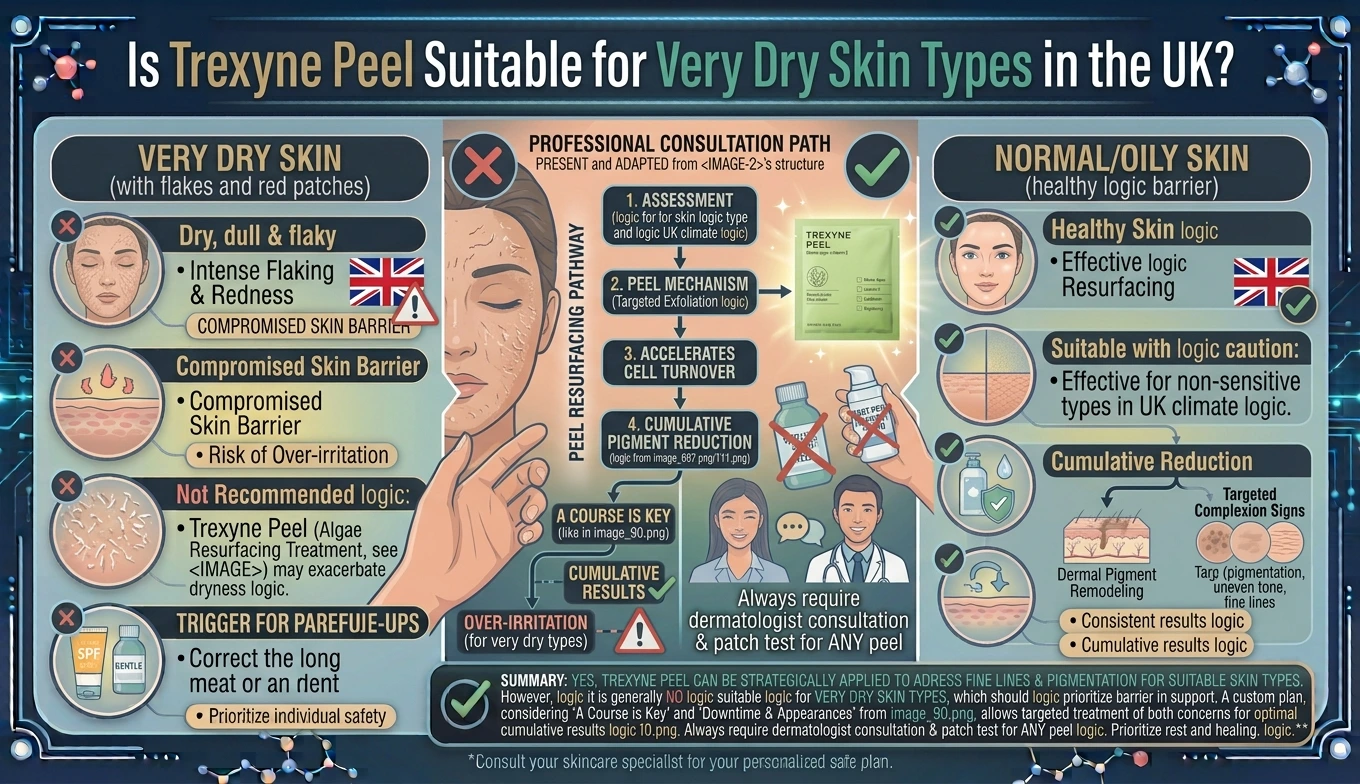
Is Trexyne Peel Suitable for Very Dry Skin Types in the UK?
Yes, the Trexyne Peel is suitable for very dry skin types in the UK, offering controlled surface refinement without stripping natural moisture or disrupting fragile lipid barrier integrity. Very dry complexions often suffer from impaired epidermal desquamation, where dead corneocytes fail to shed naturally, leading to flaky texture, tightness, and a dull surface. Incorporating the Trexyne Peel Professional Algae Resurfacing Treatment
into a clinical routine enables trained aesthetic professionals to address these surface flakes through a purely mechanical mechanism. Powered by microscopic marine-algae spicules and supported by stabilised Vitamin E, this botanical treatment forms precise micro-channels that accelerate natural epidermal turnover without relying on chemical exfoliants. By removing dry, rough surface tissue and supporting barrier hydration, Trexyne Peel supports a smoother, softer, and visibly replenished complexion with predictable downtime.
Understanding the Challenges of Very Dry Skin in the UK Climate
Very dry skin presents distinct biological hurdles, particularly within the variable climatic conditions encountered across the UK throughout the year.
Cold Weather Stress and Barrier Lipid Depletion
In the UK, cold seasonal winds, low outdoor humidity, and constant indoor heating accelerate trans-epidermal water loss. This atmospheric stress depletes essential lipid matrix components within the stratum corneum. As hydration levels plummet, natural enzymatic desquamation slows down significantly, leaving dry, dead skin cells clinging to the surface in rough patches.
The Risk of Traditional Acid Exfoliants on Dry Skin
Many conventional resurfacing options use chemical acids that alter skin pH or break down surface lipid bonds aggressively. On very dry or moisture-depleted skin, this chemical interference can compromise an already weakened barrier, inducing prolonged redness, burning, and severe dehydration. Addressing dry skin safely requires a non-chemical method that respects barrier architecture while removing flaky surface buildup.
The Mechanical Precision of Marine Algae Spicules on Dry Skin
Restoring smoothness to dry skin requires an advanced resurfacing approach that stimulates rapid cell renewal without causing chemical dehydration or tissue trauma.
Physical Micro-Channeling Without Chemical Stress
The core innovation behind Trexyne technology relies on microscopic, needle-like spicules harvested naturally from marine algae. During clinical treatment, a trained practitioner gently massages these botanical spicules into the skin, creating thousands of physical micro-channels across the upper stratum corneum. This physical interaction dislodges dry, flaky surface buildup purely through mechanical action, avoiding chemical exfoliants or pH disruptions.
Driving Internal Cell Movement for Smooth Desquamation
Once embedded within the upper epidermal layers, marine spicules act as a natural physical catalyst, signaling the skin to initiate a rapid self-repair response. Lower epidermal cells divide faster, pushing older, dehydrated surface tissue upward toward the surface. Over three to six days, this controlled mechanical desquamation clears away rough flakes, allowing fresh, hydrated skin cells to emerge naturally.
Stabilised Vitamin E and Barrier Conditioning
Because dry complexions suffer from inherent lipid deficiencies, providing immediate nourishing support during resurfacing is vital for maintaining skin comfort.
Immediate Antioxidant Support with Tocopherol
The Trexyne Peel formulation incorporates stabilised Vitamin E, also known as tocopherol, directly within its spicule carrier matrix. Tocopherol is a lipid-compatible antioxidant that integrates smoothly into the intercellular lipid layers during massage. As marine spicules engage the upper tissue, stabilised Vitamin E delivers instant conditioning to soothe dry, tight skin and protect against oxidative stress.
Retaining Vital Hydration During the Recovery Window
Reinforcing the intercellular lipid matrix helps lock in surface moisture and lowers trans-epidermal water loss throughout the post-treatment phase. Stabilised Vitamin E helps reduce post-treatment redness and keeps newly revealed tissue soft, supple, and well-nourished while old surface layers shed naturally. Aesthetic practitioners seeking professional botanical supplies can review our full product range on the official Trexyne shop page
Customising Protocol Tiers for Very Dry Complexions
Because dry skin varies in barrier resilience and flake accumulation, flexible protocol selection is essential for achieving comfortable, predictable clinical outcomes.
Entry-Level Tiers for Fragile, Moisture-Depleted Skin
For UK clients presenting with thin, tight, or severely dry skin, practitioners should always begin with a Level 1 protocol using lighter physical massage pressure. This gentler entry tier delivers effective surface smoothing and flake removal while fully protecting fragile barrier integrity and ensuring client comfort.
Progressive Tiers for Flaky, Rough Surface Buildup
For clients experiencing thick, rough patches of dry skin with good underlying resilience, practitioners can gradually adjust contact time or massage pressure in subsequent sessions. Modifying parameters based on individual healing responses ensures safe, progressive improvement in surface texture and hydration retention without triggering irritation.
Comparing Marine Spicule Resurfacing to Rough Retail Scrubs
Understanding why professional marine spicule technology outperforms retail manual scrubs highlights its safety and efficacy for very dry, fragile complexions.
Precision Micro-Channeling versus Friction Damage
Retail facial scrubs frequently rely on irregular materials such as crushed nutshells, seeds, or sugar crystals. When rubbed across dry or flaky skin, these coarse particles cause sharp micro-tears, inflame delicate tissue, and strip away vital surface lipids unevenly. Micronized marine spicules are refined microscopic structures that enter the upper stratum corneum cleanly without dragging or tearing fragile tissue.
Internal Cellular Drive versus Aggressive Surface Abrasion
Standard manual scrubs attempt to force dead cells off the surface through aggressive external rubbing, which yields uneven results and skin redness. Marine spicules work from within by temporarily resting in the upper epidermal layer to signal natural cell movement. As fresh keratinocytes ascend, old surface flakes detach naturally and uniformly without tissue trauma.
Essential Post-Treatment Care for Dry Skin Recovery
Guiding clients through appropriate home aftercare ensures the newly revealed skin barrier stays protected, deeply hydrated, and cushioned against UK environmental stressors.
Intensive Moisture Replenishment and Gentle Cleansing
Following a professional resurfacing session, dry skin clients must keep their daily home care simple, gentle, and deeply nourishing. For the first few days, cleansing should involve only lukewarm water and a mild, non-stripping cleanser applied lightly with fingertips. Clients should apply rich, lipid-replenishing moisturizers regularly to keep the renewing tissue thoroughly hydrated and support smooth desquamation.
Non-Negotiable Broad-Spectrum Photoprotection
Newly revealed surface cells possess lower natural protection and remain susceptible to environmental stress, even during overcast UK weather. Clients must apply a high-protection, broad-spectrum sunscreen every morning throughout the recovery period and beyond. Diligent photoprotection preserves barrier stability and maintains a soft, comfortable appearance. Practitioners requiring clinical guidance or technical documentation can reach out through our official Trexyne contact page
Building a Comprehensive Multi-Session Strategy
Achieving lasting texture refinement and barrier comfort for very dry skin requires a structured, multi-session clinical approach managed by an experienced practitioner.
Conducting a Detailed Pre-Treatment Consultation
Before starting a resurfacing series, the aesthetic practitioner must perform a thorough skin analysis under bright light. Assessing baseline barrier resilience, evaluating hydration levels, and reviewing surface flake accumulation ensures the client is an ideal candidate. Identifying individual goals allows the practitioner to plan safe treatment intervals and select the ideal starting protocol tier.
Scheduling Safe Session Intervals for Long-Term Comfort
To systematically clear rough surface buildup, restore natural cell turnover, and support barrier hydration, practitioners usually recommend a series of three to six sessions. Spacing appointments three to four weeks apart gives the epidermal barrier ample time to rest, rebuild, and stabilize completely between visits. Over time, progressive mechanical resurfacing restores a healthy, glowing, and visibly supple quality to the skin. Discover more about our botanical philosophy and professional standards on the main Trexyne homepage
Conclusion
Trexyne Peel is a highly suitable professional resurfacing treatment for very dry skin types in the UK, providing effective flake removal and texture smoothing without lipid disruption. Dry skin often suffers from sluggish desquamation and impaired barrier hydration, causing dead cells to cling to the surface and create a tight, dull texture. By utilizing the purely mechanical action of marine-algae spicules, the Trexyne Peel Professional Algae Resurfacing Treatment
creates controlled physical micro-channels that accelerate natural cellular desquamation without relying on chemical exfoliants. Enriched with stabilised Vitamin E to nourish the stratum corneum and fortify barrier stability, this botanical treatment offers predictable downtime and customizable tiered protocols. Guided by expert practitioner assessment and disciplined aftercare, Trexyne Peel helps clients clear surface buildup and reveal a smoother, softer, and more hydrated-looking complexion safely.
Frequently Asked Questions
Q: How does Trexyne Peel help very dry skin without using chemical exfoliants?
Trexyne Peel relies on microscopic marine algae spicules to create physical micro-channels in the stratum corneum. This mechanical action gently stimulates natural cellular turnover, pushing off dry, dead surface flakes without altering skin pH or using harsh chemical agents.
Q: Will Trexyne Peel strip essential oils from dry skin during treatment?
No, Trexyne Peel does not contain chemical stripping agents. The formulation is infused with stabilised Vitamin E, which nourishes the intercellular lipid matrix during resurfacing, supporting barrier strength and preventing moisture loss.
Q: Is Trexyne Peel safe for dry skin during cold UK winter months?
Yes, but practitioners should ensure clients use rich post-treatment moisturizers and proper home aftercare. Selecting a gentle Level 1 protocol tier helps safely refine dry winter skin while respecting barrier resilience.
Q: What downtime can a client with very dry skin expect after a Trexyne Peel session?
Clients will experience a predictable recovery window involving light to moderate physical shedding between days three and six post-treatment. This natural desquamation clears away old surface flakes to uncover fresh, soft skin underneath.
Q: Can clients purchase Trexyne Peel for home application to treat dry skin?
No, Trexyne Peel is strictly a professional-only resurfacing treatment available exclusively to verified clinics and trained aesthetic practitioners. Safe application requires professional skin assessment, controlled pressure, and expert protocol knowledge.
Q: How many Trexyne Peel sessions are recommended for very dry skin types?
Practitioners generally recommend a series of three to six sessions spaced three to four weeks apart to systematically clear surface roughness, encourage natural cellular desquamation, and maintain long-term barrier comfort.