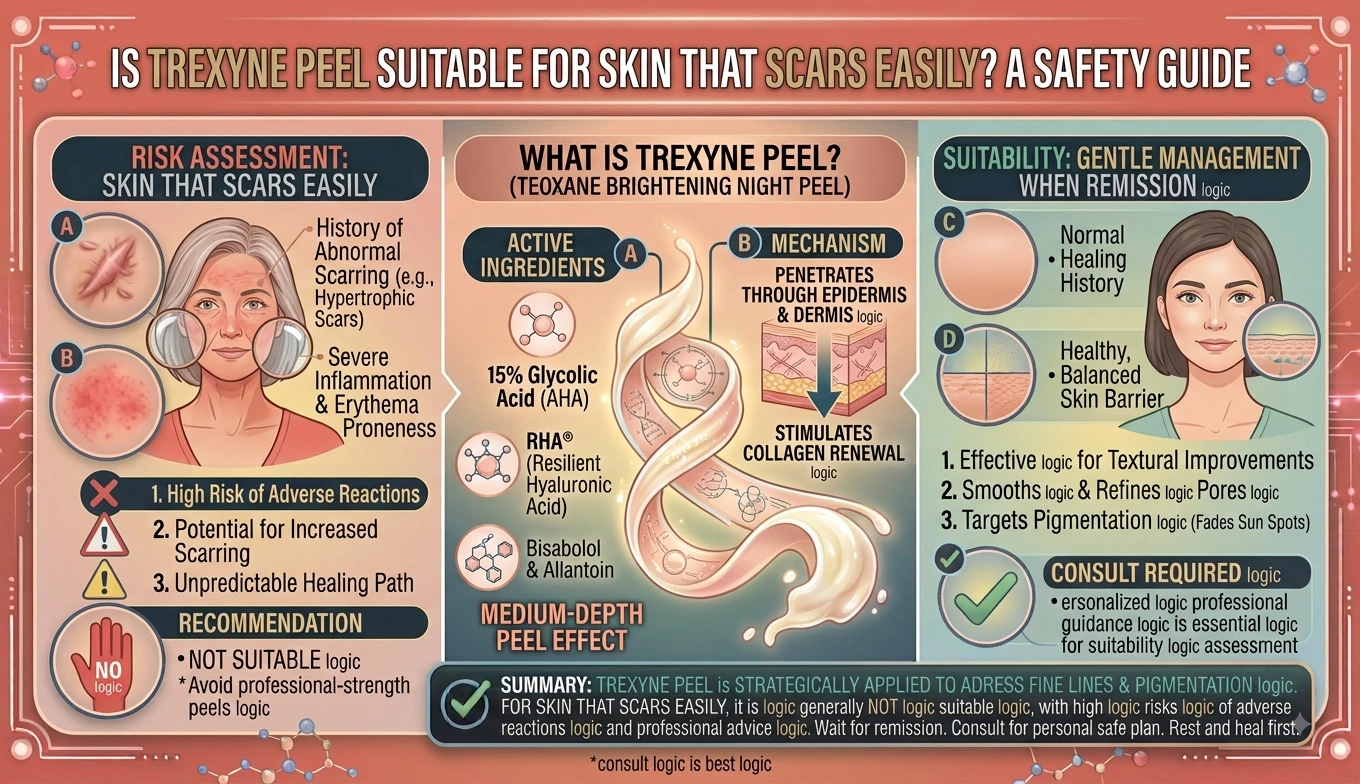
Is Trexyne Peel Suitable for Skin That Scars Easily?
Yes, the Trexyne Peel is suitable for skin that scars easily, offering a gentle, controlled physical resurfacing method that refines surface texture without relying on harsh chemical agents or thermal stress. Skin prone to hyperpigmentation or scarring requires extreme care during resurfacing, as aggressive treatments can trigger post-inflammatory hyperpigmentation or compromised barrier integrity. Incorporating the Trexyne Peel Professional Algae Resurfacing Treatment
into a clinical plan allows trained aesthetic professionals to manage delicate complexions safely through a purely mechanical mechanism. Powered by microscopic marine-algae spicules and supported by stabilised Vitamin E, this botanical treatment creates physical micro-channels that accelerate natural epidermal turnover without causing chemical burns or deep tissue trauma. By clearing dead surface tissue and encouraging smooth cellular desquamation, Trexyne Peel supports a refined, even, and healthy-looking complexion with predictable downtime.
Understanding the Vulnerability of Scar-Prone Skin Types
Skin that scars easily or develops dark marks after minor trauma requires a highly considered approach to resurfacing.
Mechanisms of Impaired Healing and Post-Inflammatory Marks
When the epidermal barrier is disrupted, skin prone to scarring often responds with an exaggerated healing reaction. Melanocytes can become overactive in response to surface inflammation, dumping excess pigment into surrounding tissue and leaving long-lasting dark marks. In addition, aggressive treatments that destroy the upper epidermal layers can compromise dermal structural integrity, increasing the risk of textured scarring or persistent redness.
The Danger of Irregular Chemical Stress
Traditional resurfacing methods that rely on acids or chemical exfoliation can penetrate unpredictably into compromised tissue, creating localized inflammation that triggers scarring responses. For clients with a history of post-inflammatory marks or easy scarring, practitioners need a predictable, physical resurfacing method that stays strictly within the upper stratum corneum.
The Mechanical Advantage of Marine Algae Spicules
Managing scar-prone skin requires an advanced resurfacing technology that drives cellular renewal without causing thermal injury or chemical stress.
Controlled Micro-Channeling Without Chemical Aggression
The primary mechanism behind Trexyne technology involves microscopic, needle-like spicules derived naturally from marine algae. During application, a trained practitioner gently massages these botanical spicules into the skin, creating thousands of physical micro-channels across the upper stratum corneum. This mechanical action dislodges dead, damaged surface cells purely through physical movement, eliminating the risk of chemical penetration or unpredictable tissue degradation.
Stimulating Natural Internal Cell Renewal
Once embedded in the upper skin layers, marine spicules act as a natural mechanical catalyst, signaling the skin to initiate a rapid self-repair process. Lower epidermal cells divide faster, pushing older, damaged surface tissue upward where it can detach naturally over three to six days. This controlled physical desquamation clears away surface irregularities while preserving the underlying dermal structures.
Stabilised Vitamin E and Barrier Preservation
Skin susceptible to scarring needs intensive antioxidant and lipid support during the recovery window to prevent surface dehydration and inflammation.
Immediate Tocopherol Delivery for Tissue Conditioning
The Trexyne Peel formulation incorporates stabilised Vitamin E, or tocopherol, directly within its spicule carrier matrix. Tocopherol is a lipid-compatible antioxidant that integrates into the intercellular lipid matrix during application. As marine spicules engage the tissue, stabilised Vitamin E delivers instant conditioning to soothe the skin barrier from the first application.
Preventing Trans-Epidermal Water Loss During Recovery
Strengthening the intercellular lipid matrix helps retain crucial surface moisture and reduces trans-epidermal water loss throughout the post-treatment phase. Stabilised Vitamin E helps lower post-treatment redness, keeping newly revealed tissue flexible, soft, and well-hydrated as old surface cells shed naturally. Practitioners interested in acquiring professional botanical formulations can review our complete inventory on the official Trexyne shop page
.
Protocol Selection: Customising Application Parameters for Scar-Prone Skin
Tailoring treatment intensity to match individual barrier strength is crucial when treating clients who develop marks or scars easily.
Gentle Tiers for Highly Reactive or Scar-Prone Tissue
For clients with a history of post-inflammatory hyperpigmentation or delicate, scar-prone skin, practitioners should always start with a Level 1 protocol using light physical massage pressure. This gentle entry tier allows controlled surface refinement and accelerated cell renewal while keeping inflammation strictly controlled to protect delicate tissue.
Progressive Adjustments for Resilient Complexions
For clients whose skin demonstrates good resilience after initial sessions, practitioners can carefully adjust contact time or massage pressure in subsequent visits. Modifying parameters based on individual healing responses ensures maximum safety while delivering progressive improvements in surface smoothness and tone.
Comparing Marine Spicule Resurfacing to Coarse Mechanical Scrubs
Understanding why professional marine spicule technology outperforms retail manual scrubs highlights its safety for scar-prone complexions.
Precision Micro-Channeling versus Friction Micro-Tears
Retail facial scrubs frequently contain irregular, harsh abrasive particles like crushed shells, seeds, or sugar. When rubbed across delicate or scar-prone skin, these jagged granules create sharp micro-tears and irregular friction that inflames tissue and triggers dark marks. Micronized marine spicules are refined microscopic structures that enter the upper stratum corneum cleanly without dragging or tearing surface tissue.
Internal Cellular Drive versus Aggressive Surface Abrasion
Standard manual scrubs rely on harsh external rubbing to force dead cells off the surface, leading to uneven results and barrier irritation. Marine spicules work from within by temporarily resting in the upper epidermal layer to signal natural cell movement. As fresh keratinocytes ascend, old surface cells detach naturally and uniformly without tissue trauma.
Essential Post-Treatment Care for Scar-Prone Skin
Guiding clients through disciplined home aftercare ensures the newly revealed skin barrier stays protected, hydrated, and shielded from external stress.
Non-Irritating Hydration and Gentle Cleansing
Following a professional resurfacing session, clients with scar-prone skin must follow a strict, non-irritating home care routine. Cleansing should involve only lukewarm water and a mild, non-stripping cleanser applied lightly with fingertips. Clients should apply non-comedogenic, barrier-supporting moisturizers regularly to keep the recovering tissue supple and hydrated.
Absolute Priority on Broad-Spectrum Photoprotection
Newly revealed surface cells are particularly vulnerable to UV-induced pigmentation, which can darken areas prone to marks. Clients must apply a high-protection, broad-spectrum sunscreen every morning throughout the recovery phase and beyond. Rigorous photoprotection preserves barrier integrity and supports a smooth, even-looking complexion. Practitioners requiring technical documentation or clinical guidance can reach out through our official Trexyne contact page
.
Building a Long-Term Professional Strategy for Scar-Prone Skin
Achieving smooth, even texture on scar-prone skin requires a structured, multi-session clinical strategy overseen by an experienced practitioner.
Conducting a Comprehensive Pre-Treatment Assessment
Before starting a resurfacing series, the aesthetic practitioner must perform a thorough skin analysis under bright light. Assessing baseline barrier function, reviewing client scarring history, and identifying specific areas of concern ensures the client is an ideal candidate. Careful evaluation allows the practitioner to plan safe treatment intervals and select the ideal starting protocol tier.
Spacing Sessions for Optimal Recovery and Renewal
To systematically refine surface texture, clear dead cell buildup, and maintain healthy cellular turnover, practitioners usually recommend a series of three to six sessions. Spacing appointments three to four weeks apart gives the epidermal barrier ample time to rest, rebuild, and stabilize completely between visits. Over time, progressive mechanical resurfacing restores a smooth, radiant, and resilient quality to the skin. Learn more about our botanical philosophy and professional standards on the main Trexyne homepage
.
Conclusion
Trexyne Peel is a safe and suitable professional resurfacing option for skin that scars easily, providing effective texture refinement without high-risk inflammation. Because scar-prone skin can react poorly to harsh chemical exfoliation or physical trauma, resurfacing must be controlled, gentle, and strictly mechanical. By utilizing the purely mechanical action of marine-algae spicules, the Trexyne Peel Professional Algae Resurfacing Treatment
creates controlled physical micro-channels that accelerate natural cellular desquamation without relying on chemical exfoliants. Enriched with stabilised Vitamin E to nourish the stratum corneum and fortify barrier stability, this botanical treatment offers predictable downtime and customizable tiered protocols. Guided by expert practitioner assessment and disciplined post-treatment care, Trexyne Peel helps clients clear surface buildup and reveal a smoother, clearer, and more even-looking complexion safely.
Frequently Asked Questions
Q: Why is Trexyne Peel safer for scar-prone skin than traditional chemical resurfacing?
Trexyne Peel relies entirely on a mechanical mechanism using marine algae spicules rather than chemical exfoliants. This avoids unpredictable chemical penetration and chemical irritation, allowing controlled surface renewal that protects scar-prone skin.
Q: Can Trexyne Peel cause post-inflammatory hyperpigmentation on skin that marks easily?
When applied correctly using a gentle protocol tier, Trexyne Peel carries a low risk of post-inflammatory marks because it creates controlled micro-channels without thermal heat or chemical trauma. Following proper post-treatment care and sun protection further ensures safe healing.
Q: Will Trexyne Peel flatten raised hypertrophic or keloid scars?
No, Trexyne Peel works within the upper epidermal layers to refine surface texture and clear dead cells. It does not alter deep dermal structural scars, such as raised keloids or deep ice-pick scars, though it can smooth the surrounding surface texture.
Q: How should a practitioner adjust the Trexyne Peel protocol for a client who scars easily?
Practitioners should begin with a Level 1 protocol, utilizing lighter physical massage pressure and shorter contact duration. This gentle approach introduces marine spicules safely while monitoring the skin’s individual response.
Q: Can clients purchase Trexyne Peel for home application to treat scarred skin?
No, Trexyne Peel is strictly a professional-only resurfacing treatment available exclusively to verified clinics and trained aesthetic practitioners. Safe application requires professional skin assessment, controlled pressure, and expert protocol knowledge.
Q: How long does the recovery window last after a Trexyne Peel session on delicate skin?
Clients typically experience light to moderate physical shedding between days three and six post-treatment. By day seven, the natural desquamation process completes, revealing smoother, refreshed skin underneath.