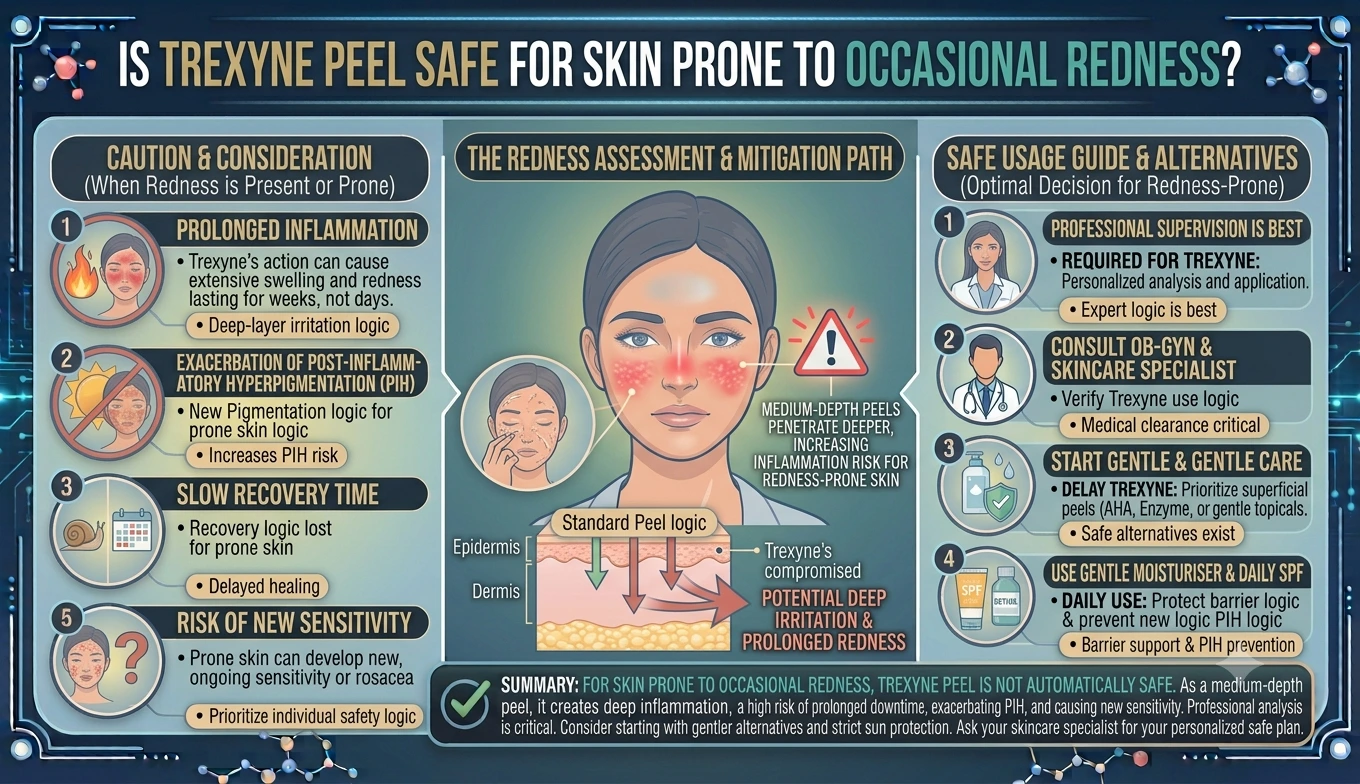
Is Trexyne Peel Safe for Skin Prone to Occasional Redness ?
Yes, the Trexyne Peel is safe and suitable for skin prone to occasional redness when administered by a trained aesthetic practitioner using an appropriate tiered protocol. Skin experiencing transient flushing or mild reactivity requires a gentle, controlled approach to resurfacing. The Trexyne Peel Professional Algae Resurfacing Treatment
operates through a purely mechanical mechanism powered by micronized marine-algae spicules, completely bypassing chemical exfoliants that often trigger harsh burning or lingering inflammation. Combined with stabilised Vitamin E to condition the epidermal barrier from the moment of application, this botanical treatment creates controlled micro-channels to encourage skin renewal, smooth uneven texture, and support a calm, balanced, and brighter complexion without unpredictable downtime.
Understanding the Physiology of Skin Prone to Occasional Redness
Managing reactive or easily flushed skin requires a thorough understanding of cutaneous vascular dynamics and epidermal barrier function. Skin prone to redness often reacts sharply to thermal, mechanical, or chemical stress.
Vascular Reactivity and the Epidermal Barrier
Skin prone to occasional redness typically features a hyper-reactive microvascular network located in the upper dermis. External stressors cause rapid vasodilation, resulting in visible flushing and localized warmth across the cheeks, nose, or chin. Often, this vascular sensitivity accompanies a compromised or inherently delicate stratum corneum. When the lipid matrix lacks structural integrity, environmental irritants penetrate more easily, which fuels ongoing neurovascular responses and persistent surface warmth.
Why Conventional Resurfacing Can Be Problematic
Traditional resurfacing methods often present significant risks for reactive complexions. Aggressive exfoliants can disrupt the delicate mantle of the skin, causing sudden pH shifts that trigger widespread vascular expansion and prolonged recovery times. Skin prone to redness demands a method that respects its delicate nature, avoids chemical agitation, and offers precise practitioner control over every phase of the resurfacing process.
The Mechanical Advantage of Botanical Marine Spicules
Botanical resurfacing using marine spicules provides a safe, highly controlled alternative for refining reactive skin without risking chemical stress.
Controlled Micro-Channeling Without Chemical Stress
The cornerstone of Trexyne technology lies in microscopic, needle-like structures derived from marine algae. When massaged gently into the skin, these botanical spicules create thousands of precise micro-channels within the upper stratum corneum. This physical interaction encourages natural cellular turnover without relying on chemical exfoliants or active solution absorption. The absence of aggressive chemical reactions prevents sudden skin destabilization, making it exceptionally manageable for easily flushed complexions.
Practitioner Control Over Physical Massage Parameters
Because marine spicules function through a mechanical mechanism, the treating aesthetic practitioner maintains total control over treatment intensity. The practitioner can adjust application time, pressure, and motion based on real-time tissue feedback. If an area demonstrates quick vascular reactivity, the practitioner simply reduces physical pressure or completes the pass, ensuring the skin stays well within its tolerance threshold throughout the session.
The Calming Role of Stabilised Vitamin E During Resurfacing
Conditioning the skin barrier during active resurfacing is critical for maintaining comfort and preventing lingering erythema in reactive skin types.
Immediate Antioxidant Support and Lipid Conditioning
To support delicate tissue from the start, the Trexyne formulation combines marine spicules with stabilised Vitamin E, or tocopherol. Tocopherol is a lipid-compatible antioxidant that integrates seamlessly into the intercellular matrix of the skin. Applied during the mechanical resurfacing phase, stabilised Vitamin E provides immediate comfort, helps soothe initial surface warmth, and conditions the delicate lipid layer as the spicules engage the tissue.
Fortifying the Stratum Corneum for Predictable Recovery
By reinforcing the lipid barrier during mechanical stimulation, stabilised Vitamin E minimizes transepidermal water loss and strengthens barrier stability. This built-in lipid support helps ensure that the subsequent shedding phase progresses smoothly and comfortably. Reactive skin receives the exact conditioning it needs to rebuild its protective outer layer while minimizing post-treatment sensitivity. Practitioners can explore our complete range of professional botanical formulations by visiting the official Trexyne shop page
.
Navigating Tiered Protocols for Reactive Complexions
A structured, tiered protocol allows aesthetic professionals to match treatment depth and physical intensity to the unique resilience of each client’s skin.
Selecting a Gentle Level 1 Resurfacing Protocol
For clients experiencing occasional redness, practitioners typically initiate treatment using a Level 1 protocol. This entry-level application utilizes gentle, feather-light massage movements and a shorter contact duration. The goal is to introduce marine spicules into the upper stratum corneum without over-stimulating underlying capillaries, establishing baseline tolerance while delivering gentle surface refinement.
Progression to Higher Tiers as Barrier Resilience Improves
As the client completes initial sessions and demonstrates robust barrier recovery, the practitioner can slowly advance the protocol tier in subsequent visits. Progressing to Level 2 or Level 3 protocols allows deeper mechanical engagement for enhanced texture refinement and pore clarification. This step-by-step progression ensures that reactive skin builds resilience over time without experiencing unexpected flare-ups or extended recovery windows.
Managing Expected Post-Treatment Responses in Redness-Prone Skin
Educating clients on normal post-resurfacing responses helps alleviate worry and ensures proper home care during the active recovery window.
Understanding Normal Post-Peel Warmth and Erythema
Following a mechanical spicule treatment, clients with reactive skin will experience localized redness and a prickling sensation similar to a mild sunburn. This reaction is a natural, expected response as the marine spicules rest within the upper skin layers and stimulate cellular movement. The initial redness typically subsides within twenty-four to forty-eight hours as the spicules work their way out of the stratum corneum naturally.
Distinguishing Normal Renewal from Hyper-Reactivity
A trained practitioner can easily guide clients through the normal stages of post-treatment renewal. While mild warmth, prickling, and transient erythema are standard indicators of active resurfacing, persistent severe irritation should not occur. Because the treatment operates purely through a physical mechanism, recovery follows a highly predictable path, allowing clients to return to their normal daily activities with confidence.
Essential Home Aftercare for Preserving Barrier Stability
Proper home care is just as vital as the clinical application when managing skin prone to occasional redness.
Simplifying the Post-Treatment Skincare Routine
During the initial recovery phase, clients must keep their daily home care simple, gentle, and strictly protective. For the first few days, cleansing should involve only lukewarm water and a mild, non-foaming cleanser applied gently with fingertips. Clients must avoid manual scrubbing, face wipes, or hot showers, as friction and thermal heat can aggravate delicate microvascular networks.
Hydration Replenishment and Sun Protection
To support the skin during desquamation, clients should apply a rich, simple moisturizer that replenishes surface lipids and locks in hydration. Daily application of broad-spectrum sun protection is equally vital, as newly revealed epidermal cells are particularly sensitive to ultraviolet radiation. Diligent sun defense prevents UV-induced flushing and guards fresh skin against environmental stress. Practitioners seeking technical protocol resources or clinical support can reach out via our official Trexyne contact page
.
Integrating Trexyne Peel into a Comprehensive Clinical Plan
Achieving long-term skin balance and clarity requires a thoughtful, structured approach that combines professional treatments with sound clinical judgment.
Conducting a Thorough Pre-Treatment Skin Assessment
Before performing a resurfacing treatment on redness-prone skin, the practitioner must conduct a detailed consultation. Assessing recent vascular reactivity, baseline barrier health, and current home care habits ensures the client is a suitable candidate. Identifying potential triggers beforehand allows the practitioner to tailor the physical application parameters for maximum safety and comfort.
Structuring Multi-Session Treatment Series
To achieve significant improvements in texture, pore clarity, and overall radiance, practitioners usually recommend a series of three to six sessions. Spacing appointments three to four weeks apart gives the epidermal barrier plenty of time to fully rest and rebuild between treatments. Over time, progressive mechanical resurfacing supports healthier cell turnover, helping the skin look smoother, firmer, and more evenly balanced. To learn more about our brand philosophy and clinical standards, visit the main Trexyne homepage
.
Comparing Mechanical Marine Resurfacing with Aggressive Physical Scrubs
Understanding why professional marine spicule treatments differ fundamentally from retail physical scrubs clarifies why spicules are safe for redness-prone skin.
Micro-Precision Versus Abrasive Surface Friction
Retail physical scrubs rely on jagged seeds, crushed shells, or large mineral particles that scrape across the surface of the skin. This coarse rubbing action tears fragile tissue, damages surface capillaries, and causes widespread vascular inflammation. In contrast, micronized marine spicules are refined microscopic structures that penetrate cleanly into the upper stratum corneum without scraping or tearing the surface.
Uniform Cellular Stimulation Without Tissue Trauma
Rather than forcefully rubbing away surface layers through heavy friction, marine spicules act as microscopic physical stimulators embedded within the tissue. They signal the skin to accelerate its natural self-repair process, pushing older cells outward from beneath. This internal mechanical action produces a smooth, uniform shedding phase without the harsh tissue trauma associated with manual home scrubbing.
Conclusion
Trexyne Peel is a safe, highly controlled option for skin prone to occasional redness when applied by a trained aesthetic practitioner utilizing a gentle tiered protocol. Skin experiencing transient flushing requires resurfacing methods that respect delicate vascular networks and maintain barrier integrity. By utilizing the purely mechanical action of marine-algae spicules, the Trexyne Peel Professional Algae Resurfacing Treatment
creates controlled micro-channels without chemical exfoliants. Infused with stabilised Vitamin E to condition and comfort the stratum corneum, this botanical treatment encourages natural cellular renewal while minimizing downtime. When combined with professional protocol adjustments and careful home care, Trexyne Peel helps clients achieve a smoother, brighter, and more even-looking complexion safely and predictably.
Frequently Asked Questions
Q: Is Trexyne Peel safe to use if my client experiences mild facial flushing on their cheeks?
Yes, Trexyne Peel is safe for skin prone to mild flushing when administered by a trained professional. The practitioner can utilize a Level 1 protocol with light physical pressure to deliver gentle resurfacing without over-stimulating delicate surface capillaries.
Q: Will the marine algae spicules cause permanent redness on sensitive skin?
No, marine spicules do not cause permanent redness. The initial erythema and prickling sensation are normal responses to mechanical stimulation and typically subside within twenty-four to forty-eight hours as the spicules naturally work out of the skin.
Q: How does stabilised Vitamin E help redness-prone skin during the resurfacing process?
Stabilised Vitamin E provides immediate antioxidant conditioning and essential lipid support to the stratum corneum. It helps soothe surface warmth, reduces transepidermal water loss, and maintains barrier stability throughout the active shedding phase.
Q: Can a client with skin prone to occasional redness get a Trexyne Peel before a major event?
Because reactive skin may experience temporary redness and light shedding for three to six days, clients should schedule their treatment at least one to two weeks before a major event. This buffer allows the skin to fully finish shedding and reveal a smooth, luminous surface.
Q: Is Trexyne Peel available for purchase as an at-home calming treatment for sensitive skin?
No, Trexyne Peel is strictly a professional-only formulation available exclusively to trained aesthetic practitioners and verified clinics. Professional skin assessment and precise application techniques are essential for safe, effective outcomes.
Q: What should a client do at home if their skin feels warm or flushed after their clinic session?
Clients should apply a simple, rich barrier cream, avoid hot showers and strenuous exercise, and keep their skin protected with broad-spectrum sunscreen. Avoiding manual rubbing and thermal heat allows the vascular system to cool down naturally while the barrier recovers.