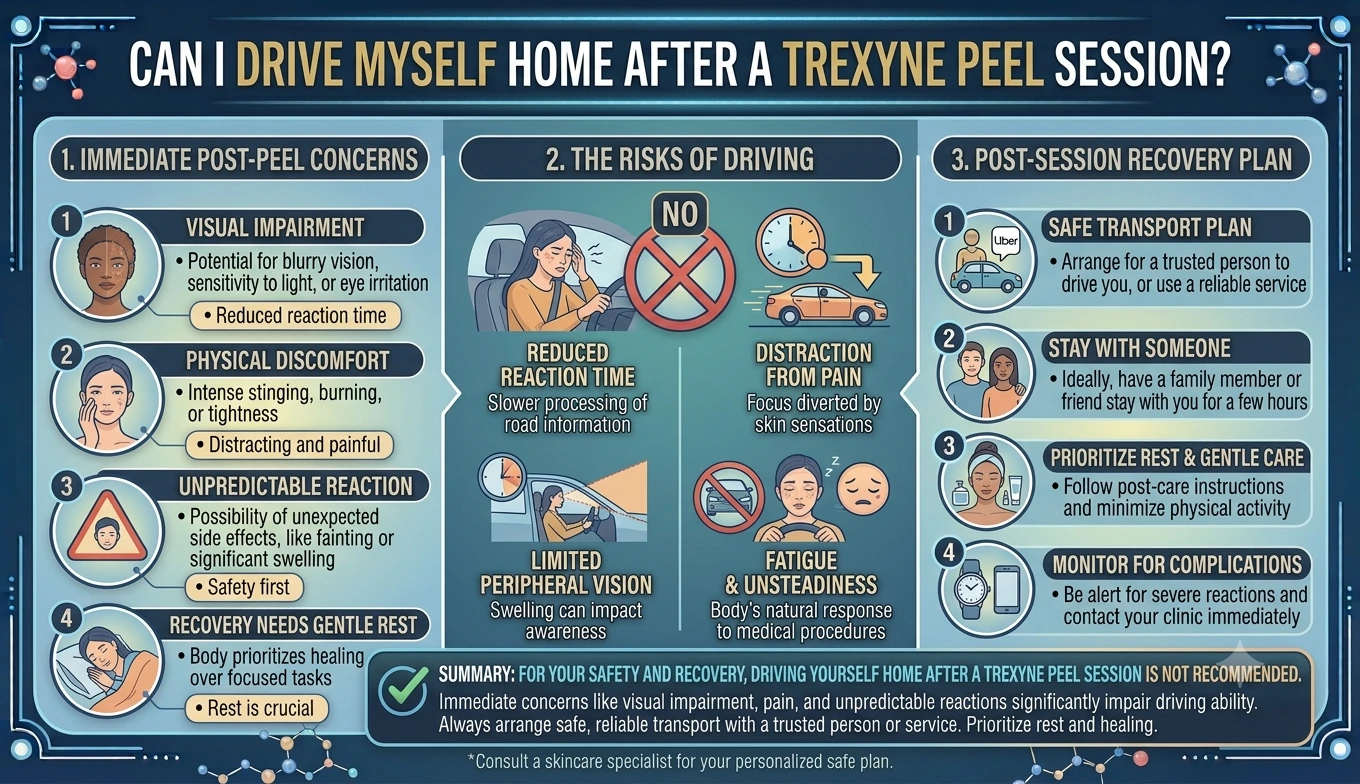
Can I Drive Myself Home After a Trexyne Peel Session?
Most clients can drive themselves home after a Trexyne Peel session. Because the treatment works through a mechanical resurfacing process rather than a chemical one, there is no sedation, numbing cream, or altered mental state involved, so your reflexes and concentration remain unaffected. The main consideration is comfort rather than safety. Some clients experience mild warmth, tightness, or pinkness in the treated area immediately afterwards, and this can feel slightly distracting during the first short while. As a practitioner, I always talk clients through what to expect before they leave the clinic, so they feel confident behind the wheel. This guide explains exactly what happens after a session and what to consider before you head off.
What Happens During a Trexyne Peel Session
A Trexyne Peel session is a controlled, in-clinic treatment carried out by a trained aesthetic professional. The treatment uses marine-algae spicules to create controlled micro-channels across the skin’s surface, working through a purely mechanical mechanism. There are no acids involved and no chemical exfoliation takes place at any stage. Alongside the resurfacing action, stabilised Vitamin E is applied to support the skin’s recovery phase from the very first application.
Because the treatment does not rely on chemical penetration, there is no need for numbing agents or sedative preparations that might otherwise affect your ability to concentrate. The session itself typically takes place in a clinic setting, with your practitioner adjusting the intensity of the treatment according to your skin type and the results you are hoping to achieve.
A typical appointment begins with a short skin assessment, where your practitioner will look at your current skin condition, discuss your goals, and decide on the most suitable intensity level for that session. The treatment itself is then carried out methodically, working across the face in sections so that coverage is even and controlled throughout. Most sessions are completed within thirty to forty-five minutes, depending on the areas being treated and the protocol chosen.
Throughout the appointment, your practitioner will check in with you regularly to make sure the sensation remains comfortable. Because the mechanism is entirely mechanical, there is a good deal of flexibility to adjust pressure and pace as the session progresses, rather than committing to a fixed chemical contact time as some other resurfacing approaches require.
You can read more about how the treatment is formulated on the Trexyne Peel product page, where the full mechanism and application protocol are outlined.
Why Driving Ability Depends on the Treatment Type, Not Just the Product
Whether a client can safely drive after any in-clinic treatment depends largely on what was actually done during the appointment, rather than the product name alone. Treatments involving sedation, strong topical anaesthetics, or injectables that affect facial movement often come with specific advice against driving. Mechanical resurfacing treatments, by contrast, do not introduce any substance into the bloodstream that could affect alertness or coordination.
How Trexyne Peel Differs From Treatments With Sedation or Numbing
Trexyne Peel does not involve chemical exfoliants, so there is no need for the deeper numbing protocols sometimes used alongside acid-based treatments. The mechanical action of the marine-algae spicules means the sensation during treatment is generally described as a light scratching or gentle friction, rather than a stinging or burning feeling. This distinction matters when considering whether a client is fit to drive, because it removes the variable of pharmacological sedation entirely.
It is a question worth asking about any treatment before booking, not just this one. If a clinic uses topical anaesthetics, oral sedatives, or injectable numbing agents as part of a protocol, it is sensible to plan for someone else to drive you home, regardless of how minor the treatment might seem. With Trexyne Peel, that planning step is generally unnecessary, though clients are always welcome to arrange transport if it simply feels more comfortable to do so.
What You Can Expect Immediately After Your Session
Immediately after a Trexyne Peel session, most clients notice a warm, slightly flushed appearance across the treated area. This is a normal response to the mechanical resurfacing action and tends to settle within a short period. Some people describe a tightness similar to mild sunburn, while others feel very little at all. Vision, coordination, and mental clarity are not affected by the treatment itself.
Typical Sensations in the First Hour
In the first hour after treatment, it is common to feel warmth, mild sensitivity to touch, and occasional tingling as the skin begins its recovery phase. None of these sensations are associated with impaired concentration or reaction times. If a client feels comfortable sitting upright and chatting normally in the treatment room afterwards, this is usually a good sign that they are ready to leave and travel independently.
Some clients also notice a light tightness across the treated areas, similar to how skin can feel after time spent outdoors on a warm day. This tends to be most noticeable in the first thirty minutes and gradually eases as the skin settles. It does not typically affect vision, hand coordination, or the ability to focus on the road, which is why most practitioners are comfortable letting clients drive themselves home once the initial check-in has been completed.
Factors That Could Affect Your Ability to Drive Safely
While the treatment itself does not impair driving ability, individual circumstances can occasionally play a role in how a client feels immediately afterwards. It is worth being aware of these before booking your appointment, particularly if you are travelling alone.
These factors are rarely significant enough to prevent someone from driving, but understanding them in advance helps you plan a session that fits comfortably around the rest of your day. A brief conversation with your practitioner beforehand is usually enough to flag anything that might apply to you specifically.
Individual Skin Sensitivity
Clients with more reactive or sensitive skin types may experience a stronger warming sensation after their session. This can sometimes feel a little uncomfortable rather than painful, and a small number of people prefer to sit quietly for ten to fifteen minutes before setting off. This is a matter of personal comfort rather than a safety requirement. Your practitioner will usually have a good sense of how your skin is likely to respond based on your consultation and any previous sessions, and can adjust the intensity accordingly if sensitivity has been an issue before.
Anxiety or First-Time Treatment Nerves
First-time clients sometimes feel a little nervous before or during their initial session, simply because the experience is new to them. This nervousness can occasionally linger for a short while afterwards. If you know you tend to feel anxious around clinical treatments, it may help to arrange transport for your first appointment, purely for peace of mind rather than because the treatment requires it.
Nerves of this kind usually settle quickly once a client sees and feels that the treatment is gentle and well tolerated. Many people find that after their first session, they feel entirely at ease driving themselves to and from subsequent appointments, since they now know what to expect.
Downtime and Recovery Timeline After a Trexyne Peel
One of the appealing aspects of this treatment is its predictable downtime. Because the tiered protocol allows intensity to be matched to skin type and client expectation, practitioners can plan sessions around a client’s schedule with a good degree of confidence about how the skin will look and feel in the hours and days that follow.
This predictability is particularly helpful for clients who need to fit a session around work commitments, school runs, or other appointments later in the day. Knowing roughly what to expect at each stage of recovery makes it much easier to plan the rest of your day with confidence, including the drive home.
Same-Day Expectations
On the day of treatment, mild redness and warmth are the most commonly reported effects. These generally begin to ease within a few hours, though the exact timeline varies from person to person depending on skin type and the intensity level chosen for that session. Makeup is usually best avoided for the remainder of the day to allow the skin to begin its recovery undisturbed.
Many clients find that by the time they leave the clinic and reach their car, the initial warmth has already started to settle. Others notice it lingers a little longer into the afternoon or evening. Either way, this settling process is a surface-level response and does not extend to how alert or focused you feel.
The Following 24 to 48 Hours
In the day or two after treatment, some clients notice mild flaking or a slightly rough texture as the skin renews itself. This is a normal part of the process and is generally manageable with a gentle, fragrance-free skincare routine. None of these later-stage effects have any bearing on your ability to drive, since they relate to the skin’s surface rather than to alertness or coordination.
By this stage, most clients have returned fully to their usual routines, including driving, exercise, and work. The main consideration during this window tends to be skincare related, such as keeping the skin hydrated and protected from direct sun, rather than anything connected to physical or mental readiness for daily activities.
Practical Tips Before You Leave the Clinic
Even though driving home unassisted is generally straightforward after a Trexyne Peel session, a few simple habits can make the journey more comfortable.
Take a moment to sit in the waiting area for five to ten minutes after your treatment rather than rushing straight out. This gives the initial warmth a chance to settle and allows you to check in with how your skin feels before getting behind the wheel. Keep sunglasses to hand if you are heading out into bright daylight, since freshly treated skin can feel slightly more sensitive to strong light for a short period. It is also sensible to have a bottle of water with you and to avoid touching or rubbing the treated area during the drive.
If you wear a seatbelt that sits close to your neck or jawline, you may want to adjust your seating position slightly so the strap does not rub against freshly treated skin. Winding down the car window a touch, rather than pointing an air vent directly at your face, can also help avoid unnecessary drying or irritation on the way home. None of these steps are essential, but they can make the short journey a little more pleasant.
If you are ever unsure about how your skin is responding, your practitioner can talk you through what is normal. You can also reach out via the Trexyne contact page if you have questions ahead of booking your first session.
When It May Be Wise to Arrange a Lift Home
Although most clients drive themselves home without any issue, there are a few situations where arranging a lift can simply make the experience more relaxed. If you are having a higher-intensity protocol as part of a course of treatments, or if you know from previous sessions that your skin tends to feel warmer than average afterwards, a short car journey with someone else at the wheel removes any need to think about driving while your skin settles.
Clients who are combining their appointment with a longer day out, or who have a considerable distance to travel afterwards, sometimes prefer to build in a short rest before setting off. This is entirely a matter of personal preference and comfort, and your practitioner can help you decide what makes sense for your particular appointment.
It is also worth thinking about the time of day your appointment falls at. An early morning session before a busy day at work may leave less time to sit and settle afterwards, whereas a late afternoon appointment might allow you to head straight home and relax for the rest of the evening. Planning your session around a quieter part of your day can make the whole experience feel more comfortable from start to finish, regardless of how you choose to travel afterwards.
How Practitioners Can Prepare Clients for Aftercare
As practitioners, part of our role is to set clear expectations before treatment even begins. Explaining the mechanical nature of the Trexyne Peel, and reassuring clients that no sedative or numbing agents are used, goes a long way towards easing any pre-appointment nerves. A short conversation about aftercare, including how the skin is likely to feel over the following hours and days, helps clients feel prepared rather than caught off guard.
It is good practice to provide clients with simple written aftercare guidance to take home, covering everything from suitable skincare products to sun protection and when they can expect to see visible changes in their skin. Clients who understand what is happening at each stage of recovery tend to feel more relaxed throughout the process, including on the drive home immediately after their appointment. Encouraging questions during the consultation, rather than only at the end of the session, also helps make sure nothing is left unclear before a client leaves the clinic.
Clinics offering the treatment can find full product and protocol details via the Trexyne shop, where the various treatment packages are listed alongside supporting information for practitioners.
Comparing Trexyne Peel Downtime to Other Resurfacing Approaches
Resurfacing treatments vary considerably in how they affect a client’s day. Some approaches involve deeper penetration, longer recovery windows, or preparatory numbing that can leave clients feeling groggy or hesitant to drive. Because Trexyne Peel works through marine-algae spicules rather than any chemical process, the experience tends to be more predictable, with a tiered protocol that lets practitioners tailor intensity to what each client can comfortably manage.
This predictability is one of the reasons practitioners often recommend it for clients who need to return to normal activities, including driving, shortly after their appointment. It is worth remembering that individual skin responses can still vary, so following your practitioner’s specific aftercare guidance always takes priority over general expectations.
For clients weighing up different resurfacing options, it can help to ask a practitioner directly what is involved in each treatment, including whether numbing agents are used, how long the appointment takes, and what the immediate aftermath tends to look like. Understanding these practical details in advance makes it much easier to plan a session, including transport, around your day-to-day commitments.
Getting the Most From Your Trexyne Peel Results
To support the best possible outcome from your treatment, it helps to plan your day around your appointment sensibly. Avoiding strenuous exercise, excessive heat, and direct sun exposure for the remainder of the day can support the skin’s recovery phase. Gentle, fragrance-free products are usually recommended in the days following treatment, alongside daily SPF to protect the newly resurfaced skin.
Consistency tends to matter more than intensity when it comes to visible results. Attending sessions at the intervals your practitioner recommends, rather than spacing them out unpredictably, allows the tiered protocol to build progressively towards a more even-looking, refined complexion. Keeping a simple record of how your skin responds after each session can also help you and your practitioner fine-tune future appointments, including how much time you might personally want to allow before driving home.
Booking a course of sessions, rather than a single treatment, is often how practitioners help clients work towards more even-looking, refined skin over time. You can explore the full range of options on the Trexyne homepage, or speak with your practitioner about which protocol suits your skin.
Booking Your Appointment With Driving Plans in Mind
If driving yourself home is important to you, it is worth mentioning this during your consultation so your practitioner can factor it into the session plan. They may suggest starting with a lower intensity level for your first appointment, simply so you can see how your own skin responds before deciding whether to adjust the protocol for future sessions.
Questions Worth Asking at Consultation
Before your first session, it can help to ask your practitioner what sensation to expect during and after treatment, how long you should plan to stay in the clinic afterwards, and whether your particular skin type tends to show a stronger or milder response. These questions are quick to cover in a consultation and give you a clearer picture of what your specific appointment and journey home are likely to look like.
If you are new to the treatment and would like to discuss your suitability before booking, the team can be reached through the Trexyne contact page. A short conversation beforehand often makes the whole experience, from treatment to travelling home, feel far more straightforward.
Conclusion
Driving yourself home after a Trexyne Peel session is generally straightforward, since the treatment works through a mechanical process rather than a chemical one and involves no sedation or numbing. Most clients feel comfortable getting behind the wheel shortly after their appointment, with mild warmth or tightness being the only immediate sensation to be aware of. Individual comfort, rather than safety, is the main factor to consider, and arranging a lift is always an option if you would simply prefer a more relaxed journey home.
Understanding what to expect at each stage, from the treatment itself through to the days that follow, makes it much easier to plan your appointment around the rest of your life, including how you choose to get home afterwards. With its predictable, tiered approach to intensity, Trexyne Peel is designed to fit naturally into a client’s day while supporting the skin’s journey towards a brighter, more even-looking complexion over time.
Frequently Asked Questions
Q: Is it safe to drive myself home after a Trexyne Peel treatment?
Yes, in most cases. Because the treatment is mechanical rather than chemical and does not involve sedation or numbing agents, your alertness and coordination are not affected. The main thing to be mindful of is comfort, since mild warmth in the treated area is common immediately afterwards.
Q: Will my skin feel sore or sensitive on the drive home?
Some clients notice mild warmth or tightness after their session, similar to a light sunburn feeling. This tends to settle within a short time and does not usually cause discomfort while driving. If you are concerned, sitting in the clinic for a few extra minutes beforehand can help you gauge how your skin is responding.
Q: Do I need someone to accompany me to my Trexyne Peel appointment?
It is not a requirement, since the treatment does not affect your ability to concentrate or react. Some first-time clients simply prefer the reassurance of a lift for their initial session, purely for peace of mind rather than because it is medically necessary.
Q: How long should I wait in the clinic before driving home?
Many practitioners suggest sitting for five to ten minutes after treatment so any initial warmth can settle, though this is a comfort measure rather than a medical necessity. You are welcome to leave sooner if you feel ready.
Q: Does Trexyne Peel use any numbing cream that could affect driving?
No. Trexyne Peel works through marine-algae spicules and stabilised Vitamin E in a purely mechanical process, so no numbing agents or sedatives are used at any stage of the treatment.
Q: Can I drive myself home after a higher-intensity Trexyne Peel protocol?
Most clients still feel comfortable driving after a higher-intensity session, though your practitioner may suggest a short rest beforehand if your skin tends to feel warmer than average following more intensive treatments.
Q: What should I avoid doing on the journey home after my session?
It is sensible to avoid touching or rubbing the treated area and to keep sunglasses handy if travelling in bright daylight, since freshly treated skin can feel a little more sensitive to strong light for a short period afterwards.