What Should I Wear to a Trexyne Peel Appointment?
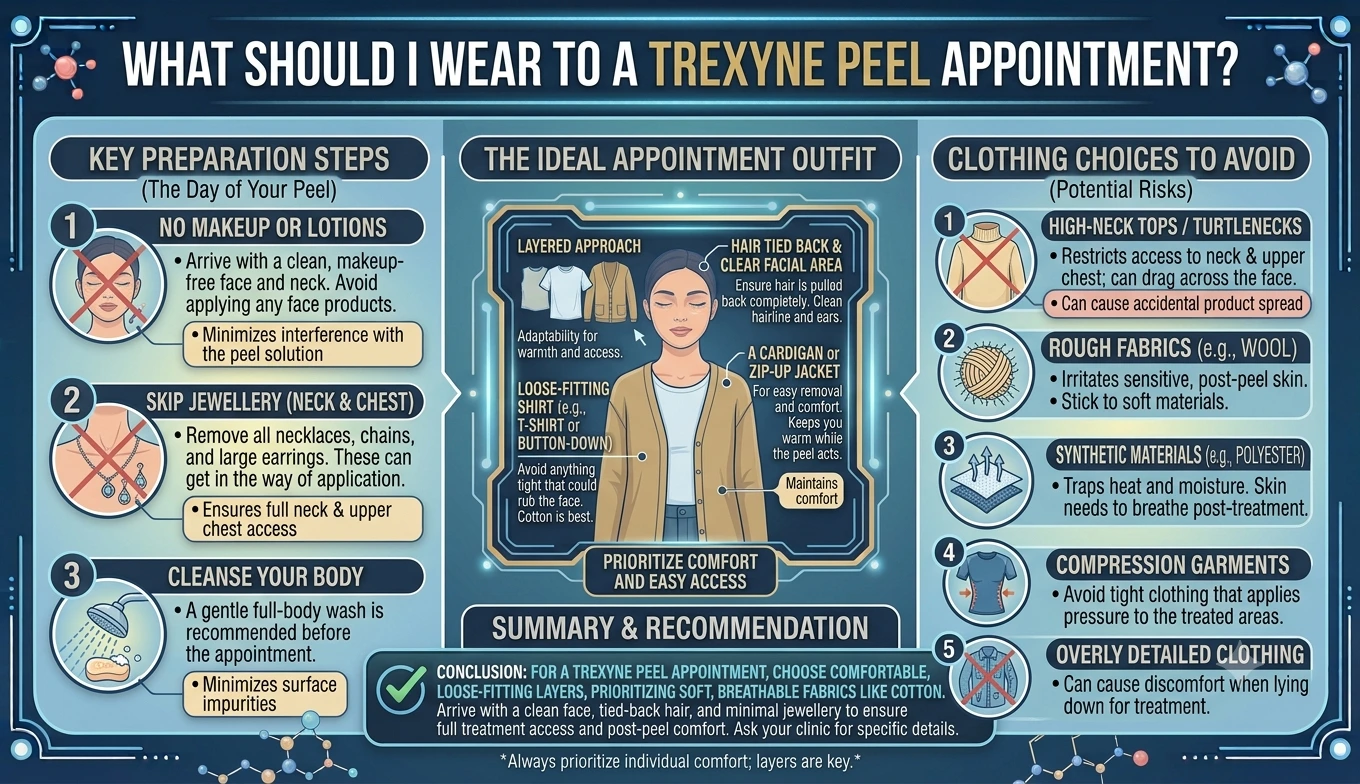
For a Trexyne Peel appointment, wear loose, comfortable clothing that won’t need to be pulled over your head afterwards, and avoid make-up, heavy skincare products and jewellery around the face and neck. Your practitioner needs clear access to your skin before, during and after treatment, and simple clothing choices make that easier for both of you. If you’re booking your first session and want to know exactly what to expect, the Trexyne Peel page outlines the full treatment process, but this guide focuses specifically on preparing what you wear and bring on the day.
Getting ready for a professional skin treatment involves more than turning up on time. Small, practical choices about clothing, accessories and skincare can make your appointment smoother and your results more comfortable to manage afterwards. Many clients spend time researching the treatment itself, reading up on downtime, results and the science behind it, but overlook the practical side of getting ready. This guide walks through everything worth thinking about before you head out the door, from the clothes in your wardrobe to what you pack in your bag for the journey home.
Why What You Wear Actually Matters
It’s easy to assume that clothing choices are irrelevant to a facial treatment, but they play a bigger role than most people expect. Your practitioner will need to work closely around your hairline, ears, neck and sometimes upper chest, depending on the treatment area. Anything that gets in the way, whether that’s a tight collar, a scarf or a hood, can slow down the appointment or lead to unwanted contact with treated skin.
There’s also the recovery period to think about. Skin that has just been treated with a resurfacing protocol like the Trexyne Peel can feel slightly warm, tight or sensitive for a short time afterwards. Clothing that brushes against the face, or that needs to be removed by pulling it over your head, isn’t ideal in those first few hours.
Practitioners often mention that the biggest disruptions to an appointment are the small, avoidable ones. A necklace that needs unclasping mid-treatment, a jumper that has to come off after the face is already prepared, or a scarf that keeps slipping into the treatment zone all add unnecessary steps to a session that should otherwise run smoothly. None of these things are difficult to plan for once you know what to expect, which is exactly why so many clinics send preparation guidance ahead of a first appointment.
There’s a practical side to this too. Appointments are often booked back to back, and a few extra minutes spent adjusting clothing or untangling jewellery can affect how relaxed the whole experience feels, both for you and for your practitioner. Thinking ahead about what you wear removes that friction entirely.
First Impressions Aren’t the Point Here
This isn’t the appointment to dress up for. Comfort and practicality matter far more than style. Many clinics see clients arrive in smart-casual outfits for work, then realise halfway through consultation that a polo neck or button-up shirt with a tight collar wasn’t the best choice. Planning ahead avoids this.
If your appointment falls during a working day, it’s worth thinking about your outfit the night before rather than grabbing whatever is convenient in the morning. Clients who come straight from the office often find themselves choosing between staying in work clothes that aren’t ideal for treatment, or bringing a change of top to swap into before their session. Either option works, but knowing in advance saves a rushed decision in the clinic reception area.
It also helps to think about what you’ll be doing immediately after your appointment. If you’re heading back to work, a change of clothes might not be practical, but a scarf or wrap that can go over a work outfit without disturbing your skin is a simple compromise.
Clothing That Works Well
The safest approach is to think about anything that touches your neck, shoulders or hairline.
Tops and Outerwear
Choose a top with a wide neckline or a full button front. Both options let you remove or adjust clothing without touching your face. A zip-up jacket or cardigan is a sensible outer layer, especially in cooler months, since it can be taken off easily in the treatment room and put back on afterwards without contact near the skin.
Avoid turtlenecks, high collars, hooded jumpers and anything that needs to go over your head. These all risk brushing against freshly treated skin, and in some cases can pull hair or fabric across the treatment area right after your session.
Layering is a useful strategy, particularly outside the summer months. A vest top or wide-neck t-shirt as a base layer, with a zip-up cardigan or jacket over the top, gives you flexibility. You can remove the outer layer easily before treatment and put it back on afterwards without any need to lift fabric over your head or shoulders.
If you’re travelling to your appointment by public transport, think about what you’ll need for the journey too. A scarf that ties at the front rather than one that has to be pulled on over the head is a small but genuinely useful choice, especially if your skin feels slightly warm or sensitive on the way home.
Hair and Accessories
If your hair is long, tie it back loosely before you arrive, or bring a soft hair tie with you. Most practitioners will offer a headband to keep hair away from the face during treatment, but arriving with your hair already manageable saves time.
Remove earrings, necklaces and any facial jewellery before your appointment if possible. Metal accessories near the treatment zone can interfere with the practitioner’s access and are easy to forget about until you’re already in the chair.
Fringes and shorter layers around the face can also be worth considering. If you have a fringe, ask whether it needs to be clipped back during your session, since practitioners often need clear access to the forehead and hairline. A small hair clip in your bag is an easy way to solve this without any fuss on the day.
Watches, bracelets and rings aren’t usually a problem for a facial treatment, but it’s still worth taking them off if you plan to relax fully during your appointment. Some clients find it easier to remove all accessories at once before their session starts, simply so nothing needs attention once they’re settled in the treatment chair.
Make-up and Skincare Before Your Appointment
Arrive with a clean face wherever you can. Make-up, sunscreen, moisturiser and other skincare products sit on the surface of the skin and need to be removed before treatment can begin properly. Most clinics will cleanse your skin as part of the appointment, but arriving with minimal product already means less time spent on preparation and more time focused on the treatment itself.
What to Avoid in the Days Before
Speak to your practitioner about anything you’re currently using on your skin, particularly retinoids, exfoliating acids or other active ingredients. These are separate from the Trexyne Peel itself, which works through a mechanical mechanism using marine-algae spicules rather than chemical exfoliants, but products used at home in the days beforehand can affect how your skin responds to any professional treatment. Your practitioner can advise on timing based on your regular routine.
Sun exposure is another factor worth mentioning at your consultation, particularly if you’ve spent time outdoors in the days before your appointment. Practitioners often ask about recent sun exposure as part of their standard assessment, since it can influence how your skin responds to any resurfacing treatment. This isn’t specific to clothing, but it’s a useful thing to mention alongside your preparation questions.
If you’re someone who wears a lot of daily SPF or foundation, consider bringing a gentle micellar water or make-up wipe with you, in case your clinic asks you to remove products before they begin their own cleansing process. It’s a small addition to your bag that can make the start of your appointment quicker.
What to Bring With You
A few practical items make the appointment and the journey home more comfortable.
- Sunglasses, particularly if your appointment is during daylight hours or if you’re sensitive to bright light afterwards
- A soft scarf or wrap that ties rather than pulls over the head, useful if the weather is cold
- A hair tie or headband, even if the clinic provides one
- Your usual moisturiser or SPF, if your practitioner has advised you can reapply it after your session
If you’re unsure what’s appropriate to bring, it’s worth checking with the clinic directly. The contact page is a good starting point if you want to ask specific questions before your visit.
It’s also worth bringing a bottle of water with you, particularly if your appointment is longer or if you have a bit of a wait before you’re seen. Staying hydrated on the day of any professional skin treatment is generally a sensible habit, and it means you’re not relying on a vending machine or shop on the way home.
Some clients like to bring headphones for the treatment itself, since sessions can involve a period of lying still while the practitioner works. This is entirely down to personal preference and depends on the clinic’s own approach, but it’s worth asking if this is something you’d find helpful.
Should You Wear Make-up Home?
Many clients ask whether they can reapply make-up straight after their appointment. This depends entirely on your skin’s response and your practitioner’s specific advice, since every protocol is tailored to skin type and treatment intensity. Some people find their skin looks slightly flushed for a short period after a resurfacing treatment, and it’s generally sensible to let your skin settle before applying anything new to it. Always follow the aftercare guidance given at your appointment rather than assuming a general rule applies.
If your practitioner does advise waiting before applying make-up again, plan your journey home with that in mind. A scarf or a pair of sunglasses can help you feel more comfortable in the meantime, without needing to put anything directly onto the skin before it’s ready.
Planning Your Day Around the Appointment
If possible, avoid booking a Trexyne Peel appointment right before an event where you need to look a certain way immediately afterwards. Giving your skin time to settle, even just for the rest of the day, tends to make the whole experience feel more comfortable. Many clients prefer to book their appointment for an evening or a day when they don’t have anywhere else to be straight afterwards.
Weekend appointments are popular for exactly this reason. They give you the rest of the day, and often the following day too, to let your skin settle without needing to think about make-up, work meetings or social plans. If your schedule only allows for a weekday appointment, try to book it towards the end of the day rather than first thing in the morning, so you have less to fit in immediately afterwards.
Some clients also find it helpful to avoid strenuous exercise or activities that cause excess perspiration on the day of their appointment, particularly straight afterwards. This isn’t about the treatment itself, which involves no extended downtime, but simply about giving your skin a calm and settled environment while it begins its natural recovery phase.
Temperature and Comfort in the Treatment Room
Treatment rooms are often kept cool, which helps practitioners work comfortably and keeps the environment clean and controlled. Bringing a light jumper or cardigan that’s easy to remove means you can stay warm before and after your session without complicating the treatment itself.
If you tend to feel the cold, mention it to your practitioner when you arrive. Small adjustments, like a blanket over your legs during treatment, are usually easy to arrange and won’t interfere with your session.
This is another reason layering makes sense. Socks, a warm pair of trousers or leggings, and an easily removable top or jacket mean you can stay comfortable in a cool treatment room without needing anything near your face or neck. Comfortable footwear is also worth considering, particularly if you’re sitting in a reclined treatment chair for part of your appointment.
Clinics vary in how they manage room temperature, and some will offer a blanket as standard practice. If this matters to you, it’s a reasonable thing to mention when booking your appointment, so the practitioner can have one ready before you arrive.
Preparing Mentally as Well as Practically
Knowing what to wear is only part of feeling ready for a professional skin treatment. Understanding what the Trexyne Peel actually does can also help you feel more at ease. It works through marine-algae spicules that create controlled micro-channels in the skin, alongside stabilised Vitamin E to support the skin’s recovery phase. There are no acids involved and no extended downtime associated with the treatment, which is part of why it has become a popular choice among UK aesthetic practitioners looking for a mechanical, tiered approach to resurfacing.
If you’re new to this type of treatment, ask your practitioner to talk you through what to expect at each stage. Most clinics are happy to answer questions before, during and after your appointment, and this can make the whole experience feel far more predictable.
Understanding the tiered nature of the protocol can also help set realistic expectations. Because intensity is matched to skin type and client expectation, no two appointments look exactly the same. Some clients may have a gentler first session while their skin is assessed, with intensity adjusted at later visits as their practitioner learns more about how their skin responds. This is worth bearing in mind if you’re comparing notes with a friend who has had a different experience, since your own protocol may look quite different from theirs.
Feeling informed before you arrive tends to reduce any nerves about the appointment itself. Many clients find that once they understand the mechanical, botanical basis of the treatment and know there are no acids involved, they feel considerably more relaxed about what to expect.
Questions Worth Asking Beforehand
- How many sessions might I need to see the results I’m looking for?
- What can I expect my skin to feel like immediately afterwards?
- Are there any specific products I should avoid in the days before or after?
- Is there anything about my skin type that affects how I should prepare?
Bringing a short list of questions like this to your appointment, or sending them ahead through the clinic’s contact details, helps you get tailored advice rather than general guidance.
Aftercare Clothing Considerations
What you wear on the way out matters just as much as what you wear on the way in. If your practitioner has advised your skin may feel slightly sensitive to touch or temperature, choose something soft against the skin for your journey home. A scarf that ties loosely rather than one that sits tight against the neck is a sensible choice.
If you’re travelling by car, consider keeping air conditioning or heating away from direct contact with your face for the first part of the journey. This is a small detail, but it can make the trip home more comfortable, particularly in colder months.
If you’re walking or using public transport, think about wind exposure too. A scarf that can be loosely draped rather than wrapped tightly gives you some protection without adding pressure or friction to the treated area. On particularly cold or windy days, some clients prefer to book a taxi home rather than walk, simply for extra comfort.
Once you’re home, it’s worth having comfortable, loose clothing ready to change into if you’ve been out in work clothes. A soft, wide-neck top for the rest of the day means you don’t need to think about your skin again until it’s time to follow whatever aftercare routine your practitioner has recommended.
Choosing the Right Clinic for Your Treatment
Wearing the right clothing is only useful if you’re being treated by a practitioner who understands how to deliver a tailored, professional protocol. The Trexyne Peel is designed for use exclusively by trained aesthetic professionals, so it’s worth confirming that your clinic is experienced with this specific treatment before you book. A good practitioner will walk you through preparation advice, including what to wear, as a standard part of your consultation.
If you’re researching clinics or want to see the full treatment range available, the Trexyne shop page lists the different session options, from single treatments to larger packages for those planning a longer-term skin resurfacing programme. For more general information about the brand and its approach to professional skin treatments, the Trexyne homepage is a useful starting point.
A good consultation should always cover practical preparation alongside the treatment plan itself. If your practitioner doesn’t mention what to wear or how to prepare beforehand, it’s entirely reasonable to ask. Clinics that take a thorough approach to consultation tend to also take a thorough approach to aftercare, which matters just as much as the treatment itself.
It’s also worth asking how many sessions might be recommended for your specific goals. Because the protocol is tiered and adjustable, some clients see their practitioner for a single session, while others follow a longer programme across several appointments. Knowing this in advance can help you plan not just what to wear on the day, but how to prepare for a series of appointments over time.
Seasonal Considerations for Your Appointment
The time of year can influence what you wear and how you prepare, beyond just staying warm or cool.
Summer Appointments
In warmer months, sun protection becomes a bigger consideration. Speak to your practitioner about how to manage sun exposure in the days before and after your appointment, particularly if you’ll be outdoors soon after your session. Loose, breathable fabrics like cotton are a sensible choice for summer appointments, and a wide-brimmed hat can be a useful addition to your bag if you’re heading somewhere sunny afterwards, as long as it doesn’t need to be pulled tightly over the head.
Winter Appointments
Cold weather brings its own considerations. Wind and cold air can feel more noticeable on skin that has just been treated, so a soft scarf and a warm, easy-to-remove coat are worth prioritising. Central heating in cars and homes can also feel different against freshly treated skin, so it’s worth being mindful of how close you sit to heaters or vents in the hours after your appointment.
Appointments Around Special Occasions
If you’re planning a Trexyne Peel appointment ahead of a wedding, holiday or other event, timing matters as much as clothing. Book your appointment with enough time before the occasion for your skin to settle fully, and discuss this timeline with your practitioner at your consultation. They’ll be able to advise on how many sessions to plan for and how far in advance of your event to schedule your final appointment.
Final Practical Checklist
Before you leave for your appointment, it can help to run through a short mental checklist:
- Loose top with a wide neckline or button front
- Hair tied back or a hair tie in your bag
- No jewellery around the face, neck or ears
- Clean skin, free from make-up and heavy products
- Sunglasses and a soft scarf for the journey home
- A list of questions for your practitioner, if you have any
None of these steps take much effort, but together they make a noticeable difference to how smoothly your appointment runs.
Conclusion
What you wear to a Trexyne Peel appointment plays a bigger role than most people expect. Loose clothing, minimal jewellery and a clean face all help your practitioner work efficiently and make your own experience more comfortable, both during the session and in the hours afterwards. Choosing accessories that avoid contact with the treated area, such as a soft scarf instead of a fitted collar, can also support a smoother recovery period. The Trexyne Peel itself works through a controlled, mechanical mechanism using marine-algae spicules and stabilised Vitamin E, offering a tiered approach that practitioners can match to individual skin types and expectations. With the right preparation, including simple choices about what you wear, your appointment is more likely to feel straightforward from start to finish, supporting your skin’s journey towards a brighter, more even-looking complexion.
FAQ
Q: What should I avoid wearing to a chemical-free skin peel appointment like the Trexyne Peel? Avoid turtlenecks, hooded tops and anything that needs to be pulled over your head. High collars and tight scarves can also get in the way, so a loose top with a wide neckline or button front is a better choice.
Q: Can I wear make-up to my Trexyne Peel appointment? It’s best to arrive with a clean face if possible. Make-up needs to be removed before treatment, so skipping it beforehand saves time during your appointment.
Q: Is it safe to wear jewellery during a professional algae resurfacing treatment? It’s advisable to remove earrings, necklaces and facial jewellery before your appointment. Metal accessories near the treatment area can interfere with your practitioner’s access to your skin.
Q: What should I bring to my appointment besides clothing considerations? Useful items include sunglasses, a soft scarf that ties rather than pulls over the head, and a hair tie if your hair is long. Some clients also bring a list of questions for their practitioner.
Q: Should I wear anything different for aftercare once I leave my appointment? Choose something soft against the skin for your journey home, particularly if your practitioner has mentioned any temporary sensitivity. A loosely tied scarf is generally more comfortable than a fitted collar.
Q: Do I need to prepare my skin before wearing minimal products to a Trexyne Peel session? Speak to your practitioner about any active skincare products you use regularly, such as retinoids or exfoliating acids. They can advise on timing so your skin is well prepared before your appointment.
Q: Is the Trexyne Peel appointment suitable for all skin types when it comes to preparation? The tiered protocol allows practitioners to match treatment intensity to different skin types and expectations. Your practitioner will advise on any specific preparation, including clothing and skincare, based on your individual assessment.