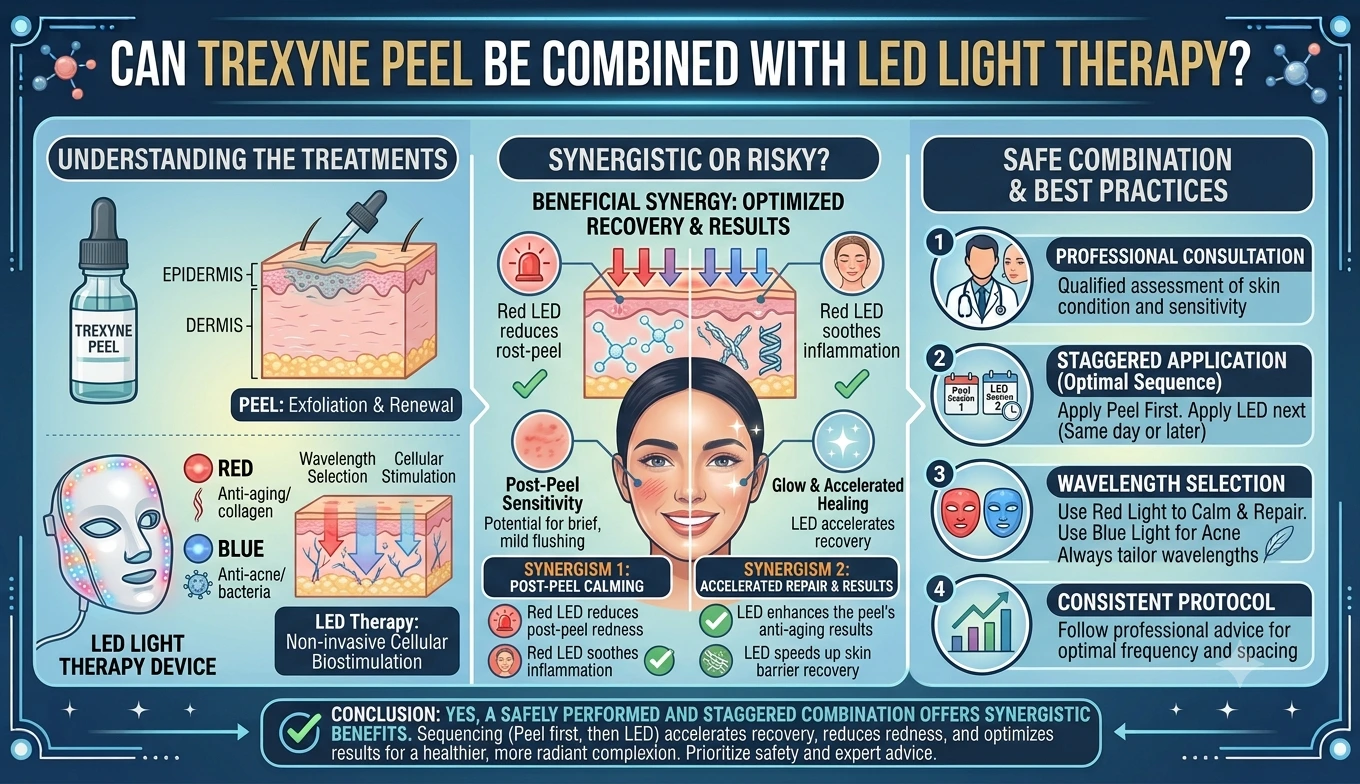
Can Trexyne Peel Be Combined With LED Light Therapy?
Many practitioners ask whether Trexyne Peel can sit alongside other treatments in a client’s routine, and LED light therapy is one of the most common pairings that comes up. In general, LED light therapy can be considered alongside a Trexyne Peel treatment plan, though the timing and sequencing of each session should be carefully managed to support the skin’s recovery. Because Trexyne Peel works through a mechanical resurfacing action rather than chemical exfoliation, it tends to allow for more predictable planning when combining it with complementary in-clinic treatments.
This post looks at how practitioners typically think about sequencing these two treatments, what factors to consider before combining them, and how to build a client’s schedule in a way that supports comfortable, well-managed results. As always, any combination approach should be based on a thorough skin assessment and clear communication with the client.
Understanding How Trexyne Peel Works Before Combining Treatments
Before considering any combination approach, it helps to be clear on how Trexyne Peel works on its own. Trexyne is a precision botanical peel built around marine-algae spicules and stabilised Vitamin E. It resurfaces and refines the skin through a mechanical mechanism, creating controlled micro-channels without the use of acids or chemical exfoliants.
This mechanical action means the skin undergoes a physical, controlled resurfacing process rather than a chemical one. The stabilised tocopherol included in the formula supports the skin’s recovery phase from the first application, which is relevant when thinking about what other treatments the skin can comfortably tolerate around the same time.
Why the Mechanism Matters for Combination Planning
Because Trexyne’s tiered protocol allows practitioners to match intensity to skin type and client expectation, it is possible to plan sessions with a reasonably predictable recovery window. This predictability is helpful when trying to fit another treatment, such as LED light therapy, into a client’s overall skincare calendar.
What LED Light Therapy Involves
LED light therapy is a widely used non-invasive treatment in professional clinics, typically involving exposure to specific wavelengths of light as part of a broader skincare routine. It is generally considered gentle and is often used to support the skin’s general condition and appearance.
Because LED light therapy does not involve physical exfoliation or resurfacing, it works through a different mechanism entirely compared to Trexyne Peel. This distinction is useful to keep in mind when deciding how the two treatments might fit together in a client’s plan.
Why Practitioners Often Consider Pairing the Two
Some practitioners consider LED light therapy as a way to support the skin’s calm, settled appearance following a resurfacing treatment. Because it does not involve any additional mechanical exfoliation, it is sometimes viewed as a comfortable addition to a broader skincare plan that includes periodic Trexyne Peel sessions.
Timing Considerations When Combining Treatments
Sequencing matters more than people often expect when it comes to combining in-clinic treatments. The order and spacing of each session can influence how comfortable the client feels and how well the skin manages the combined approach.
Should LED Come Before or After a Trexyne Peel Session?
Many practitioners prefer to schedule LED light therapy on a separate day from a Trexyne Peel session, particularly in the first 24 to 48 hours after treatment when the skin is still in its early recovery phase. Introducing additional treatments during this window is generally approached with caution, since the priority is allowing the skin to settle from the peel itself.
Building in a Recovery Window
Once the initial sensitivity from a Trexyne Peel session has resolved, which is often within a few days depending on the intensity level used, some practitioners consider introducing LED light therapy as part of the client’s ongoing routine. This approach allows the peel’s renewal process to progress without interruption in the early stages.
Assessing Each Client Individually Before Combining Treatments
Not every client is a suitable candidate for combining treatments in quick succession, and a thorough assessment should always come first.
Skin Sensitivity and Tolerance
Clients with more reactive or sensitive skin types may need a longer gap between a Trexyne Peel session and any additional treatment, including LED light therapy. Assessing how the skin has responded to previous Trexyne sessions gives useful insight into how it might tolerate a combined approach.
Client Goals and Overall Treatment Plan
Understanding what a client is hoping to achieve helps determine whether combining treatments is a sensible fit. Some clients may benefit from keeping their Trexyne Peel course as a standalone focus, while others may want to build a broader routine that includes complementary treatments over time.
Reviewing the Client’s Full Treatment History
Before combining any treatments, it is worth reviewing what else the client has had done recently, including any other resurfacing or in-clinic procedures. This full picture helps avoid overloading the skin with too much activity in a short space of time.
Building a Combined Treatment Plan Responsibly
For practitioners who do want to incorporate both treatments into a client’s routine, a structured, well-paced plan tends to work best.
Spacing Sessions Appropriately
Allowing a Trexyne Peel session to complete its early recovery phase before introducing LED light therapy helps the skin transition smoothly between treatments. This usually means leaving a few days of separation, though the exact timing should be based on how the client’s skin has responded.
Reassessing After Each Session
Just as with a standalone Trexyne Peel course, the skin should be reassessed before adding any additional treatment to the schedule. If there is any lingering redness or sensitivity from the peel, it is generally sensible to delay LED sessions until the skin has fully settled.
Keeping Detailed Records
Documenting how a client’s skin responds to each treatment, and in what order, makes it easier to refine their personalised combination plan over time. This is particularly useful for clients on a longer course of Trexyne Peel sessions who are also incorporating LED therapy regularly.
Common Questions Practitioners Have About Combining Treatments
A few themes tend to come up repeatedly when practitioners are considering this combination for the first time.
Will Combining Treatments Speed Up Results?
It is worth managing expectations here. Trexyne’s renewal process, supported by its mechanical resurfacing action and stabilised Vitamin E, follows its own natural timeline. Adding LED light therapy alongside a Trexyne course may support the skin’s overall condition, but it is not a way to bypass the renewal process or accelerate the peel’s own timeline.
Is There a Risk of Overloading the Skin?
Combining treatments without appropriate spacing can increase the risk of irritation, particularly for clients with more reactive skin. This is why sequencing and reassessment at each visit remain important, even when both treatments are considered generally gentle on their own.
Talking to Clients About a Combined Approach
Clear communication is essential whenever a client’s plan includes more than one type of treatment. Clients should understand why a particular order or spacing has been chosen and what signs to look out for if their skin becomes more sensitive than expected.
Setting Expectations From the Start
Explaining that Trexyne Peel and LED light therapy work through entirely different mechanisms, one mechanical and one light-based, helps clients understand why a considered schedule is being used rather than combining sessions on the same day as standard practice.
Encouraging Clients to Report Any Sensitivity
Clients should always feel comfortable flagging any unusual sensitivity between sessions. This feedback is valuable for adjusting the spacing of future appointments and keeping the combined plan comfortable and manageable.
Where to Find Further Guidance
Practitioners considering incorporating Trexyne Peel into a broader treatment offering, including alongside other in-clinic services, can find more information on the Trexyne website. For specific questions about protocol planning or how Trexyne fits into a wider treatment menu, the team can be reached directly through the contact page.
Exploring the Full Range of Treatment Options
Clinics building out a combined treatment offering can review the available Trexyne packages on the Trexyne shop, which include options across 1, 10, and 20 session packages to suit different course lengths and client needs.
Conclusion
Trexyne Peel and LED light therapy can generally be considered together as part of a client’s broader skincare plan, provided the sequencing and timing are managed thoughtfully. Because Trexyne works through a mechanical resurfacing action using marine-algae spicules and stabilised Vitamin E, its predictable recovery window makes it easier to plan complementary treatments around it without disrupting the skin’s renewal process.
A considered, well-paced approach, built on thorough assessment and clear communication with the client, supports the best possible outcome from both treatments. Over time, this kind of thoughtful planning can support a brighter, smoother, and more even-looking complexion as part of a well-rounded professional skincare routine.
FAQs
Q: Can you have LED light therapy on the same day as a Trexyne Peel session?
Many practitioners prefer to separate the two treatments, particularly avoiding LED sessions within the first 24 to 48 hours after a Trexyne Peel, to allow the skin’s early recovery phase to progress undisturbed.
Q: Does combining Trexyne Peel with LED light therapy speed up results?
Combining treatments may support the skin’s overall condition, but Trexyne’s renewal process follows its own timeline and is not accelerated by adding other treatments.
Q: Is LED light therapy safe for skin recovering from a Trexyne Peel?
LED light therapy is generally considered gentle, though it should be introduced once any redness or sensitivity from the Trexyne Peel session has fully settled.
Q: How long should you wait between a Trexyne Peel and LED light therapy?
The right interval depends on the individual client’s skin response, though many practitioners leave a few days of separation after a Trexyne Peel session before introducing LED therapy.
Q: Can sensitive skin tolerate a combined Trexyne Peel and LED light therapy routine?
Clients with more reactive skin may need a longer gap between treatments, and a thorough skin assessment should guide how the two are combined.
Q: Do you need a professional consultation before combining Trexyne Peel with other treatments?
Yes, a full assessment of the client’s skin type, treatment history, and goals is recommended before building any combined treatment plan.
Q: Where can practitioners get guidance on building a combined Trexyne Peel treatment plan?
Practitioners can reach out directly through the Trexyne contact page for specific guidance on protocol planning and combining treatments responsibly.