How Often Can You Safely Repeat a Trexyne Peel?
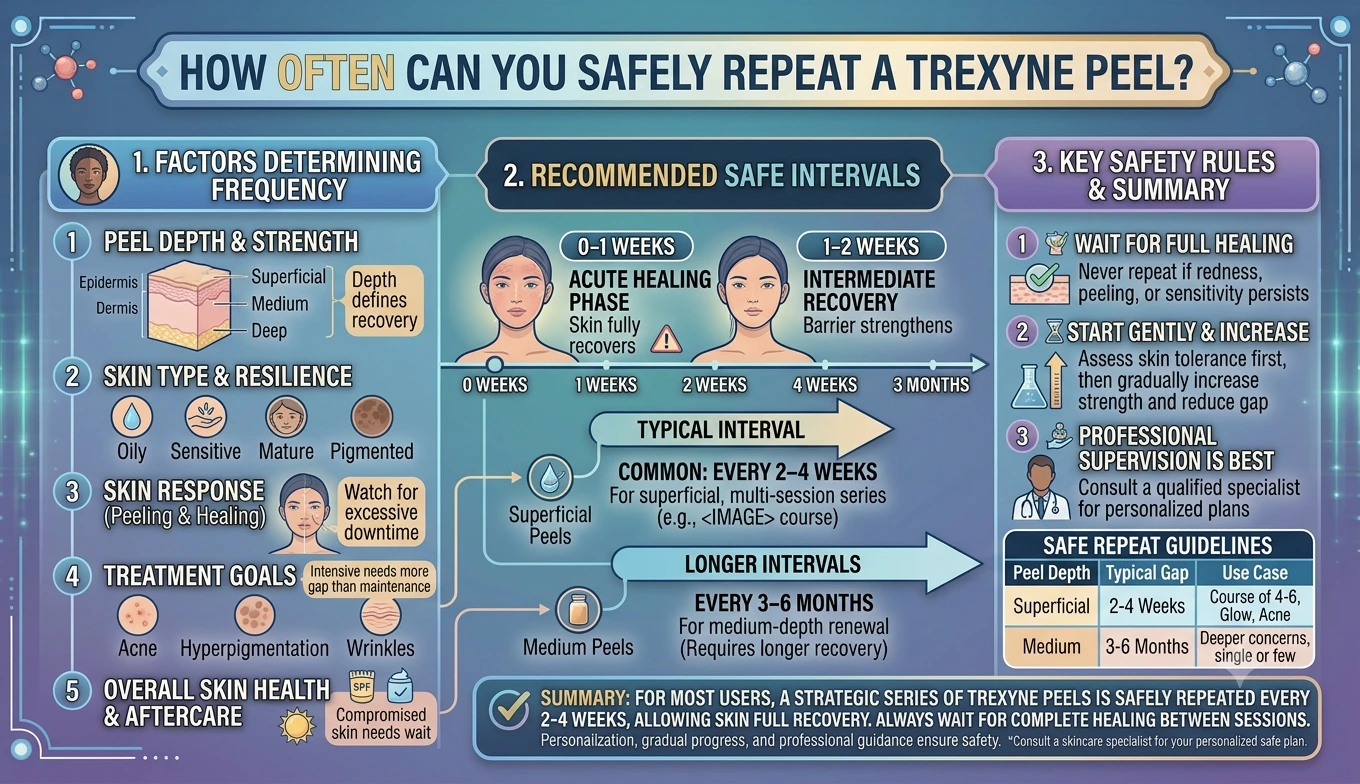
This is one of the most common questions practitioners hear once a client sees their first results. In general, Trexyne Peel sessions can be safely repeated every two to four weeks, depending on the client’s skin type, the intensity level used, and how the skin has responded to previous treatments. Because Trexyne Peel works through a mechanical resurfacing action rather than chemical exfoliation, the skin’s recovery tends to be predictable, which makes it easier to plan a repeat schedule with confidence.
Getting the timing right matters. Too short a gap between sessions can overwork the skin before it has fully renewed, while too long a gap can slow progress towards a client’s goals. This post looks at how to judge the right interval, what influences it, and how to structure a course of treatments that gets the best from this mechanical botanical peel.
Why Timing Between Sessions Matters
Skin renewal is a process, not an instant event. After a Trexyne Peel session, the skin needs time to move through its natural recovery phase before it is ready for another round of controlled micro-channelling. Repeating too soon risks compounding sensitivity rather than building on progress.
On the other hand, spacing sessions too far apart means the skin may return closer to its baseline condition before the next treatment, which can slow down the cumulative improvements that a course of peels is designed to deliver. Finding the right rhythm is part of what makes a treatment plan effective.
The Role of the Tiered Protocol
Trexyne’s tiered protocol allows practitioners to match intensity to skin type and client expectation, which directly affects how quickly the skin can handle another session. A lighter intensity level generally allows for a shorter interval between treatments, while a more targeted approach may call for a slightly longer gap to let the skin fully recover.
A General Guide to Repeat Intervals
While every client is different, most practitioners work within a general framework when planning repeat sessions.
Every Two Weeks for Lighter Protocols
Clients receiving a gentler intensity level, often those with more resilient or less reactive skin, can typically return every two weeks. This shorter interval suits clients working towards a specific goal within a defined timeframe, such as preparing for an event.
Every Three to Four Weeks for Standard Protocols
For most clients on a standard treatment plan, a three to four week gap between sessions tends to work well. This allows enough time for the skin’s renewal process to complete before the next round of controlled resurfacing begins.
Longer Intervals for Sensitive or Reactive Skin
Clients with more reactive skin types may need four weeks or slightly longer between sessions. Extending the interval gives the skin extra time to settle and reduces the likelihood of cumulative sensitivity building up over a course.
Factors That Determine the Right Interval for Each Client
There is no single answer that suits every client, and part of a practitioner’s role is judging which factors matter most for the person in front of them.
Skin Type and Baseline Condition
Oilier, more resilient skin types often tolerate shorter intervals between sessions, while drier or more sensitive skin types generally benefit from a longer gap. Assessing baseline skin condition at each visit helps confirm whether the client is ready for their next session.
Intensity Level Used Previously
If a more targeted intensity was used in the last session, it is often sensible to allow a slightly longer recovery window before repeating. Reviewing how the skin responded last time should always inform the decision for the next appointment.
Client Goals and Timeline
Clients preparing for a specific event may want a tighter schedule, while those working on general skin maintenance over the longer term can often follow a more relaxed interval. Discussing goals during consultation helps set a realistic and comfortable pace.
How the Skin Responded to the Previous Session
If a client experienced longer than expected redness or sensitivity after their last session, this is a signal to extend the interval before the next one. Listening to this feedback protects the skin and supports better long-term results.
Signs the Skin Is Ready for Another Session
Before booking a repeat treatment, it helps to check for a few visual and tactile signs that the skin has fully recovered from the previous session.
Texture Has Returned to Normal
Skin should feel smooth and settled, without any lingering tightness or rough patches from the previous treatment, before another session is scheduled.
Redness Has Fully Resolved
Any pinkness or redness from the last appointment should have completely faded. Proceeding while residual redness is still present is generally not advisable.
No Ongoing Sensitivity
Clients should not be experiencing any stinging, tightness, or discomfort in their daily routine. A fully calm and comfortable complexion is the best indicator that the skin is ready to be treated again.
How a Course of Treatments Is Typically Structured
Many clinics offer Trexyne Peel as part of a course, often in packages of 10 or 20 sessions, which supports a more structured and cumulative approach to results. Spacing these sessions appropriately across weeks or months allows the skin’s renewal process to build progressively, rather than trying to achieve everything in a single visit.
Practitioners can review the available package options on the Trexyne shop to help plan a course that matches a client’s goals and budget. A well-structured course, with appropriate spacing between each session, tends to produce more consistent and satisfying outcomes than sporadic, unplanned visits.
Adjusting the Schedule Partway Through a Course
It is common to adjust the interval between sessions as a course progresses. Skin often becomes more accustomed to treatment over time, which may allow for slightly shorter intervals later in a course, provided the skin continues to respond well.
What Happens If Sessions Are Repeated Too Soon
Booking sessions too close together can overwhelm the skin’s natural recovery process. Instead of building on previous results, the skin may become increasingly sensitised, leading to prolonged redness or discomfort rather than the smoother, more even complexion clients are hoping for.
This is why practitioners should always assess the skin thoroughly before agreeing to bring forward a client’s next appointment, even if the client is keen to see faster results. Patience with the schedule tends to produce better outcomes in the long run.
Educating Clients on Why Patience Pays Off
Clients sometimes assume that more frequent sessions will speed up their results. Part of a practitioner’s role is explaining that the skin’s renewal process has its own natural pace, and respecting that pace is what allows Trexyne Peel to deliver consistent, predictable improvements over a course.
Building a Maintenance Schedule After the Initial Course
Once a client has completed an initial course of treatments and reached their desired results, many practitioners recommend moving to a maintenance schedule. This often means spacing sessions further apart, such as every six to eight weeks, to help sustain the improvements achieved during the initial course.
Maintenance sessions allow the skin to continue benefiting from periodic renewal support without the more frequent commitment of an initial treatment plan. This approach suits clients who want to preserve their results over the longer term.
Reviewing Progress at Each Maintenance Visit
Each maintenance appointment is a good opportunity to reassess the skin and confirm the interval is still appropriate. Some clients may need to return to a slightly shorter interval if their skin condition changes, while others may extend the gap even further as their skin remains stable.
How Practitioners Can Personalise the Schedule for Each Client
No two clients will follow exactly the same interval, and building a personalised plan is part of delivering a professional standard of care.
Starting With a Thorough Consultation
A detailed skin assessment before the first session sets the foundation for the entire treatment plan, including how frequently sessions should be repeated. This is also the time to discuss the client’s goals and timeline.
Reassessing at Every Visit
Rather than following a fixed schedule regardless of how the skin looks, each appointment should begin with a quick assessment to confirm the client is ready for treatment. This flexible approach helps avoid repeating sessions too soon.
Keeping Clear Records
Documenting the intensity level used, the client’s response, and the date of each session makes it much easier to plan the right interval for future appointments and to spot patterns in how an individual client’s skin responds over time.
When to Seek Further Guidance
Practitioners who are unsure about the right interval for a particular client, especially those with more complex or reactive skin, are welcome to reach out directly to the Trexyne team via the contact page for further guidance on protocol planning.
Conclusion
Repeating a Trexyne Peel safely comes down to respecting the skin’s natural renewal timeline. Most clients can expect to return every two to four weeks depending on their skin type, the intensity level used, and how their skin responded to the previous session. Because Trexyne works through a mechanical resurfacing action using marine-algae spicules and stabilised Vitamin E, its tiered protocol gives practitioners the flexibility to personalise this schedule for each client.
A well-planned course, followed by a sensible maintenance schedule, allows the skin’s renewal process to build steadily over time. This considered approach to spacing sessions is often what helps clients achieve a brighter, smoother, and more even-looking complexion over the course of their treatment plan.
FAQs
Q: How soon can you repeat a Trexyne Peel after the first session?
Most clients wait at least two weeks before their next session, though the exact interval depends on skin type, the intensity level used, and how the skin responded to the first treatment.
Q: Is it safe to have a Trexyne Peel every two weeks?
For clients receiving a lighter intensity protocol with resilient skin, a two week interval can be appropriate, though this should always be confirmed by assessing the skin before each session.
Q: How many Trexyne Peel sessions are needed for a full course?
Courses are often structured around packages of 10 or 20 sessions, spaced appropriately to allow the skin’s renewal process to build progressively over time.
Q: What happens if you repeat a Trexyne Peel too soon?
Repeating sessions too close together can overwork the skin before it has fully recovered, potentially leading to prolonged redness or sensitivity rather than improved results.
Q: Do sensitive skin types need longer gaps between Trexyne Peel sessions?
Yes, clients with more reactive or sensitive skin generally benefit from a longer interval, often four weeks or more, to allow full recovery between sessions.
Q: How often should you have a Trexyne Peel for maintenance once a course is complete?
Many practitioners recommend a maintenance schedule of every six to eight weeks once the initial course is complete, to help sustain results over the longer term.
Q: How do you know if your skin is ready for another Trexyne Peel session?
Skin should feel smooth and settled with no lingering redness, tightness, or sensitivity from the previous session before booking the next appointment.