Can You Exercise After a Professional Skin Peel?
Clients often ask this question within minutes of finishing a treatment: can they head straight to the gym afterwards? The short answer is no, not immediately. Sweat, heat, and friction can all interfere with the skin’s early recovery phase, and timing matters more than most people realise. Understanding why exercise needs to wait, and for how long, helps practitioners set expectations that protect results. This is especially relevant with treatments like the Trexyne Peel, a botanical resurfacing treatment designed to work through a controlled mechanical process rather than chemical exfoliation. Getting the aftercare advice right is just as important as the treatment itself.
Why Skin Needs Time to Recover Before a Workout
Straight after a professional peel, the skin’s surface is in an active recovery state. Micro-channels created during treatment need time to close, and the outer barrier is temporarily more permeable than usual. This is a normal part of the renewal process, but it also means the skin is more reactive to external stress.
Exercise introduces several factors that can interfere with this recovery window. Increased blood flow, elevated skin temperature, and sweat production all place additional demand on skin that is trying to settle. For clients used to a daily training routine, even a short delay can feel inconvenient, but it is a small trade-off for a smoother, more predictable result.
What Happens at a Cellular Level
During the resurfacing process, the skin’s surface layer is gently disrupted to encourage renewal. Blood vessels near the surface can be slightly more responsive in the hours that follow, which is why clients sometimes notice mild warmth or a flushed appearance. Raising the heart rate through exercise adds further heat and circulation on top of this, which can prolong redness and general sensitivity.
The Problem With Sweat on Freshly Treated Skin
Sweat is not simply water. It carries salts, minerals, and small amounts of waste products from the body, and it interacts with the skin in ways that can feel uncomfortable when the barrier is temporarily more delicate. Salt residue in particular can cause stinging or a tight sensation on skin that has recently undergone resurfacing.
There is also the matter of contact. Wiping sweat away with a towel, or letting it sit on the face during a long session, introduces friction and moisture that a recovering complexion does not need. Encouraging clients to avoid this for a set period is one of the simplest ways to support a calmer recovery.
Practical Guidance for Clients
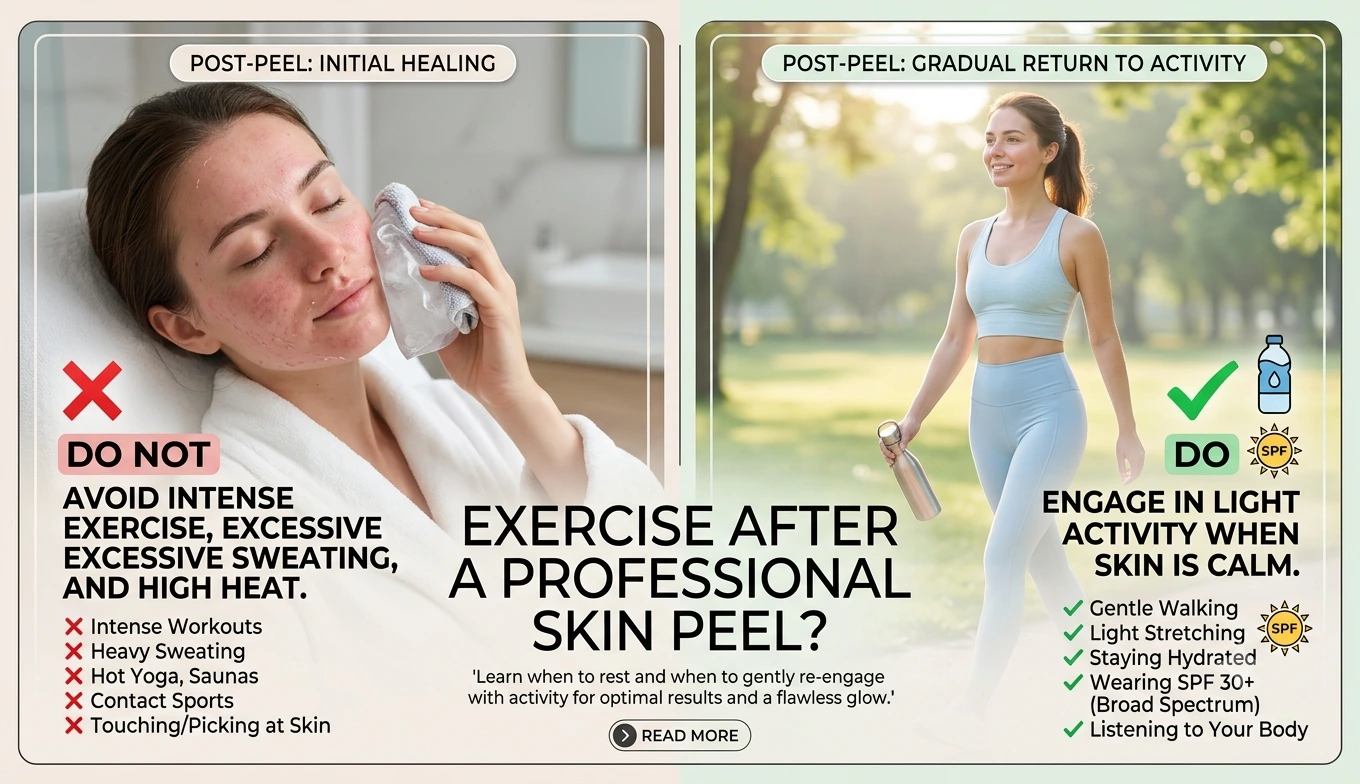
Practitioners can suggest clients plan their training schedule around treatment days rather than the other way round. A rest day, or a lighter, low-sweat activity such as a short walk, tends to be a more suitable option in the first day or two after treatment.
How Long Should Clients Wait Before Exercising Again?
There is no single answer that applies to every peel or every skin type, which is why a tiered approach to aftercare makes sense. Generally, clients are advised to avoid strenuous exercise, saunas, and steam rooms for at least 24 to 48 hours following a professional resurfacing treatment. More intensive protocols may call for a longer pause.
This is one of the reasons the Trexyne Peel is built around a tiered protocol. Because intensity can be matched to skin type and client expectation, practitioners are able to give more precise, individualised aftercare timelines rather than a generic instruction that may not suit everyone.
Adjusting Advice for Different Skin Types
Clients with more resilient, less reactive skin may find their recovery window is shorter, while those with sensitive or compromised skin barriers often benefit from a longer pause. A thorough consultation before treatment allows a practitioner to gauge which category a client falls into and set realistic aftercare expectations from the outset.
Heat, Humidity, and Why They Matter So Much
Beyond exercise itself, heat exposure of any kind deserves attention in the aftercare conversation. Saunas, steam rooms, hot yoga studios, and even prolonged time in a hot shower can all raise skin temperature in a way that mirrors the effects of a workout. Clients sometimes overlook these as “exercise” and need a gentle reminder that the same caution applies.
Humidity adds another layer of consideration. Moist, warm air can keep the skin’s surface damp for longer, which is not ideal when it is trying to settle and re-establish its barrier function. For clients attending a gym with a sauna or a hot studio, it is worth flagging this specifically rather than assuming the advice is obvious.
Why the Trexyne Peel’s Mechanical Mechanism Changes the Aftercare Conversation
A key point worth explaining to clients is that not every peel behaves the same way, and aftercare advice should reflect that. The Trexyne Peel works through marine-algae spicules that create controlled micro-channels, supported by stabilised Vitamin E to assist the skin’s recovery phase from the first application. There are no acids involved and no chemical exfoliation taking place.
This mechanical approach is associated with a more predictable downtime profile, which practitioners can use to their advantage when setting client expectations. Rather than a vague estimate, the tiered protocol allows intensity to be matched to the individual, which in turn allows for a clearer, more tailored return-to-exercise timeline.
Setting Realistic Expectations With Clients
Being upfront about downtime, however modest, builds trust. Clients who understand why a short pause from the gym supports better results tend to be more compliant with aftercare instructions overall, which benefits the outcome of the treatment.
Signs Skin Is Ready to Handle Exercise Again
Rather than relying purely on a fixed number of days, it helps to give clients a few practical markers to watch for. Skin that no longer feels tight, sensitive to touch, or visibly flushed is generally in a better position to cope with increased blood flow and sweat.
A useful checklist to share with clients includes:
- Skin feels comfortable rather than tender when touched gently
- Any initial redness has settled to a normal baseline tone
- There is no ongoing flaking, tightness, or visible micro-texture from the treatment
- The client has completed any recommended aftercare products or steps
When in Doubt, Wait a Little Longer
If a client is uncertain whether their skin has recovered enough, the safer approach is always to extend the pause by another day rather than risk irritation. This is a simple message that practitioners can reinforce during the consultation and again at the point of treatment.
Aftercare Products and Habits That Support Recovery
Alongside the exercise pause, general aftercare habits play a supporting role in how quickly and comfortably skin settles. Gentle cleansing, avoiding active ingredients that were not specifically recommended, and keeping the skin protected from direct sun exposure all contribute to a smoother recovery.
Hydration also matters, both topically and through general fluid intake. Skin that is well supported with appropriate, practitioner-recommended products tends to look more settled sooner, which can indirectly shorten the practical waiting period before a client feels comfortable returning to their normal routine, including exercise.
Building an Aftercare Routine Around the Treatment
Practitioners can use the consultation stage to talk clients through a short, manageable aftercare routine rather than a long list of dos and don’ts. Simplicity tends to improve compliance, and a client who follows a few clear steps is more likely to see the results the treatment is designed to support.
What Practitioners Should Communicate at the Point of Treatment
Verbal aftercare advice is easily forgotten once a client leaves the clinic, particularly if they are also juggling a busy schedule that includes regular training. Written aftercare instructions, whether printed or sent digitally, give clients something to refer back to and reduce the chance of premature exercise.
It is also worth discussing the client’s typical week during consultation. Someone who trains daily will need a clear, specific plan for working around their treatment, while someone with a more flexible schedule may simply need a general guideline. Tailoring the conversation shows professionalism and helps clients feel genuinely supported.
Encouraging Questions Rather Than Assumptions
Clients do not always think to ask about exercise specifically, so it helps to raise the topic proactively rather than waiting for a question. A brief, clear explanation of why the pause matters tends to be far more effective than a generic instruction sheet alone. Clinics that want to explore how the Trexyne Peel could fit into their treatment menu, or discuss tailored aftercare protocols, can get in touch via the Trexyne contact page.
Building Exercise Guidance Into Your Clinic’s Standard Protocol
For clinics offering resurfacing treatments regularly, it makes sense to build exercise guidance into a standard aftercare protocol rather than explaining it fresh with every client. This ensures consistency across the team and reduces the risk of a client receiving different advice from different practitioners.
Reviewing your current product range and treatment menu periodically is also worthwhile. Browsing the full Trexyne shop can help practitioners see how the Peel fits alongside other professional offerings, and how a tiered, mechanical approach to resurfacing might complement an existing treatment menu.
Conclusion
Exercise and freshly treated skin do not mix well in the first day or two after a professional resurfacing treatment. Sweat, heat, and increased circulation can all interfere with the skin’s natural recovery process, so a short pause supports a smoother, more predictable outcome. Because the Trexyne Peel works through a mechanical mechanism using marine-algae spicules and stabilised Vitamin E, practitioners can offer a tiered protocol that matches intensity to skin type, giving clients clearer, more personalised guidance on when it is safe to return to their normal exercise routine. With the right aftercare advice, clients can support their skin’s renewal process while working towards a brighter, more even-looking complexion. For more information on the full range of professional treatments, visit Trexyne.
FAQ
Q: How long should I wait to exercise after a professional skin peel?
Most practitioners recommend avoiding strenuous exercise for at least 24 to 48 hours after a professional resurfacing treatment. The exact timeframe can vary depending on skin type and the intensity of the protocol used, so it is best to follow the specific aftercare advice given by your practitioner.
Q: Can sweating after a peel cause irritation?
Sweat contains salts and minerals that can cause stinging or discomfort on skin that is still in its early recovery phase. Avoiding activities that cause heavy sweating for a day or two after treatment can help reduce this risk.
Q: Is it safe to use a sauna or steam room after a resurfacing treatment?
Saunas and steam rooms raise skin temperature in a similar way to exercise, which is why they are generally best avoided for the same recommended period. Heat and humidity can both interfere with the skin’s ability to settle comfortably.
Q: Does the Trexyne Peel require a long recovery period before exercise?
The Trexyne Peel is designed with a tiered protocol, meaning downtime can be matched to skin type and client expectation. This allows practitioners to give more tailored guidance rather than a single fixed recovery time for every client.
Q: What signs show my skin is ready for exercise again after a peel?
Skin that no longer feels tight or tender, has settled back to its normal tone, and shows no ongoing flaking is generally in a good position to cope with exercise. If in doubt, waiting an extra day is the safer option.
Q: Can light activity like walking be done straight after a peel?
Lower-intensity activity that does not cause heavy sweating, such as a gentle walk, is generally more suitable than strenuous training in the first day or two after treatment. Always confirm specific guidance with your practitioner.
Q: Why do practitioners recommend avoiding exercise after a mechanical peel like Trexyne?
Even though the Trexyne Peel works through a mechanical mechanism rather than chemical exfoliation, the skin still needs time for its micro-channels to close and its recovery phase to begin. Avoiding exercise briefly helps support this natural process without added heat, friction, or sweat.