What Type of Makeup Is Safe for Freshly Peeled Skin?
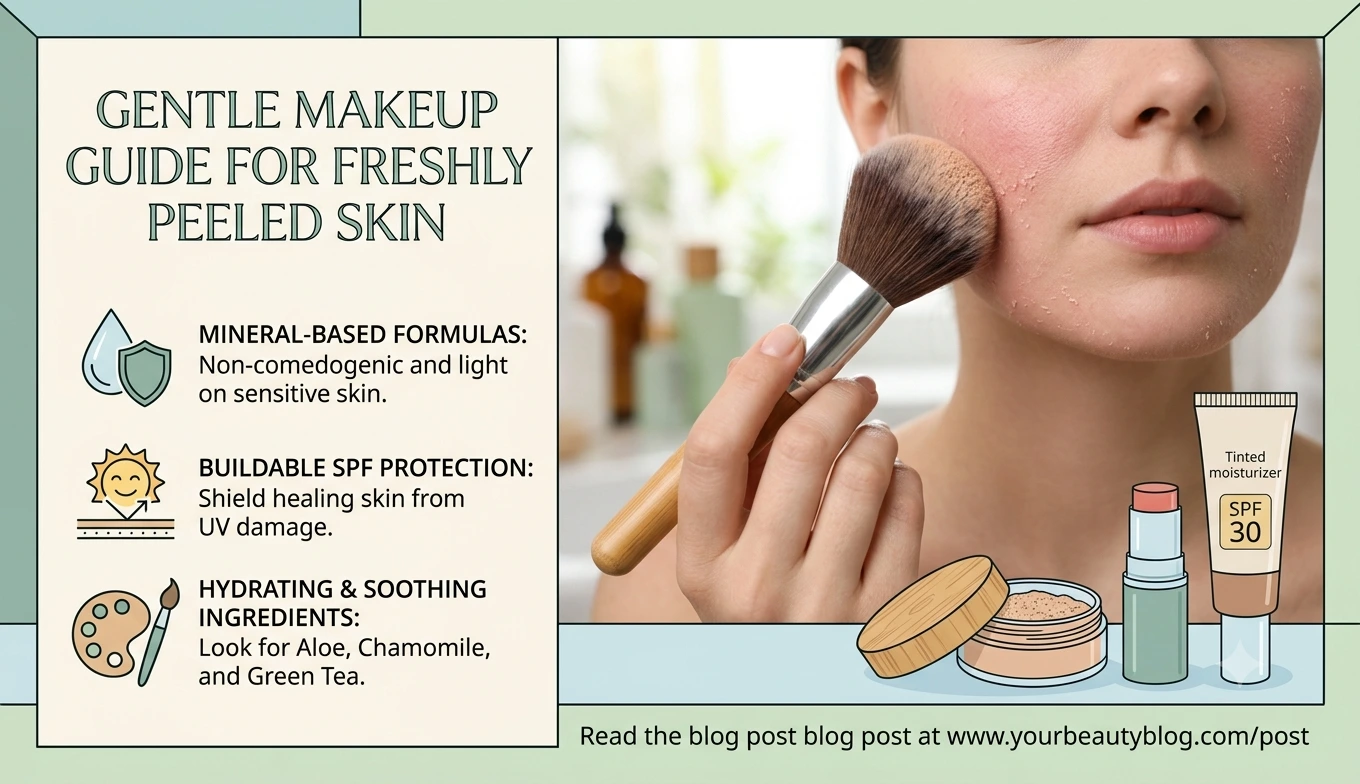
Freshly peeled skin needs mineral-based, non-comedogenic makeup applied with clean tools and a light hand, ideally with a short break from full coverage for the first day or two. After a professional resurfacing treatment, the skin barrier is in an active recovery phase, and what you apply on top of it can either support that process or slow it down. Clients often want to return to their usual routine straight away, but the right guidance at this stage makes a real difference to their results. The Trexyne Peel is designed with predictable, manageable downtime in mind, which makes it easier for practitioners to give clients clear, confident advice on makeup timing and product choice after treatment.
This guide walks through what happens to the skin after a professional peel, which makeup ingredients and formats are safest, which ones to avoid, and how to help clients feel comfortable and camera-ready while their skin does its work underneath.
Why Skin Behaves Differently After a Professional Peel
When skin has just been treated with a professional resurfacing protocol, it is not behaving the way it normally does. The outer layers have been encouraged to renew, and the barrier function is temporarily more delicate than usual. This is a completely normal part of the process and is not something to be concerned about, but it does mean the skin responds differently to products it might usually tolerate well.
Redness, mild tightness, and a slightly warm sensation are common in the hours after treatment. Some clients notice fine flaking or a rougher texture over the following days as the skin renews itself. This is the visible sign that the treatment is doing its job.
Because the surface is more reactive during this window, makeup that would normally sit comfortably on the skin can feel heavier or more irritating than usual. Heavy, occlusive, or fragranced products are more likely to cause discomfort or interfere with the renewal process. This is why makeup choice in the days following a peel deserves just as much attention as the treatment itself.
The Barrier Recovery Window
Most clients experience the bulk of visible renewal within the first three to five days after a professional treatment, though this can vary depending on skin type and the intensity of the protocol used. During this window, the skin’s natural barrier is working to re-establish itself. Anything applied on top should support that process rather than add friction, both literally and figuratively.
What Happens After a Trexyne Peel Specifically
The Trexyne Peel works through a mechanical mechanism rather than a chemical one. It uses marine-algae spicules to create controlled micro-channels in the skin, encouraging resurfacing and renewal without relying on chemical exfoliants. This approach is one of the reasons practitioners favour it for clients who want a more predictable recovery experience.
The treatment is also infused with stabilised Vitamin E, which supports the skin’s recovery phase from the very first application. Because the protocol is tiered, practitioners can match the intensity of the treatment to the client’s skin type and expectations, which in turn affects how the skin behaves in the days afterwards and how soon makeup can comfortably be reintroduced.
Because there are no acids involved and no chemical penetration, clients tend to experience a more consistent and manageable downtime pattern, though the exact timeline still varies from person to person. This predictability makes it easier to give clear, practical aftercare advice, including guidance on makeup.
How Soon Can Makeup Be Worn After a Peel?
This is one of the most common questions clients ask before they even leave the treatment room. The honest answer is that it depends on the intensity of the protocol used and how the individual’s skin responds.
As a general guide that practitioners can adapt to their own clinical judgement:
- For lighter protocols, many clients feel comfortable wearing minimal makeup the following day, once any initial redness has settled.
- For more intensive protocols, it is often sensible to recommend a full day, sometimes two, without makeup while the skin settles.
- Full coverage or heavier formulas are usually best delayed until any visible flaking has resolved.
Because the Trexyne Peel protocol is tiered, this timeline can be discussed with the client at the time of treatment, so they leave with realistic expectations rather than guessing at home.
Signs the Skin Is Ready for Makeup Again
Practitioners can advise clients to look out for a few practical signs before reintroducing makeup:
- Redness has noticeably calmed compared to immediately after treatment
- Any tightness or warmth has eased
- Visible flaking, if present, has mostly resolved
- The skin no longer feels sensitive to a gentle touch
If any of these are still present, it is generally better to wait a little longer or stick to the lightest possible coverage.
Mineral Makeup: Often the Safer Starting Point
Mineral-based makeup tends to be one of the gentler options for freshly peeled skin. These formulas are typically free from many of the synthetic fillers, binders, and fragrances found in conventional makeup, which reduces the likelihood of irritation on skin that is still renewing.
Loose mineral powders and mineral-based foundations sit on top of the skin rather than settling deeply into fine flaking or micro-texture, which can make application feel more comfortable. They also tend to be easier to remove gently at the end of the day, which matters when cleansing needs to be soft and non-abrasive during recovery.
That said, “mineral” is not automatically synonymous with “safe” for every client. It is worth checking the full ingredient list rather than relying on marketing language alone, since some products labelled mineral still contain additional ingredients that may not suit freshly treated skin.
What to Look for in a Mineral Formula
- Minimal ingredient lists
- No added fragrance
- No alcohol-based components
- A soft, buildable texture rather than a heavy, matte finish
Ingredients to Avoid on Freshly Peeled Skin
Certain makeup ingredients are more likely to cause discomfort or interfere with the skin’s recovery after a professional treatment. While every client’s skin is different, there are some general categories worth flagging during aftercare conversations.
Fragranced products. Added fragrance, whether synthetic or from essential oils, is one of the more common triggers for irritation on freshly treated skin. Even products marketed as gentle can contain fragrance components that sensitive, renewing skin reacts to.
Alcohol-based formulas. Many long-wear or matte foundations contain alcohol to help them set. This can be drying and uncomfortable on skin that is already adjusting to a temporary change in its barrier function.
Heavy, occlusive bases. Thick, full-coverage foundations can trap heat and moisture against the skin in a way that feels uncomfortable during the early recovery window, and may make it harder to monitor how the skin is genuinely healing underneath.
Exfoliating or active-ingredient makeup. Some newer makeup formulas are marketed with added actives, such as ingredients designed to gently resurface or brighten. These are best avoided entirely during the recovery period, since the skin is already doing renewal work of its own.
Application Technique Matters as Much as Product Choice
Even the gentlest formula can cause problems if it is applied roughly. Practitioners should encourage clients to think about technique as well as ingredients during the days following treatment.
Use Clean Tools Only
Freshly peeled skin is more vulnerable to bacteria than usual, simply because the surface barrier is still re-establishing itself. Makeup brushes and sponges that have not been washed recently can introduce bacteria into skin that is less equipped to deal with it. Clients should be reminded to use freshly cleaned tools, or even single-use applicators, in the days after treatment.
Apply With a Light Hand
Rubbing or buffing makeup into the skin, a common habit with liquid foundations, adds friction that renewing skin does not need. A gentle patting or pressing motion, rather than dragging the product across the skin, is far kinder to the surface.
Avoid Double Cleansing Straight Away
While this is about removal rather than application, it is worth mentioning in the same breath. Vigorous double cleansing routines, common for removing heavy makeup, can be too much for skin that is still recovering. A single, gentle cleanse is usually sufficient during this window, which is another reason to favour lighter makeup that comes off easily.
Concealer and Redness: What Actually Helps
Many clients want to address visible redness in the days after treatment, particularly if they have social or professional commitments they cannot postpone. This is a completely understandable concern, and there are ways to approach it sensibly.
Colour-correcting concealers with a green or yellow undertone can help visually balance redness without needing to layer on heavy coverage. A small amount, applied only where needed rather than across the whole face, tends to work better than trying to mask everything with a thick layer of product.
It is worth setting realistic expectations here. The goal during this window is to gently reduce the visual impact of redness, not to completely erase it. Trying to fully conceal active redness usually means applying more product than the skin can comfortably tolerate at this stage.
Building an Aftercare Conversation Around Makeup
Practitioners are in the best position to guide this conversation, since they know exactly what protocol was used and roughly what to expect in terms of downtime. A short, practical conversation at the end of the appointment goes a long way towards client satisfaction and results.
It helps to cover:
- A realistic timeline for when makeup can be reintroduced, based on the protocol used
- Which ingredients and formats to avoid in the meantime
- How to gently address visible redness if the client has an event or work commitment
- When to reach out if anything feels unusually uncomfortable
Clinics using the Trexyne Peel often find that clients respond well to this kind of clear, structured aftercare guidance, since the tiered protocol already gives a reasonably predictable framework to work from.
Skincare Under Makeup: Supporting Recovery From Beneath
Makeup is only one part of the picture. What is applied underneath it matters just as much, if not more, during the recovery window. A gentle, well-formulated moisturiser can help create a more comfortable base for makeup application, particularly if the skin is feeling slightly tight or dry.
Sun protection is also worth discussing, since freshly renewed skin can be more reactive to UV exposure. A mineral-based SPF, applied before any makeup, is generally a sensible addition to the routine during this period, alongside sensible day-to-day sun avoidance where practical.
Clients who are consistent with their broader skincare routine, not just their makeup choices, tend to see a smoother, more comfortable recovery overall.
Special Considerations for Different Skin Types
Not every client’s skin behaves the same way after a professional treatment, and makeup advice can be adjusted accordingly.
Dry or dehydrated skin may benefit from a slightly more hydrating makeup base, such as a cream-to-powder mineral formula, once the skin is ready for makeup again. Extra attention to moisturising beforehand can also help.
Oily or combination skin may still produce oil during recovery, which can make lightweight, oil-free mineral formulas a more comfortable choice than heavier bases.
Sensitive or reactive skin benefits most from the simplest possible ingredient lists, and clients with a history of sensitivity may want to patch test any new makeup product on a small area before applying it to the full face.
Practitioners who know their client’s skin history are well placed to tailor this advice rather than giving the same blanket recommendation to everyone.
Frequently Asked Questions
Q: How long should I wait to wear makeup after a professional peel?
This depends on the intensity of the treatment and how your skin responds. Lighter protocols may allow minimal makeup the next day, while more intensive treatments often call for a day or two without makeup while the skin settles. Your practitioner can give you a timeline based on the specific protocol used.
Q: Is mineral makeup really better for freshly peeled skin?
Mineral formulas are often gentler because they tend to contain fewer synthetic fillers and fragrances, which can reduce the risk of irritation. It is still worth checking the ingredient list, since not all products marketed as mineral are formulated the same way.
Q: Can I use concealer to cover redness after a peel?
Yes, a small amount of colour-correcting concealer can help visually reduce redness. It is best applied sparingly and only where needed, rather than as a full-coverage layer, while the skin continues to recover.
Q: What makeup ingredients should I avoid after a resurfacing treatment?
Fragranced products, alcohol-based formulas, heavy occlusive foundations, and makeup containing added exfoliating actives are generally best avoided until the skin has fully settled.
Q: Does the Trexyne Peel cause more downtime than other treatments?
The Trexyne Peel uses a tiered, mechanical protocol, which allows practitioners to match treatment intensity to the client’s skin type and expectations. This tends to make downtime more predictable, though individual recovery time will still vary.
Q: Can I wear makeup the same day as my peel treatment?
This is generally not recommended immediately after treatment. Most practitioners advise waiting until any initial redness and sensitivity has settled before applying any makeup, even a light formula.
Q: What is the best way to remove makeup while my skin is recovering?
A single, gentle cleanse is usually enough. Vigorous double cleansing or abrasive removal methods can be too much for skin that is still in its renewal phase, so a soft touch is best.
To find out more about how the tiered Trexyne protocol can fit into your clinic’s aftercare approach, visit Trexyne or get in touch with the team directly.