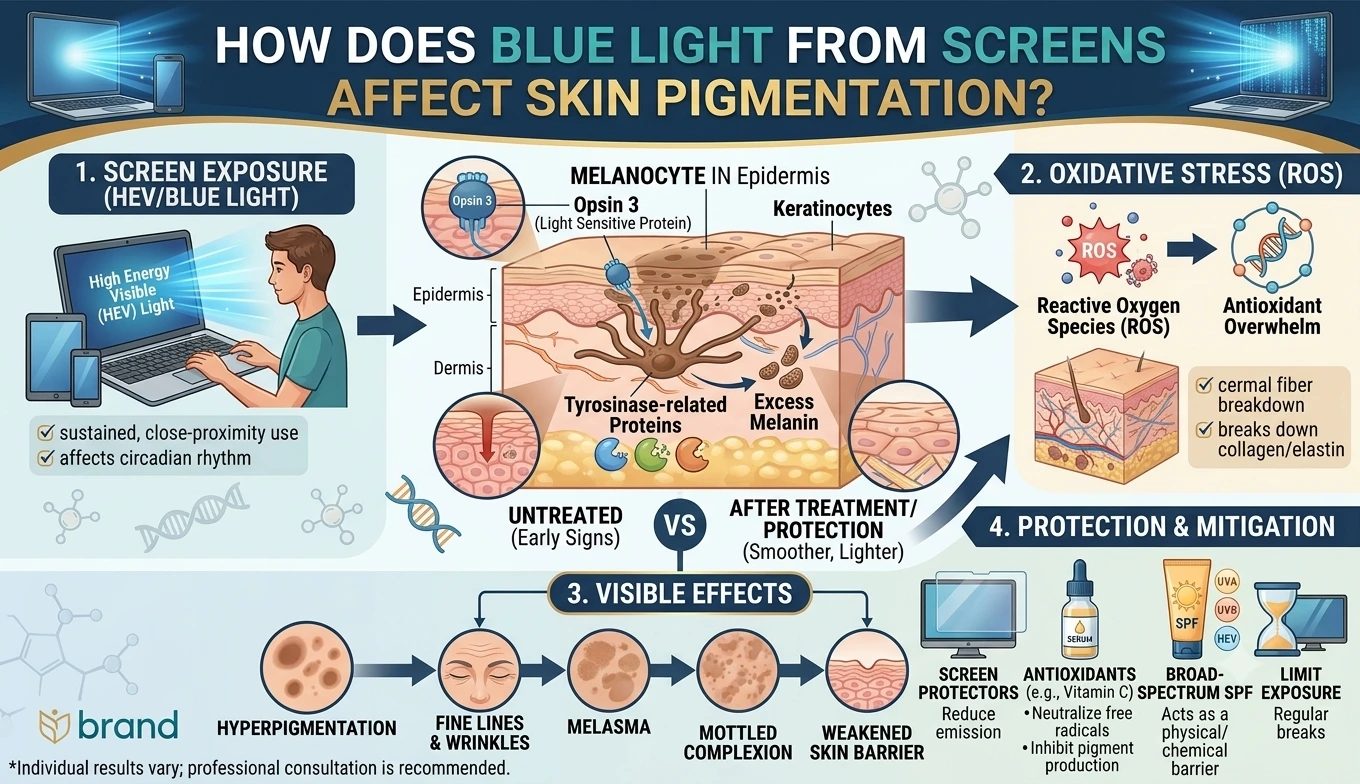
How Does Blue Light From Screens Affect Skin Pigmentation?
Blue light from screens can contribute to uneven skin tone over time, particularly in clients with darker skin types or existing pigmentation concerns. Unlike UV rays, blue light penetrates deeper into the skin and has been associated with stimulating melanin production, which may lead to patches of hyperpigmentation appearing or worsening with prolonged exposure. For practitioners working with clients who spend long hours in front of laptops, phones, and tablets, this is becoming a genuine consideration in skin health planning.
As screen time has increased across almost every profession, more clients are asking whether their devices are affecting their complexion. The answer is nuanced, but the evidence pointing to blue light as a contributing factor in pigmentation irregularities is growing. Understanding how this happens, and what can be done to support the skin’s recovery, helps practitioners give informed advice. Treatments such as the Trexyne Peel may support a more refined, even-looking complexion as part of a wider approach to managing screen-related pigmentation concerns.
What Is Blue Light and Where Does It Come From?
Blue light, also known as high-energy visible light (HEV), sits on the visible light spectrum with a short wavelength and relatively high energy. It is emitted naturally by the sun, but it is also emitted by digital screens, including smartphones, laptops, tablets, televisions, and LED lighting.
Because most people now spend several hours a day looking at screens, cumulative exposure to blue light has increased substantially over the last decade. This is different from occasional sun exposure. Screen-based blue light exposure tends to be close range, frequent, and sustained over long periods, often at close proximity to the face.
Why Blue Light Behaves Differently to UV Light
UV light is absorbed largely in the upper layers of the skin, where it can trigger sunburn and DNA damage. Blue light, by contrast, has a longer wavelength than UV but still carries enough energy to penetrate deeper into the dermis. This deeper penetration is part of why researchers have started looking closely at its effects on pigmentation, particularly in skin types that are already prone to melanin overproduction.
How Blue Light May Contribute to Pigmentation Changes
Pigmentation is controlled by melanocytes, the cells responsible for producing melanin. When skin is exposed to certain wavelengths of light, melanocytes can be triggered to produce more melanin as a protective response. Blue light has been associated with this kind of melanocyte activation, particularly in medium to darker skin tones where melanocytes tend to be more reactive.
This means that with repeated blue light exposure, some clients may notice areas of skin becoming darker or patchier, especially in places that are more exposed, such as the cheeks and forehead when looking down at a phone. This process can be gradual, which is why clients often do not connect their pigmentation changes to their screen habits until a practitioner raises the possibility.
Melasma and Blue Light
Melasma is a common pigmentation condition that appears as symmetrical brown or greyish patches, often on the cheeks, forehead, and upper lip. It is more common in women and in those with medium to darker skin tones. Blue light exposure is thought to be one of several environmental triggers that can worsen melasma, alongside hormonal factors and UV exposure.
Clients managing melasma may benefit from a fuller picture of their environmental exposures, including their daily screen habits, so that professional treatments can be planned around realistic expectations.
Who Is Most at Risk From Blue Light Pigmentation?
Not every client will experience the same response to blue light. Some skin types and conditions carry a higher risk of visible pigmentation changes.
- Clients with medium to darker skin tones, whose melanocytes tend to be more reactive
- Clients with a history of melasma or post-inflammatory hyperpigmentation
- Clients who spend extended hours on screens for work, often at close range
- Clients who work near-screen in low ambient light, which can increase relative screen brightness on the face
Practitioners assessing a client’s pigmentation concerns should always factor in screen habits alongside sun exposure, skincare routine, and hormonal history. A full picture makes it easier to recommend suitable in-clinic treatments and supportive home care.
Signs That Screen Exposure May Be Affecting a Client’s Skin
Some patterns can suggest that blue light is playing a role in a client’s pigmentation concerns.
Uneven Tone in Frequently Exposed Areas
Clients who hold their phones close to their face or who work at a laptop for long stretches may notice pigmentation building in the areas most exposed to the screen’s light, rather than a uniform pattern across the whole face.
Pigmentation That Persists Despite Good Sun Protection
If a client is diligent with SPF but still experiencing pigmentation changes, blue light exposure indoors is worth considering, since sunscreen alone does not always address HEV light in the same way it addresses UV.
Gradual Onset Over Months, Not Weeks
Because melanocyte stimulation from blue light tends to be cumulative, changes often develop slowly. Clients may describe their skin as “just getting duller” or “patchier” over several months rather than noticing a sudden change.
Can Skincare Products Alone Protect Against Blue Light Pigmentation?
Many skincare formulations now claim to offer protection against blue light, often through antioxidant ingredients. While a good antioxidant-rich routine can support the skin’s general resilience, topical products work primarily on the skin’s surface and may not fully address pigmentation that has already developed at a deeper level.
This is where in-clinic treatments become a valuable addition to a client’s routine, particularly when the goal is to visibly improve tone and texture rather than only slow further pigmentation from forming.
The Role of Professional Resurfacing in Managing Pigmentation
Professional resurfacing treatments work by encouraging the skin’s natural renewal process. Rather than relying on chemical exfoliants, some modern treatments use botanical, mechanical methods to refine the skin’s surface and support a more even-looking tone over a course of sessions.
The Trexyne Peel is a precision botanical peel built around marine-algae spicules and stabilised Vitamin E. It resurfaces and refines the skin through a purely mechanical mechanism, creating controlled micro-channels without the use of acids or chemical exfoliants. This approach is designed to support skin renewal while avoiding extended downtime, making it a practical option for clients who want visible improvement without disrupting their routine for long periods.
Why a Mechanical Mechanism Matters for Pigmentation-Prone Skin
Clients with pigmentation concerns, particularly those with a history of melasma or post-inflammatory hyperpigmentation, often need a more considered approach to resurfacing. Because the Trexyne Peel works mechanically through marine-algae spicules rather than through chemical penetration, practitioners can tailor the intensity of the treatment to the client’s skin type and expectations, using the tiered protocol available with the product.
The infusion of stabilised Vitamin E within the treatment is designed to support the skin’s recovery phase from the very first application, which is a useful consideration for clients whose pigmentation-prone skin may be more reactive to intervention.
Building a Practical Treatment Plan for Screen-Related Pigmentation
When a client’s pigmentation concerns are linked, even partially, to blue light exposure, a practical treatment plan usually addresses three areas together: reducing further exposure, supporting the skin’s barrier and renewal process, and using professional treatments to refine visible pigmentation.
Practical Advice on Reducing Blue Light Exposure
- Encourage clients to hold devices further from the face where possible
- Suggest reducing screen brightness in low ambient light settings
- Recommend regular screen breaks to reduce cumulative daily exposure
- Discuss broad-spectrum sun protection as part of the daily routine, since many formulations now include some coverage against HEV light alongside UV
Positioning In-Clinic Treatment Within the Plan
A course of professional treatments, such as those built around the Trexyne Peel, can be positioned as the visible-improvement stage of the plan, working alongside the client’s efforts to reduce ongoing exposure. Because it does not involve extended downtime, it can usually be scheduled without heavily disrupting a client’s normal routine.
Practitioners interested in incorporating this treatment into their pigmentation protocols can review full details on the product page or browse the wider range available in the shop.
Setting Realistic Expectations With Clients
Pigmentation management is rarely a single-session process, particularly when screen exposure is an ongoing daily factor in a client’s life. Clients should understand that visible improvement is usually associated with a course of treatments rather than one appointment, and that consistent reduction of triggers, including blue light, plays a supporting role alongside professional care.
Being upfront about this from the first consultation helps build trust and reduces the likelihood of clients feeling disappointed by a slower, more gradual improvement in tone and texture.
Why Professional Guidance Matters for Pigmentation Concerns
Pigmentation can have multiple overlapping causes, including UV exposure, hormonal changes, inflammation, and now, increasingly, blue light from screens. Because of this complexity, self-diagnosing the cause of pigmentation changes is often unreliable, and home treatments may not be suited to the client’s actual skin needs.
A trained practitioner can assess the pattern, depth, and likely triggers of a client’s pigmentation and recommend an appropriate course of action, which may include treatments such as the Trexyne Peel. Clinics interested in stocking or learning more about professional botanical peel treatments can get in touch through the contact page, or explore more on the Trexyne website.
Conclusion
Blue light from screens is an increasingly relevant factor in pigmentation concerns, particularly for clients with medium to darker skin tones or a history of melasma. Its ability to penetrate deeper into the skin and stimulate melanocyte activity means that daily screen habits can quietly contribute to uneven tone over months of exposure. Alongside practical steps to reduce exposure, professional resurfacing treatments can play a meaningful role in supporting a brighter, more even-looking complexion. The Trexyne Peel, working through its mechanical botanical mechanism with marine-algae spicules and stabilised Vitamin E, may support this process as part of a considered, professionally guided treatment plan.
FAQ
Q: Can blue light from phones and laptops really cause dark spots?
Blue light has been associated with stimulating melanocyte activity, particularly in medium to darker skin tones, which may contribute to dark spots or patchy pigmentation over time with sustained exposure.
Q: Is blue light pigmentation the same as sun damage?
Not exactly. Sun damage is primarily linked to UV exposure, while blue light pigmentation relates to high-energy visible light from both sunlight and screens. The mechanisms overlap in some ways but are not identical.
Q: Does sunscreen protect against blue light pigmentation?
Traditional sunscreens are formulated mainly to block UV rays. Some newer formulations include ingredients that may offer additional coverage against HEV light, but this varies by product, so it is worth checking with a practitioner.
Q: Can the Trexyne Peel help with pigmentation caused by screen exposure?
The Trexyne Peel resurfaces and refines the skin through a mechanical mechanism using marine-algae spicules and stabilised Vitamin E, which may support a more even-looking complexion as part of a wider pigmentation management plan.
Q: How long does it take to see improvement in screen-related pigmentation? Improvement is generally associated with a course of professional treatments over time rather than a single session, alongside consistent efforts to reduce daily blue light exposure.
Q: Is the Trexyne Peel suitable for clients with melasma?
Because melasma-prone skin can be more reactive, practitioners can use the tiered protocol of the Trexyne Peel to match treatment intensity to the client’s skin type and expectations. A full consultation is recommended before starting treatment.
Q: Can I buy the Trexyne Peel for home use?
No. The Trexyne Peel is sold strictly to verified aesthetic practitioners and clinics and is designed for professional use only.